





Fat transfer breast augmentation involves the extraction of the patient’s own fat, harvested via liposuction, which is purified and injected into the breasts to improve their volume and shape. This procedure is suitable for women looking to make improvements to breast size without the need for implants. Suitability can only be assessed after a one-to-one consultation.
All fat transfer procedures at CREO Clinic are performed by Dr Omar Tillo and Dr Dan Del Vecchio, who are both specialists in fat transfer procedures.
Dr Tillo is a body contouring specialist and member of the British Association of Aesthetic Plastic Surgeons (BAAPS) and a Fellow of the Royal College of Surgeons (FRCS). He works exclusively on procedures from the neck down and has led the development of guidelines for fat transfer procedures in the UK.
Dr Del Vecchio is a graduate of Yale College and Harvard Medical School, and is a member of the American Board of Plastic Surgery (ABPS) and the American Society of Plastic Surgeons (ASPS). He has also written a textbook on gluteal fat transfer procedures.
At CREO Clinic, all clinical care is surgeon-led and free of influence from commercial considerations. Planning and procedural decision-making are managed exclusively by the surgical team.
Surgery at a Glance
Treatments
1Results
3-6 MonthsAnesthesia
Sedation or GeneralSurgery Time
2-3 HoursOff-Work
2 WeeksExercise
4-6 WeeksFull Recovery
4-6 WeeksWhy This Procedure Matters
Motivations for surgery vary between patients and can include post-pregnancy volume loss, subtle contour refinement, or a preference to avoid implant-based augmentation.
Post-Pregnancy Restoration
If pregnancy and breastfeeding have depleted breast volume or distorted the shape of the breasts, fat transfer can help restore lost proportion, depending on tissue availability.
Subtle Volume & Shape Enhancement
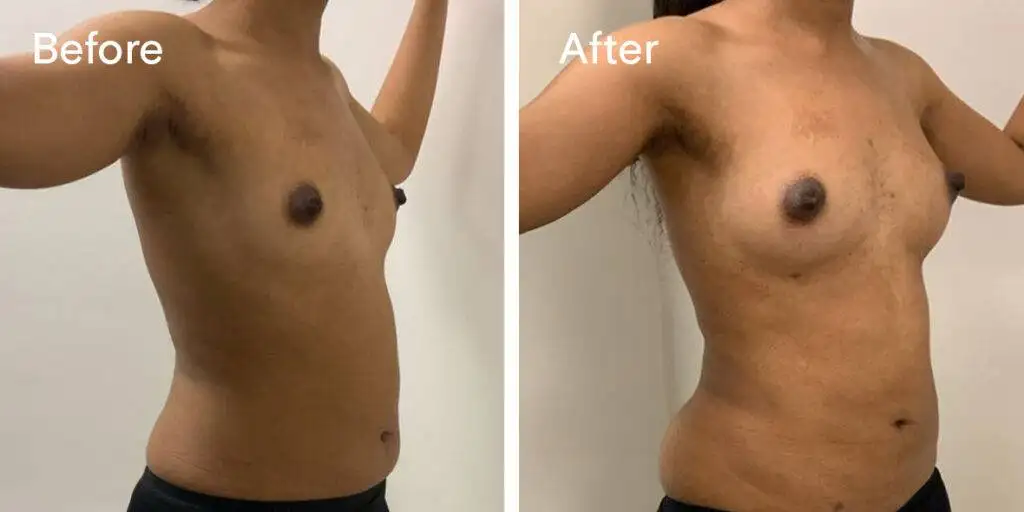
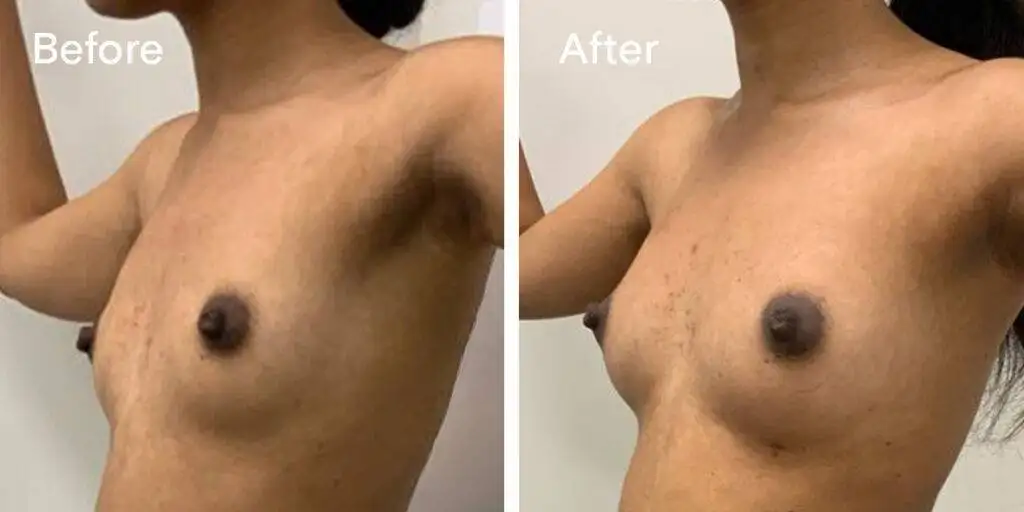
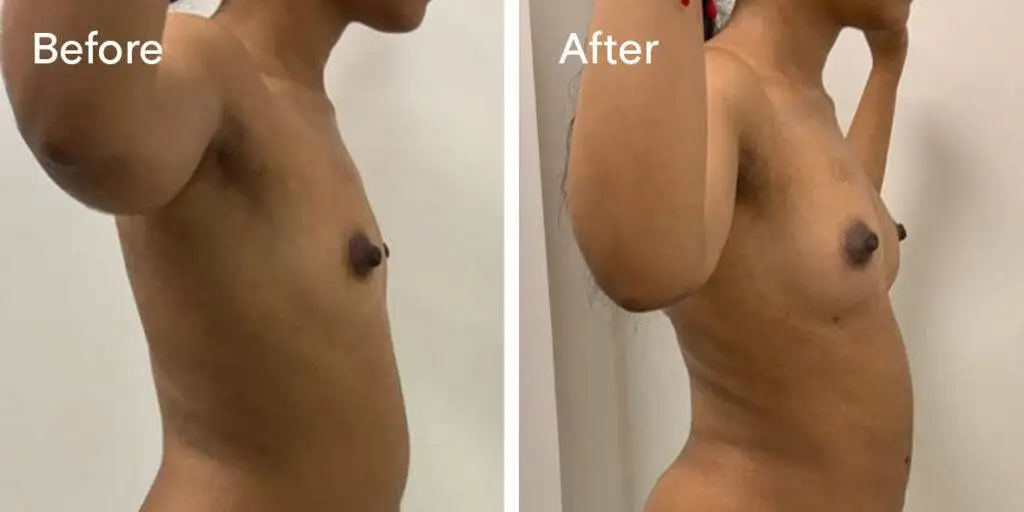
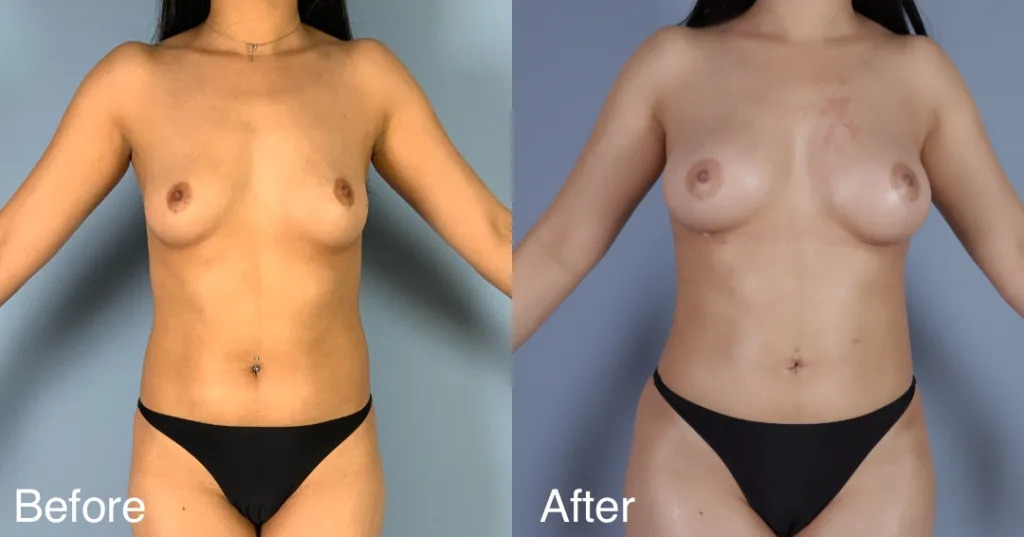
Fat transfer can increase breast size by as much as one cup size per session, depending on available fat and patient anatomy. Enhancements to shape and size are precise and targeted rather than making drastic changes in volume or form; larger size increases can be made in subsequent sessions.
Preference to Avoid Implants
Patients looking for alternatives to breast implants may benefit from fat transfer augmentation if they wish to see refinements to volume and shape that may look and feel softer than silicone implants. However, implants may be the more appropriate option for more dramatic augmentations.
How the Procedure Works
Fat transfer breast augmentation involves several stages, including fat harvesting through liposuction, purification of the harvested fat, and reinjection into the breasts. Surgical planning is tailored to the patient’s anatomy, available donor fat, and desired outcome identified during consultation.
Fat Harvesting & Transfer Process
Liposuction is used first to harvest fat from other areas of the body where it is in excess, such as the abdomen and thighs. The harvested fat is then processed and purified before injection into the breasts. The injections are placed at carefully chosen sites according to the patient’s clinical and aesthetic needs.
Anaesthesia & Surgical Environment
Fat transfer breast augmentation is typically a day case, but overnight stays are offered if necessary or requested. The surgery itself usually lasts between two and four hours (this depends on the number of liposuction sites) and is always performed in CQC-registered surgical facilities.
Fat Survival & Integration
A proportion of fat (approximately 30–50%) is reabsorbed by the body after the transfer. This is a well-understood feature of the procedure and is factored into surgical planning; extra fat is applied to the treatment sites to compensate for this loss.
How much fat has been lost typically becomes clear after the ‘fluffing phase’. This is the stage at which residual swelling dissipates, and all surviving fat integrates into the tissues of the breasts, a process that usually takes between three and six months.
Patient Feedback & Outcomes
Is This Right for You?
Suitability for fat transfer breast augmentation depends on factors such as available donor fat, existing breast tissue, general health, and the degree of enhancement desired. A consultation and clinical assessment are required to determine whether the procedure is appropriate for your anatomy and goals.
Who It’s For
Fat transfer breast augmentation may be appropriate for patients who:
– Have sufficient available fat around the body for harvesting
– Are seeking a modest improvement in breast volume and shape, rather than a significant size increase
– Are 18 years old or above
– Are in good general physical and psychological health, with a BMI of 30 or below
– Prefer an approach that avoids the use of implants or foreign materials
– Have realistic expectations of fat survival and the degree of enhancement achievable through fat transfer
Who It May Not Be Right For
– Do not have adequate body fat available for transfer
– Are seeking a substantial increase in breast size beyond what a single fat transfer session can typically achieve
– Are under 18 years old
– Use nicotine products and feel unable to abstain for at least four weeks before surgery
– Are prone to significant fluctuations in weight, which can affect the long-term stability of results
Have underlying health conditions that may increase the risk of surgical complications
Have expectations that cannot be realistically met by fat transfer alone
Procedure Variants & Alternatives
Several approaches to breast augmentation are available, and the most appropriate option depends on factors such as desired breast size, available donor fat, tolerance for scarring, and long-term expectations.
Fat Transfer vs Breast Implants
| Fat transfer | Breast Implants | |
| Results | Typically up to one cup size per procedure, depending on available fat and breast anatomy | Greater increases in breast volume are usually possible, depending on implant selection and tissue characteristics |
| Anaesthetic | Sedation or GA | Sedation or GA |
| Scarring | Small liposuction and injection-site scars | Scars vary according to implant placement technique and may be positioned in the breast crease, around the nipple, or under the arm |
| Recovery | Most patients return to light activity within approximately 4–6 weeks, depending on recovery progress | Recovery timelines vary, but many patients return to light activity within approximately 6 weeks |
| Longevity | Surviving fat is generally long-lasting, although results may change with weight fluctuations and natural ageing | Implants are long-lasting medical devices, but some patients may require replacement or revision surgery over time |
| Price | From £8,500 | From £7,250 |
The most appropriate procedure depends on your anatomy, available donor fat, desired breast size, tolerance for scarring, and long-term expectations. During consultation, your surgeon will assess these factors and explain which approach may be most suitable for your goals and clinical circumstances.
Composite Breast Augmentation (Fat + Implants)
CREO Clinic provides a signature approach to breast augmentation that combines implants with fat transfer. This approach places implants into the breasts, followed by fat grafting using fat harvested from the body. This can help improve breast volume and upper pole fullness, while also refining contour irregularities or asymmetry.
This technique may be suitable for patients seeking a greater increase in breast volume, while also using fat grafting to soften contours and improve shape transitions around the implants. Suitability depends on individual anatomy, tissue characteristics, and surgical goals identified during consultation.
When No Surgery May Be More Appropriate
In some cases, a consultation will show that it is clinically inappropriate to perform fat transfer breast augmentation or any form of augmentation surgery. Should you be unsuitable, Dr Tillo or Dr Del Vecchio will explain this clearly during your consultation and discuss whether no treatment or a different approach may be more appropriate.
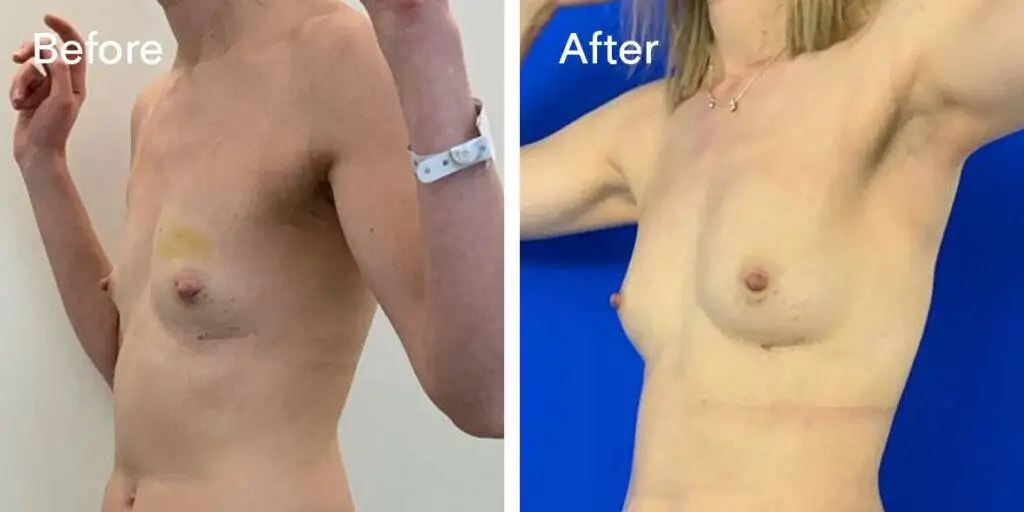
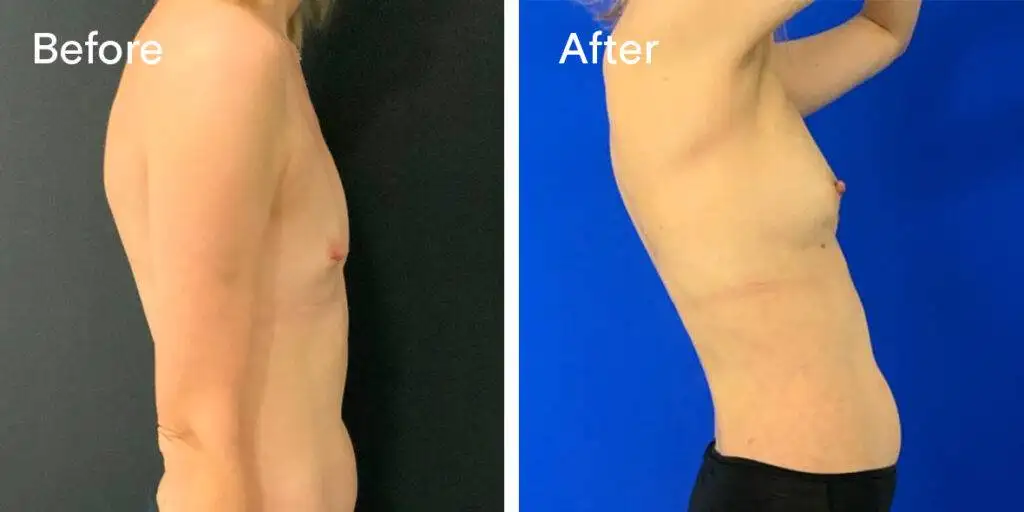
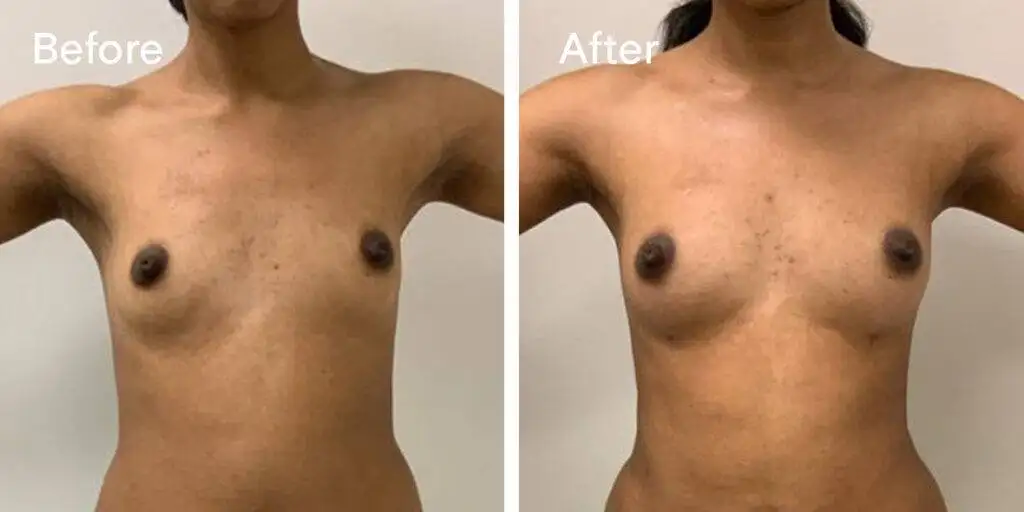
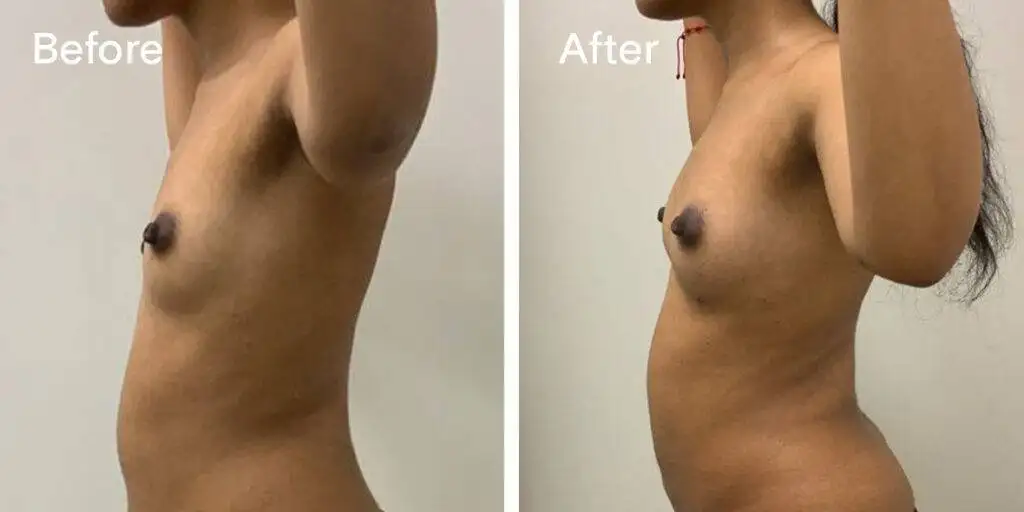
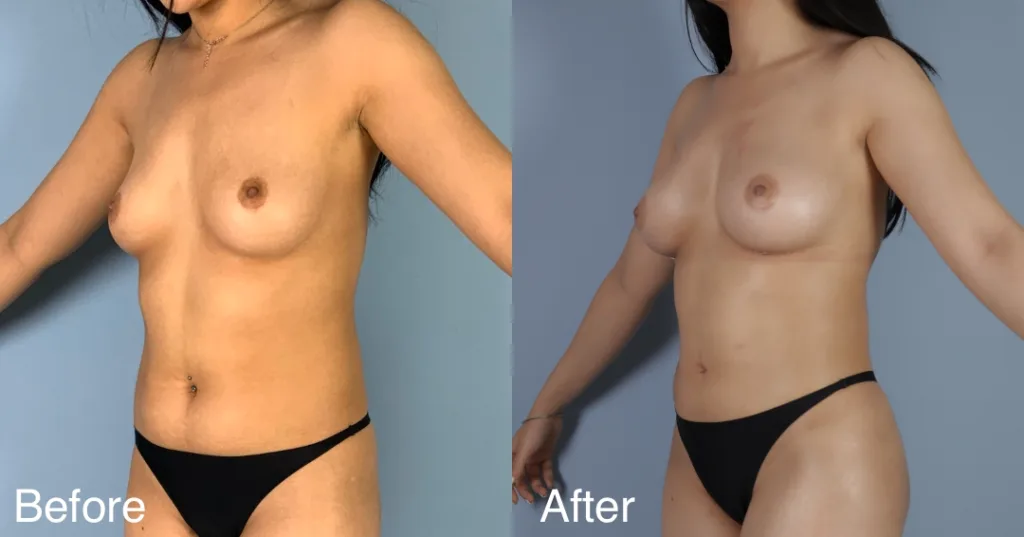
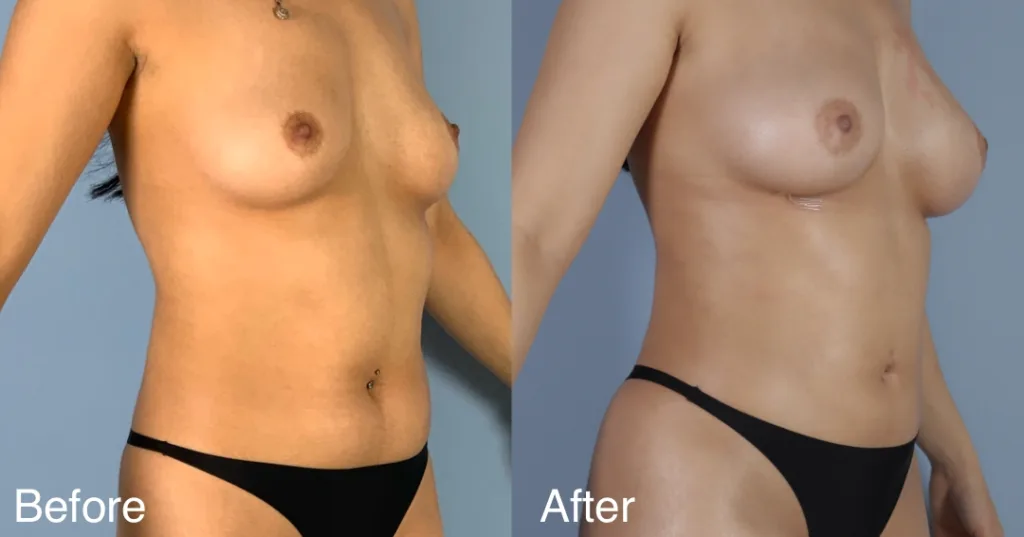
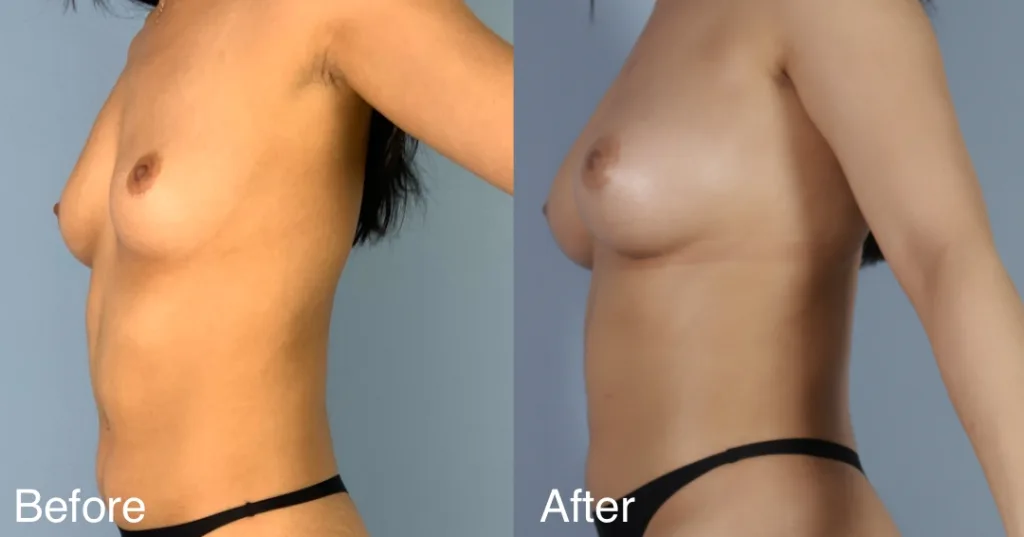
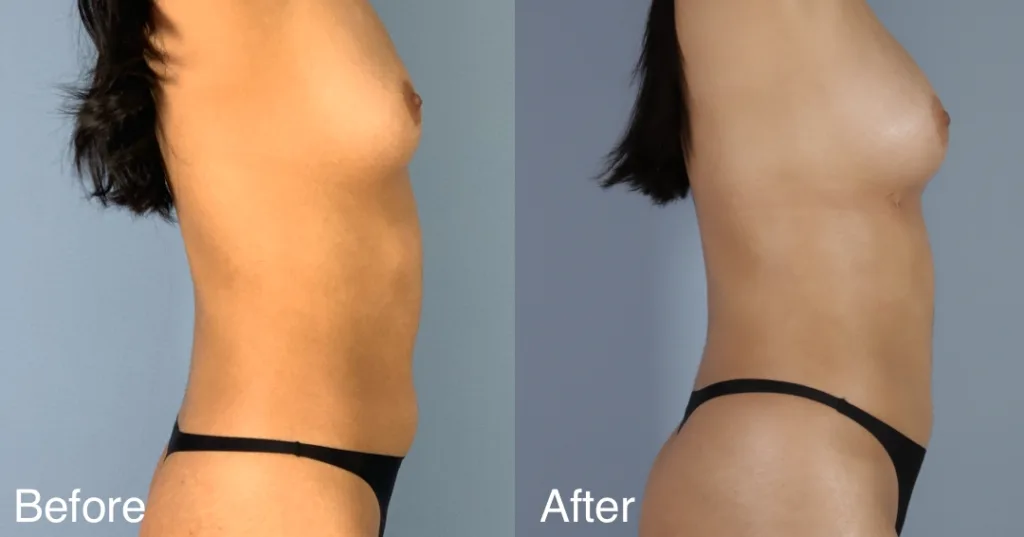
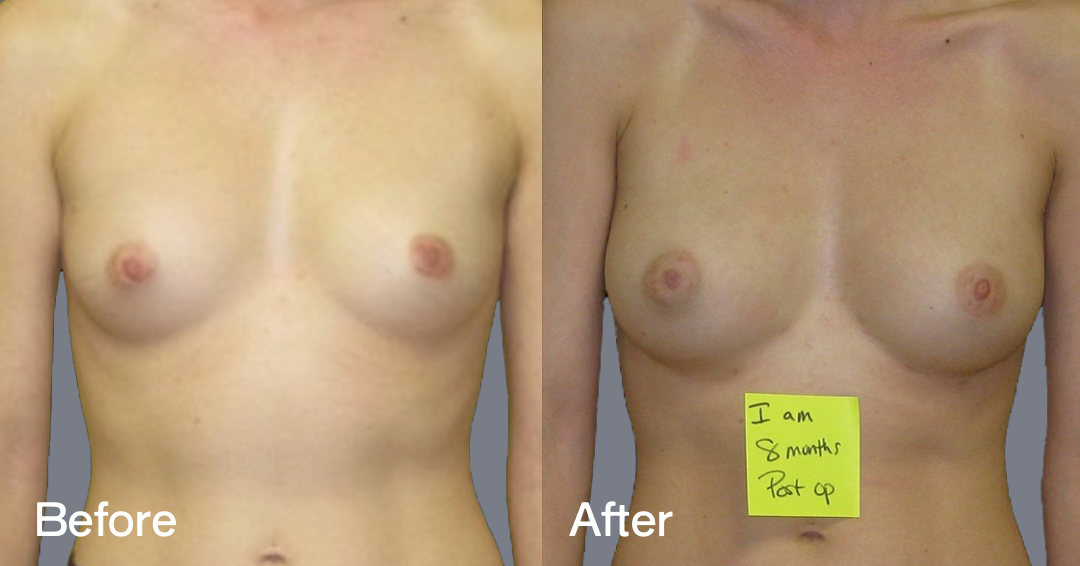
Before & After Results
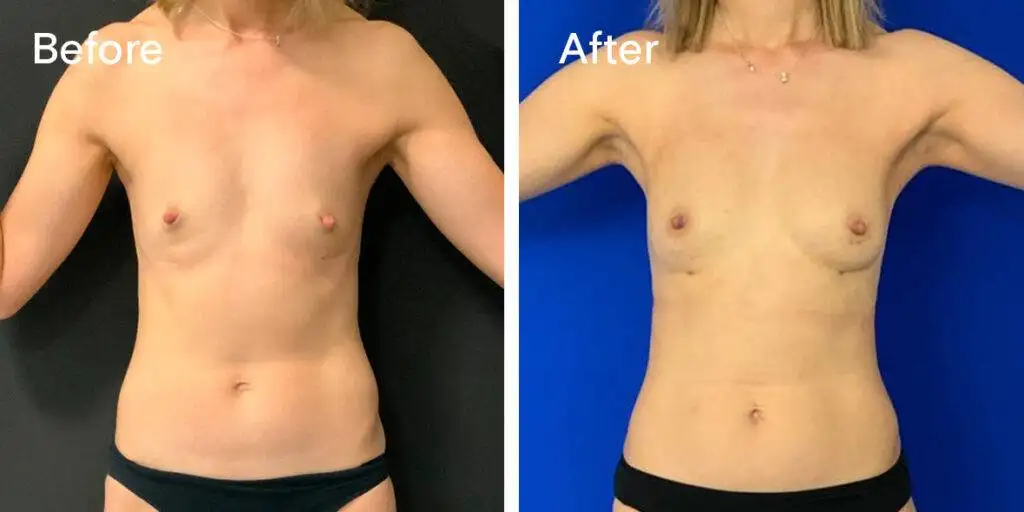
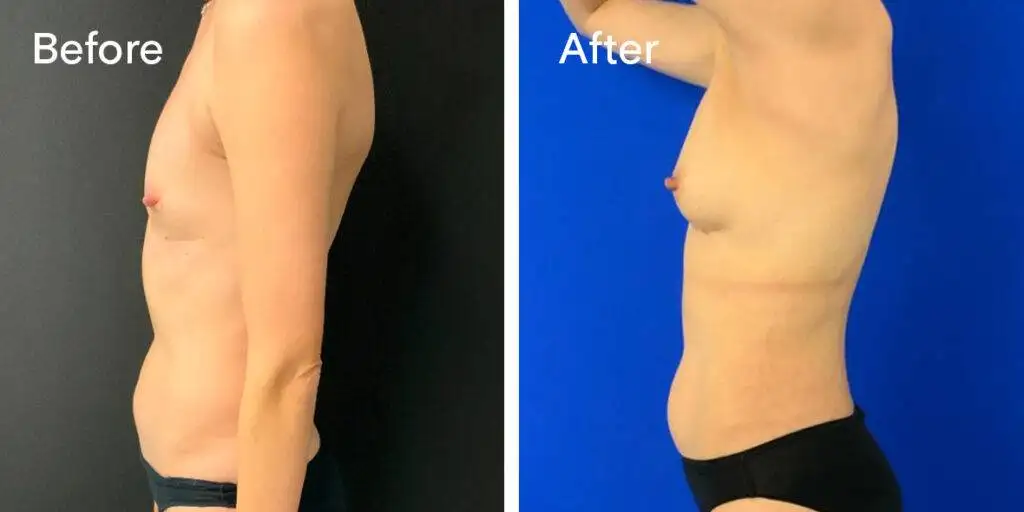
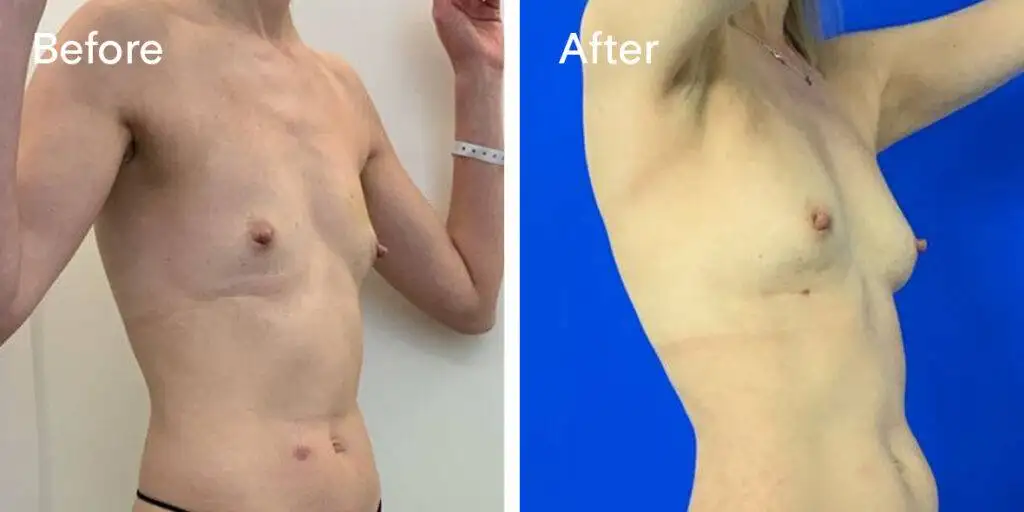
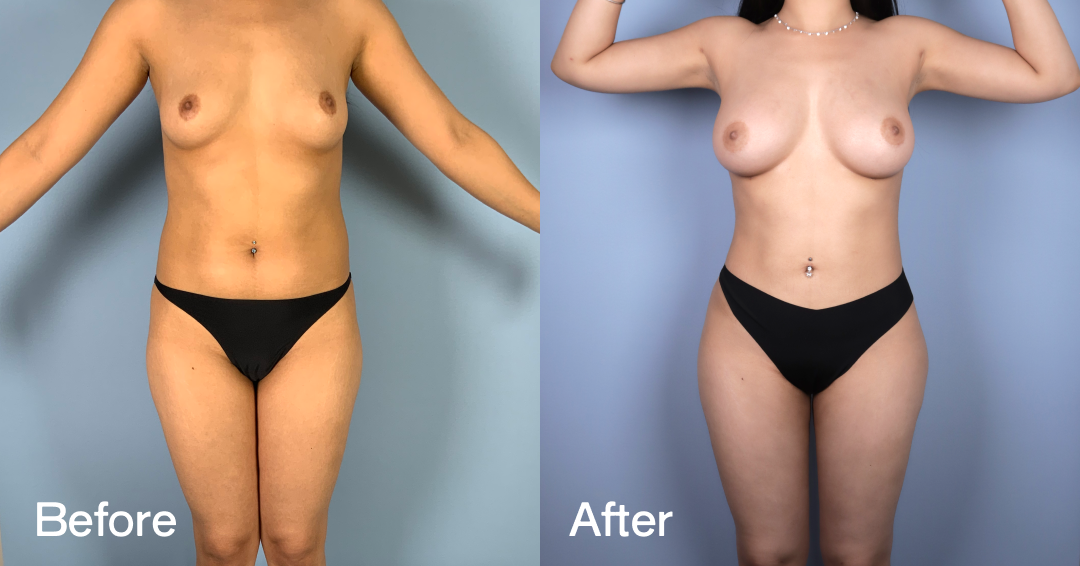
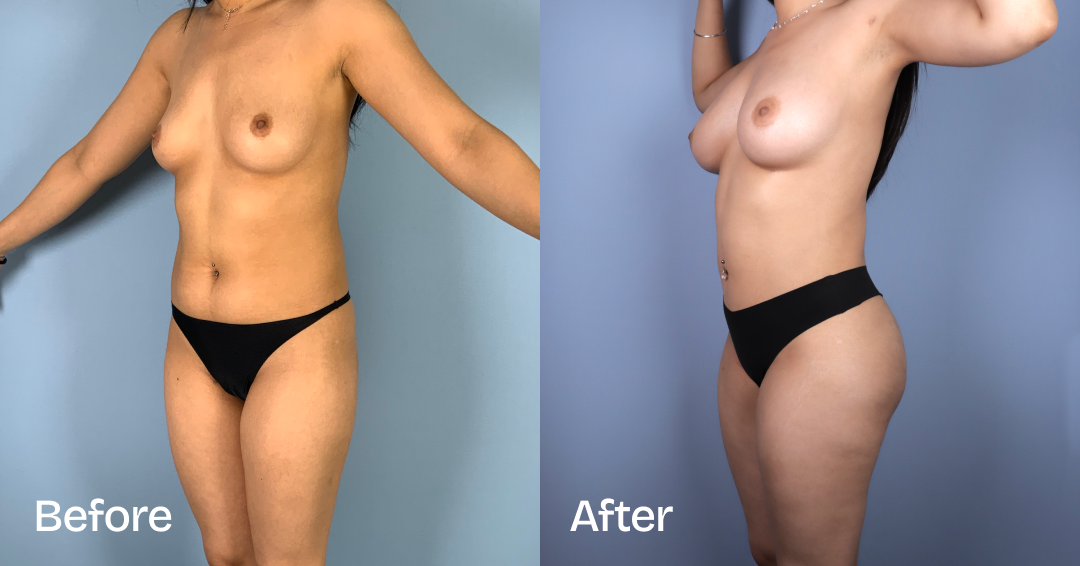
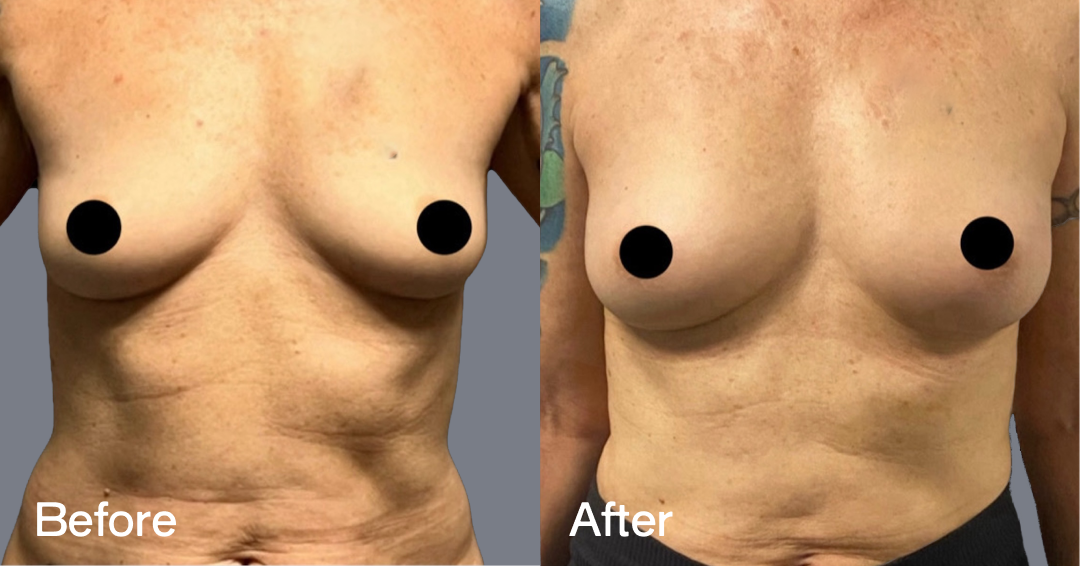
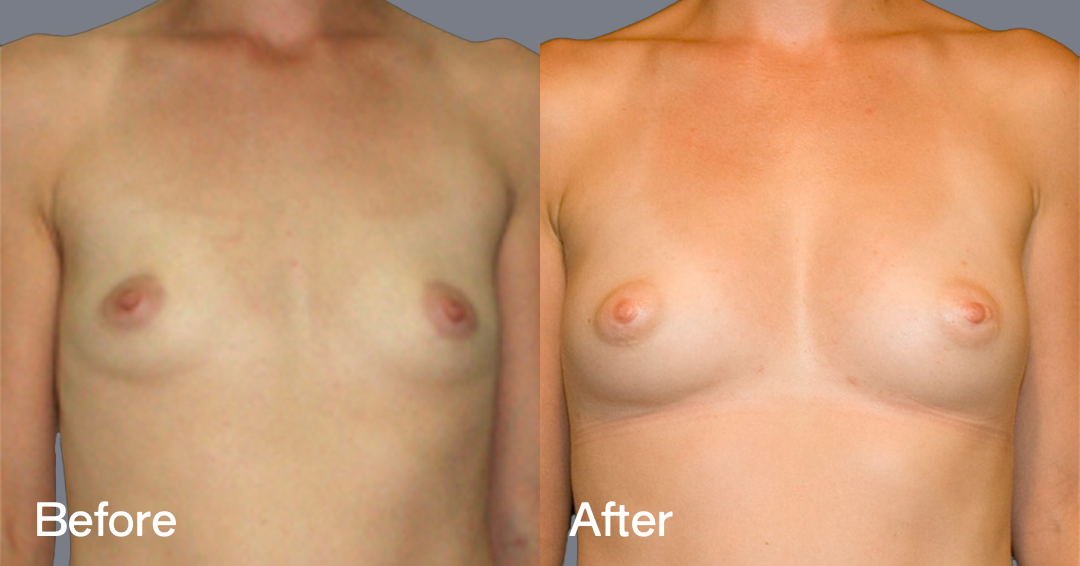
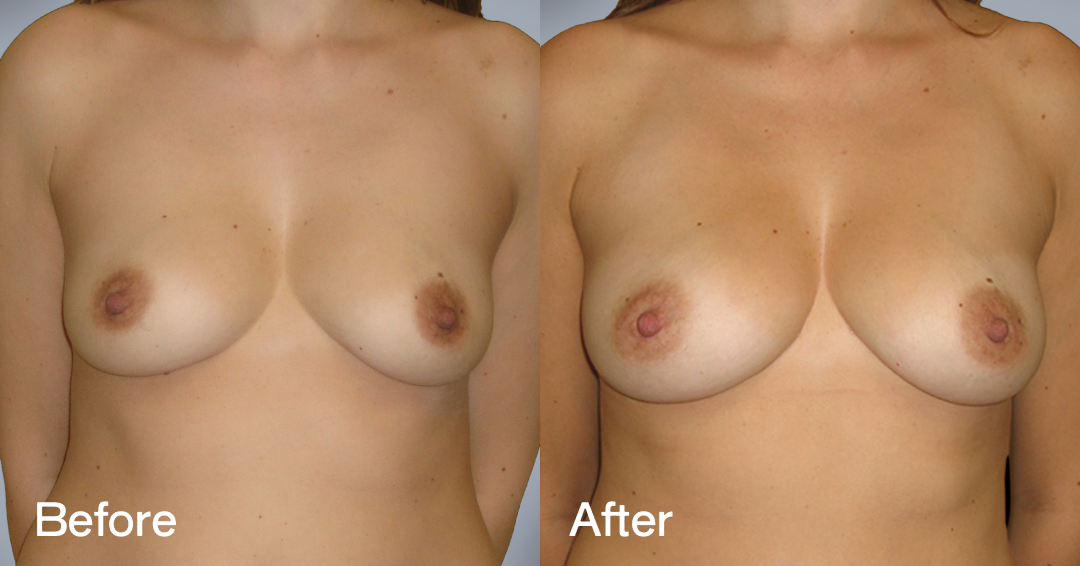
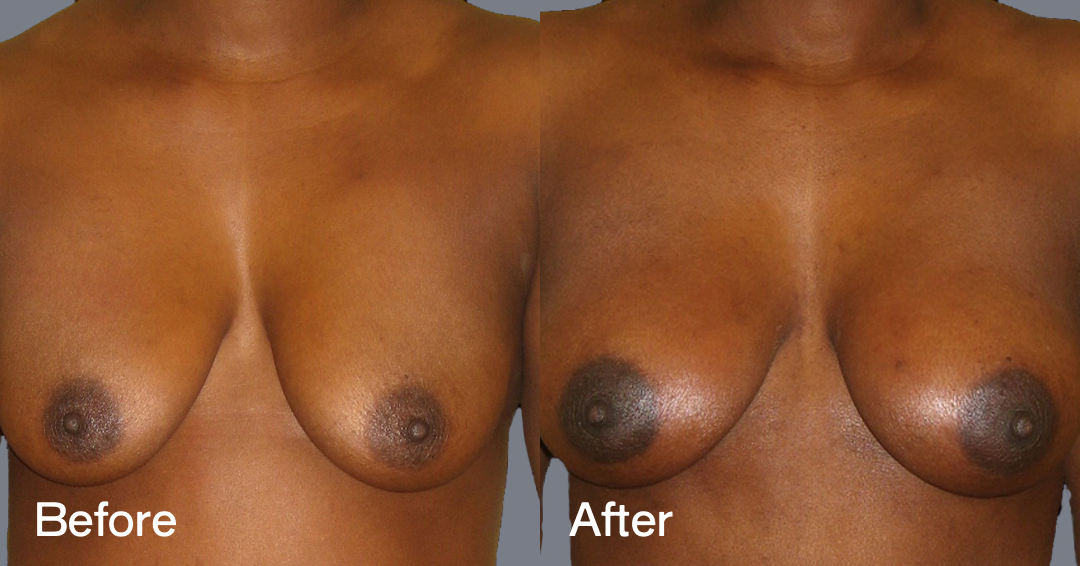
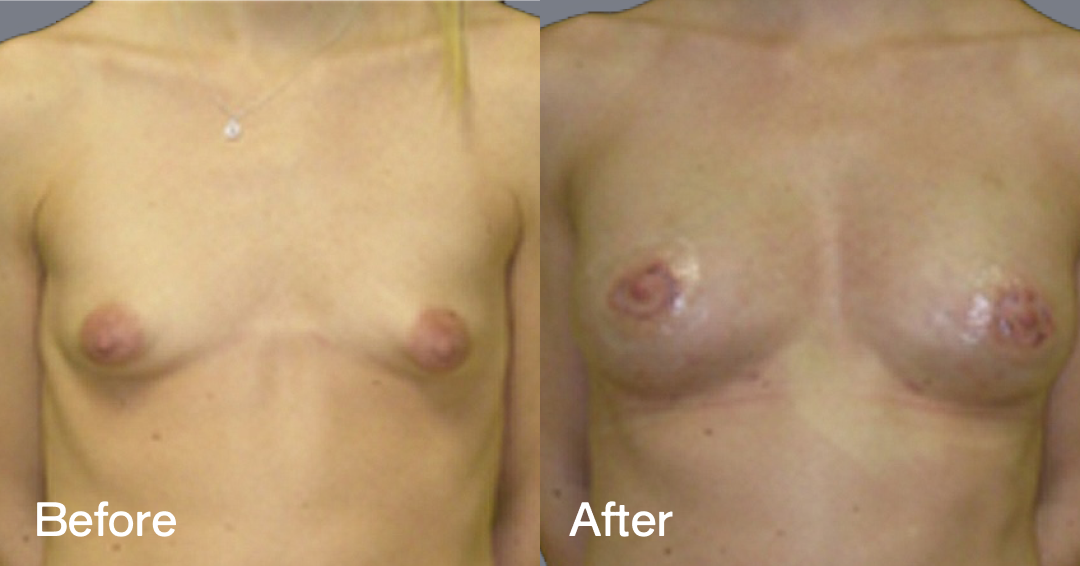
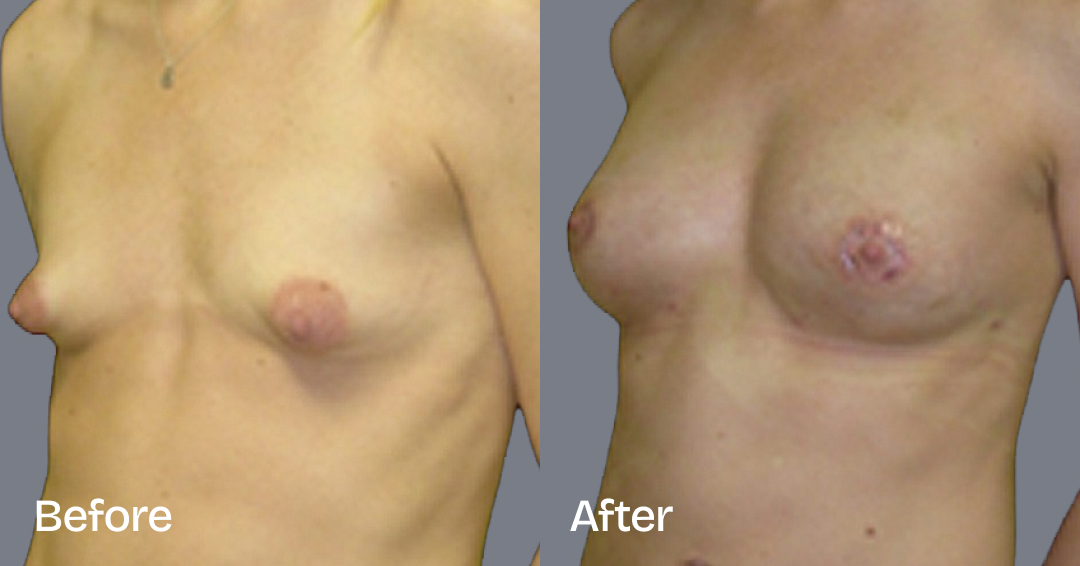
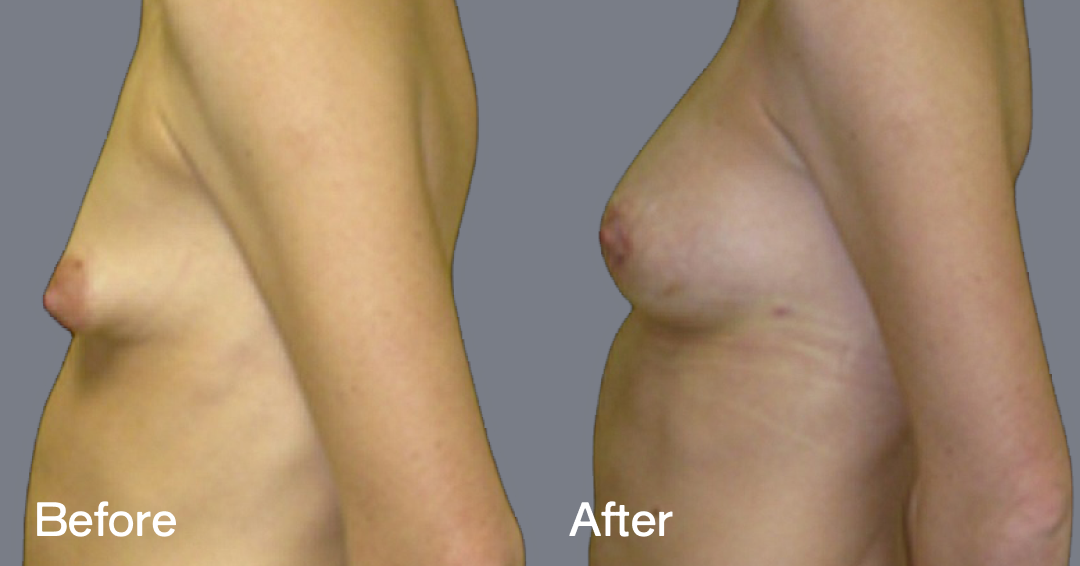
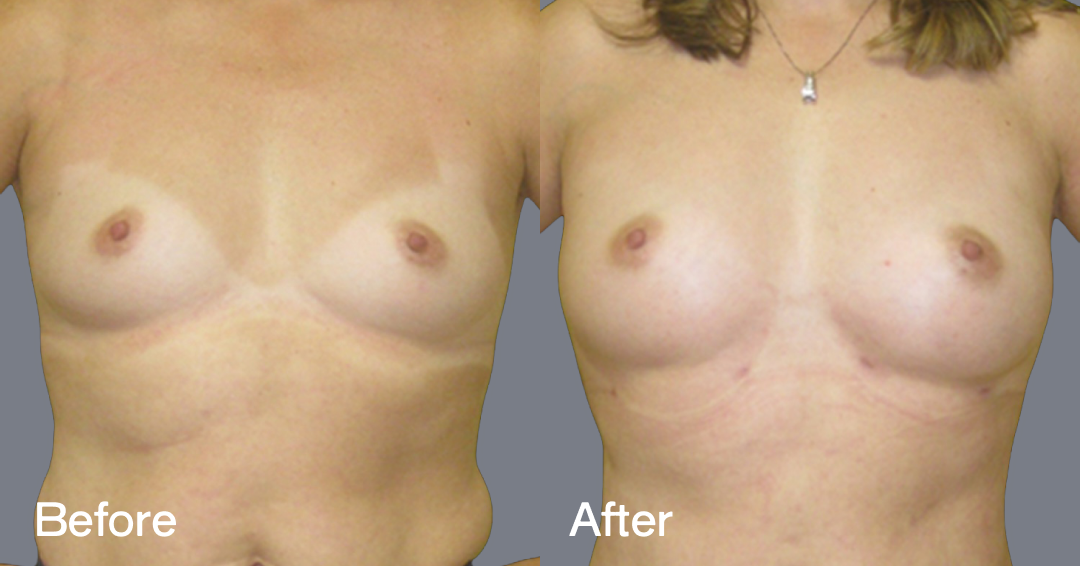
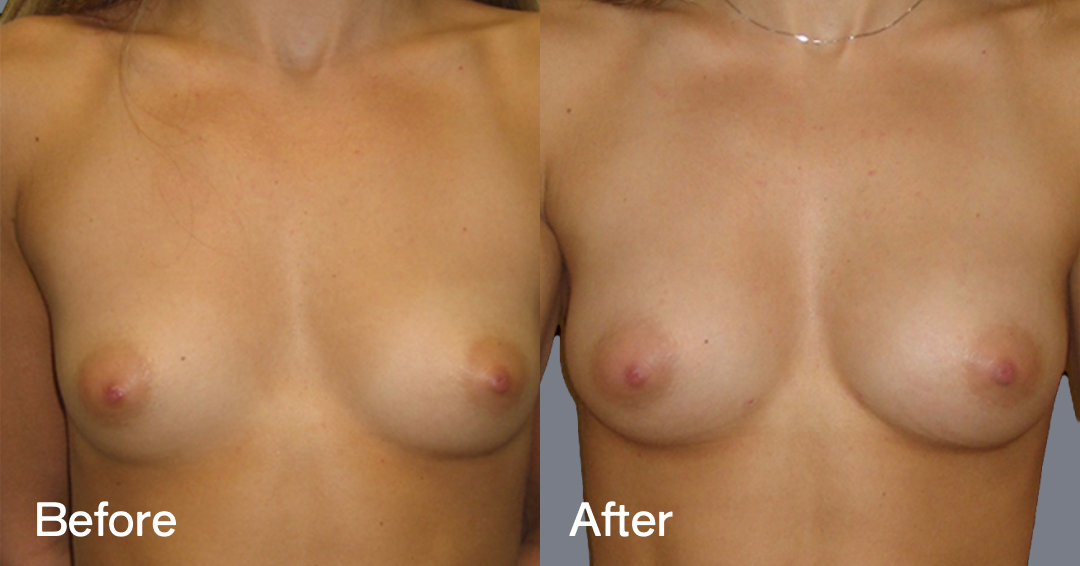
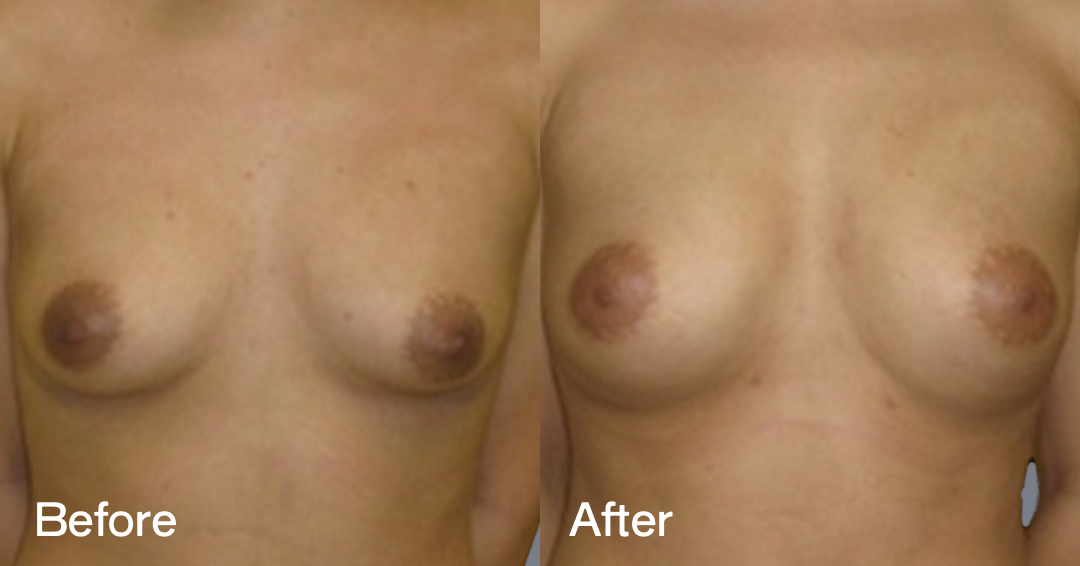
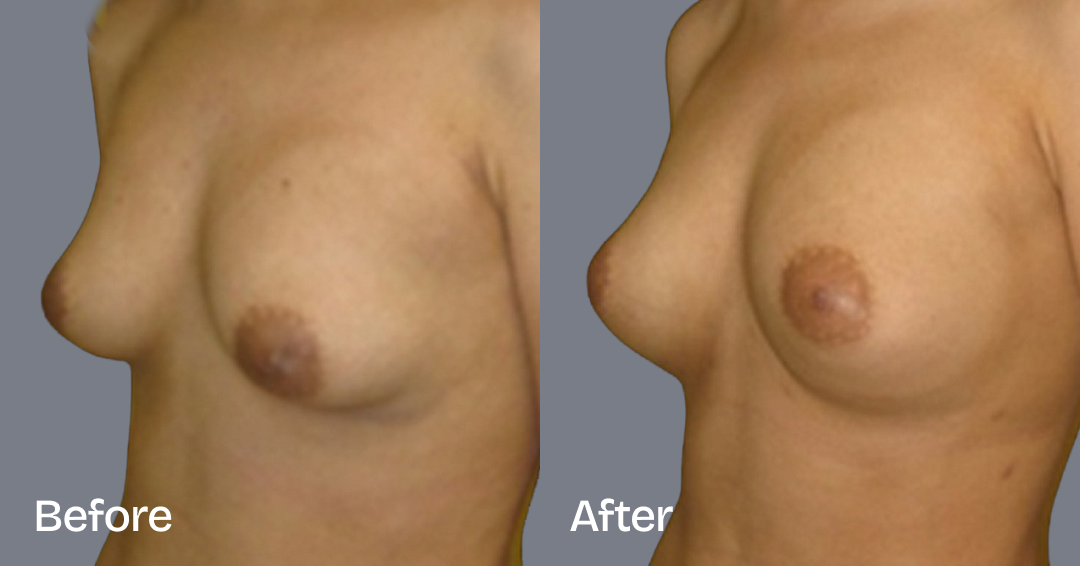
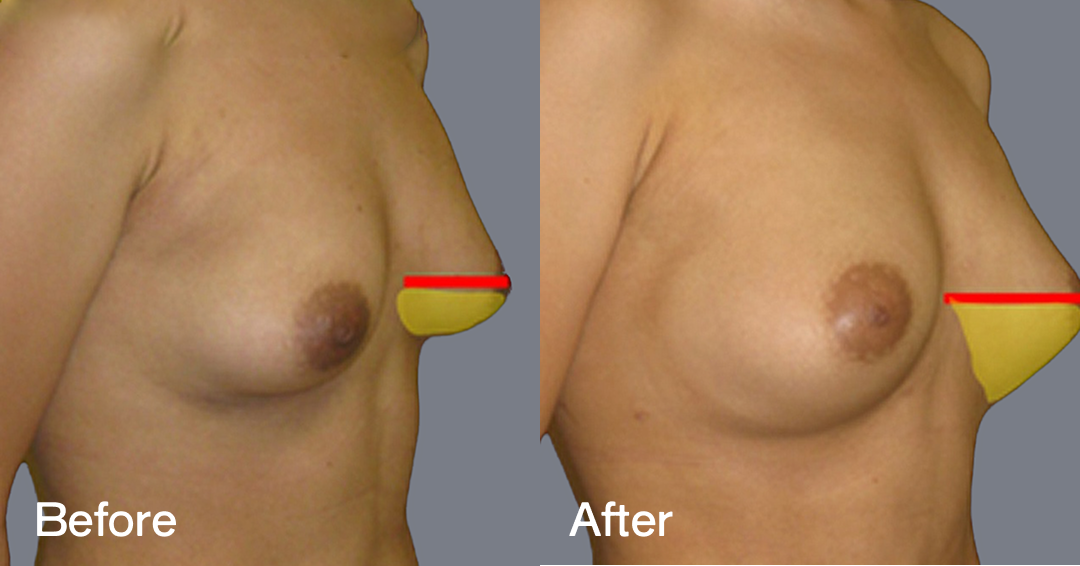
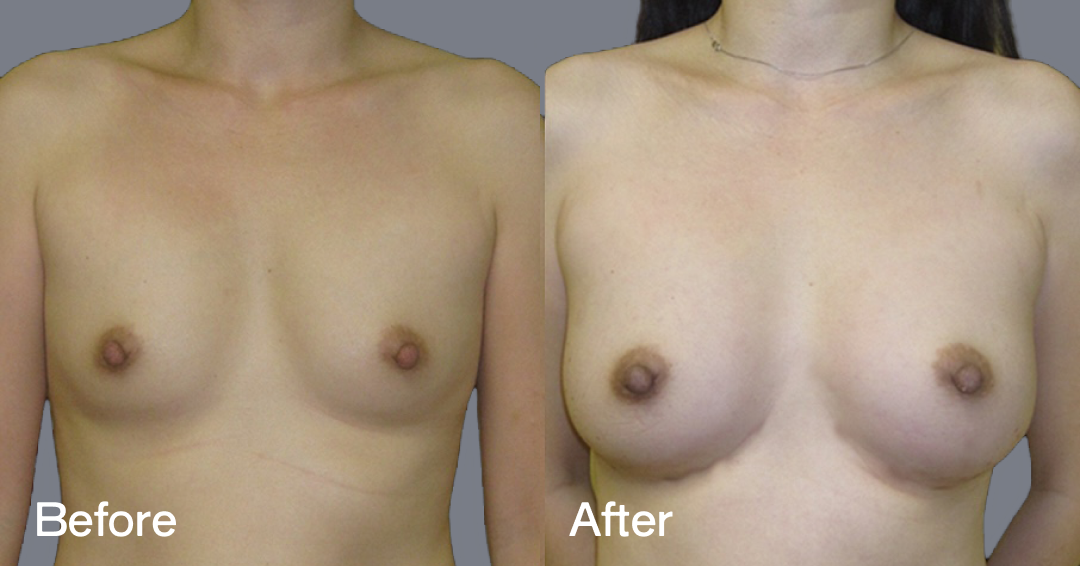
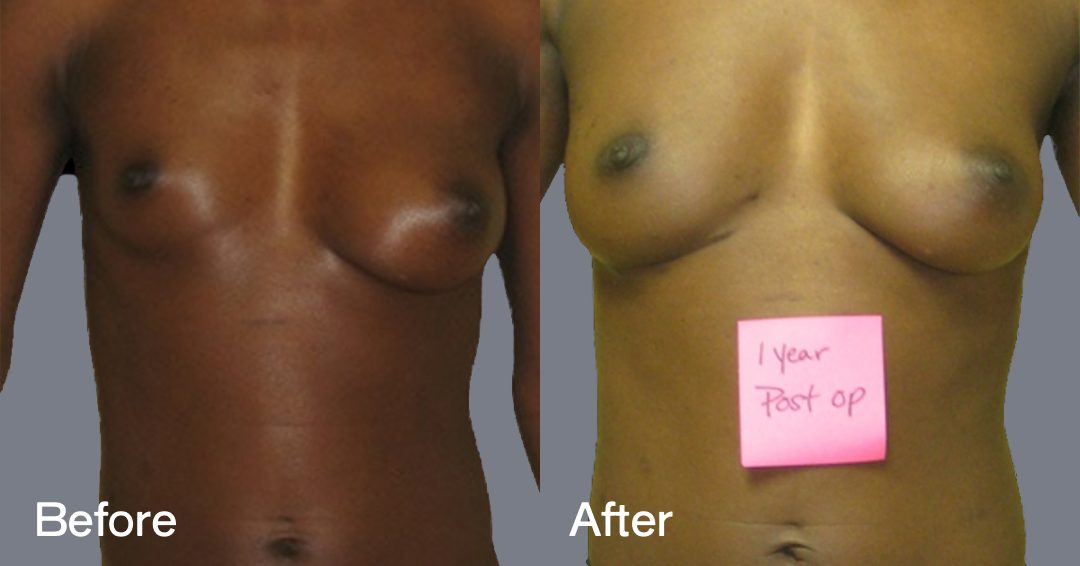
The gallery below illustrates some real-life outcomes from fat transfer breast augmentation. The nature of fat transfer results means that outcomes are unique to each patient and can vary according to individual anatomy and the body’s response to the transfer.
Benefits of Fat Transfer Breast Augmentation
Fat transfer breast augmentation may offer several benefits for appropriately selected patients, particularly those seeking measured changes in breast volume and contour without the use of implants. Outcomes vary between patients according to anatomy, fat survival, and the overall surgical plan.
Natural Look & Feel
Once fat grafts have settled in the breasts, they may feel softer than silicone implants for some patients. Surviving fat typically integrates with the existing breast tissue, although outcomes can vary according to fat survival, anatomy, and healing response.
Dual Benefit: Liposuction + Enhancement
There are two key components to fat transfer breast augmentation: First, liposuction removes fat from selected donor areas for use in the transfer, which may also provide targeted contouring depending on the surgical plan.
Secondly, the extracted fat is purified and transferred into the breasts to support modest improvements in volume and shape.
Subtle, Proportionate Outcomes
Fat transfer breast augmentation is designed to make proportionate alterations to the breasts with incremental increases in volume and targeted improvements to shape. It is generally most suitable for patients seeking refinement rather than substantial increases in breast size, although suitability and expected outcomes can only be determined during consultation.
The CREO APEX Recovery System
What to Expect: Before, During & After
To ensure our patients can understand their surgical journey in advance, clinical timelines are kept as consistent as possible. Below is a start-to-finish guide to what you can expect from fat transfer breast augmentation.
Before Surgery
– Maintain stable BMI: Keep a stable BMI of 30 or below. Use of BMI Calculator to check your BMI if needed
– Abstain from nicotine: Stop all consumption of nicotine products for at least four weeks before surgery
– Reduce alcohol consumption: Significantly reduce alcohol consumption for the two weeks leading up to surgery
– Oestrogen contraceptives/HRT: Cease courses of oestrogen contraceptives or HRT medication for at least four weeks before surgery
– Prepare the home: Prepare a comfortable space at home for rest and delegate child or pet care responsibilities for at least the initial stages of your downtime
– Practise back sleeping: In the lead-up to surgery, try to adjust to sleeping on your back, as this will be necessary throughout the recovery period
Day of Surgery
In general, the procedure lasts between two and four hours, but this depends on the number of liposuction areas. Once the procedure is complete, you will spend a period of time in a specialised recovery area to allow the effects of your anaesthetic to subside. You will be monitored closely during this period, and discharge timing can vary according to your clinical needs.
Initial Recovery
As soon as it is clinically expedient, manual lymphatic drainage (MLD) massage will be performed to help reduce fluid retention and improve circulation; this can aid wound healing.
Many patients feel comfortable returning to work and other light activities between 10 and 14 days after the procedure, but it may take between four and six weeks before you can return to strenuous activities and exercise.
Long-Term Results
This fat loss is a well-understood aspect of fat transfer, and our surgical team compensates for this loss by adding extra fat volume during the procedure. How much fat is lost varies between patients and is commonly influenced by individual biology, surgical technique, and the general quality of aftercare.
Once the majority of swelling has subsided and surviving fat has settled, any surviving fat is typically considered stable, provided there are no significant fluctuations in weight.
Risks, Limitations & Considerations
As with any surgery, fat transfer breast augmentation carries potential risks and limitations. These risks vary between patients according to factors such as anatomy, general health, healing response, and the extent of the procedure.
Potential risks and complications can include:
- Loss of sensation
- Irregularities or asymmetry in the breasts
- Fat reabsorption
- Discolouration of the skin
- Wrinkling and skin looseness
- Unevenness or dimpling of the skin
- Reactions to anaesthesia
- Fat necrosis
- Fat embolism
A proportion of transferred fat is expected to be reabsorbed by the body, and outcomes can vary according to individual healing and fat survival. In some cases, additional procedures may be required to achieve or maintain the desired volume.
Our surgeons follow detailed surgical protocols and monitor patients closely throughout recovery to help minimise the risk of complications. However, no surgical procedure is without risk, and these risks will be discussed in detail during your consultation as part of the decision-making process.
Costs of Fat Transfer Breast Augmentation in London
In general, the cost of fat transfer breast augmentation at CREO Clinic starts from £8,500. Pricing varies according to factors such as the number of liposuction treatment areas, the complexity of the surgical plan, and the length of the procedure. The exact cost of surgery can only be confirmed following consultation and clinical assessment with Dr Tillo.
The price of your fat transfer augmentation includes:
- Fees for the surgeon
- Fees for anaesthesia and anaesthetist
- Use of CQC-registered surgical facilities
- All preoperative assessments and blood tests
- Post-operative monitoring and follow-up consultations
- Our APEX aftercare package, including laser scar treatments where clinically appropriate
- A post-surgical recovery kit, including Hibiscrub, absorbent pads, Bio-Oil, and recovery-support products
What Influences Cost
Multiple factors can influence the cost of fat transfer breast augmentation, including:
- The extent of the surgical plan and any necessary pre-operative assessments
- The number of donor areas requiring liposuction
- The overall length and complexity of your procedure
- Associated surgeon, nursing, and hospital fees (rise according to the length of the procedure)
- Whether any additional policies or staged procedures are selected
CREO Top-up policy
Because transferred fat cells can change in volume alongside fluctuations in body weight, some patients may experience changes in breast volume over time. Creo Clinic offers an optional fat transfer top-up policy, intended for patients who may wish to undergo an additional fat grafting procedure in the future.
The policy costs £2,250 and must be arranged before the initial surgery. It covers one additional fat transfer procedure to the breasts, using fat harvested from one donor area.
The top-up policy is not a revision guarantee, and does not prevent future changes in breast volume or shape. Suitability for any future top-up procedure would still require clinical assessment at the time.
Typical Price Range
An approximate price range for fat transfer breast augmentation in London is between £7,000 and £17,000, depending on the complexity of the procedure and the number of liposuction areas treated.
Financing Options
Financing options are available through Chrysalis Finance for patients who wish to spread the cost of treatment. Available plans may include twelve-month interest-free instalments, as well as longer-term finance arrangements with applicable interest rates.
All borrowing is subject to approval, and financial considerations should be assessed alongside clinical suitability during the decision-making process.
Why Choose CREO Clinic
Patients choose CREO Clinic for its emphasis on clinical standards, surgeon-led care, and continuity throughout the treatment process. Fat transfer breast augmentation procedures are performed by surgeons with specific experience in fat transfer and body contouring procedures, with treatment plans guided by clinical assessment and patient suitability.
Specialist Surgeons by Anatomical Area
CREO Clinic works with surgeons with a strong focus on the procedures they perform. Both Dr Tillo and Dr Del Vecchio have extensive experience in fat transfer procedures and related surgeries, with clinical practice centred on body contouring and fat grafting techniques.
Surgeon-Led Planning & Decision-Making
All planning and procedural decision-making at CREO Clinic is managed by the surgical team rather than commercial advisors. Surgical recommendations are based on clinical assessment, patient anatomy, and the suitability of the proposed procedure.
Integrated Aftercare & Long-Term Support
The APEX Aftercare plan is included as part of the treatment process and provides ongoing post-operative support throughout recovery. This may include lymphatic drainage massage, compression garments, post-procedural recovery products, follow-up consultations, and direct access to the clinical team during recovery.
Patients are monitored throughout the healing process, with follow-up appointments used to assess recovery progress and address any clinical concerns as they arise.
FAQs: Fat Transfer Breast Augmentation
How much can breast size increase with fat transfer?
How long do fat transfer breast augmentation results last?
What percentage of the transferred fat survives?
How long does a fat transfer breast augmentation take?
Fat transfer does not carry risks associated with implants, such as rupture or capsular contracture. However, risks related to fat, such as fat necrosis, embolism, and variable retention rates, are unique to fat transfer. The appropriate procedure for you will depend on your individual anatomy, aesthetic goals, and a clinical assessment with Dr Tillo.A fat transfer breast augmentation usually takes 2-3 hours in surgery, depending on the amount of fat to be moved and the number of liposuction areas targeted.