






Buttock lift surgery may be appropriate for patients with excess lax buttock skin, as confirmed through a one-to-one clinical consultation.
The aim of a buttock lift is to adjust the proportions of the buttocks and help reduce symptoms such as chafing and irritation by firming the surface skin. By removing excess skin and tissue, the remaining skin can be repositioned to create a smoother contour, which may improve the overall appearance and support greater definition of the buttocks, depending on individual skin quality and anatomy.
All buttock lift procedures at the CREO Clinic are performed by Dr Omar Tillo, a member of the British Association of Aesthetic Plastic Surgeons (BAAPS) and Fellow of the Royal College of Surgeons (FRCS). Dr Tillo focuses exclusively on body contouring procedures, including buttock lifts and related complementary surgeries.
At CREO, all clinical care is surgeon-led, meaning surgical decision-making and procedural planning are managed exclusively by the surgical team and guided by clinical suitability, patient goals, and individual anatomy.
Suitability for buttock lift surgery can only be determined following consultation and clinical assessment.
Treatments
1Results
6 weeksAnesthesia
Sedation or General AnaesthesiaSurgery Time
2-3 HoursHospital Time
6 HoursMobility
24 HoursWashing
2 daysOff-Work
1-2 weeksExercise
4 weeksFull Recovery
6-8 weeksWhat Is a Buttock Lift and What It Is Not
Buttock lift surgery is designed to address excess skin and tissue affecting the buttock area. The sections below explain how a buttock lift differs from other procedures that focus primarily on volume enhancement or fat transfer.
Buttock lift vs Brazilian butt lift (BBL)
A BBL works to add volume and projection to the buttocks via fat transfer, whereas a buttock lift can firm up the surface skin of the buttocks to help improve the contour, tone, and definition of the buttock area.
When skin removal is required over volume enhancement
Anyone experiencing clinically confirmed skin laxity causing the buttocks to sag may be an appropriate candidate for a buttock lift, as the elasticity of this skin and contour cannot be restored purely by adding fat to the area via fat transfer. If the lax skin has become a physical issue, only excising the skin can help resolve it.
In cases where the goal is improved projection, augmentations such as buttock implants or a BBL may be more suitable.
Why Patients Consider Buttock Lift Surgery
Patients may consider buttock lift surgery for a range of physical and aesthetic reasons, most commonly where excess skin affects comfort, body proportion, or clothing fit.
Loss of skin elasticity after weight loss
When we gain weight, the skin stretches and can lose its elasticity. When that weight is lost again, the resulting inelastic skin around the buttocks can hang and become both a physical and aesthetic concern. Unfortunately, it is not possible to restore full elasticity to the skin, but buttock lift surgery can excise it to help firm up buttock contour.
Changes in body contour following pregnancy
Pregnancy and childbirth can have significant effects on the physique, including weight fluctuations that cause sagging skin. A buttock lift can be planned as an isolated adjustment to the skin of the buttocks, or as one phase of a comprehensive post-childbirth restoration of the physique.
Discomfort or functional concerns from excess skin
Drooping skin on the buttocks can lead to hygiene issues caused by friction and trapped moisture, such as intertrigo in the buttock folds, which can become itchy and painful. The excess skin can also affect physical activity by causing chafing or changing the fit and function of clothing. Removing the excess skin via a buttock lift can help to address these issues by reducing friction and moisture.
How the Procedure Works
Buttock lift surgery is tailored according to the location and severity of excess skin, alongside individual anatomical considerations. Surgical planning, incision placement, and recovery recommendations are determined during consultation.
Surgical techniques and incision placement
Incision placement during buttock lift surgery varies according to the location and severity of excess skin, as well as individual anatomical considerations identified during consultation.
| Technique | Incision location | Best suited for | Scarring |
| Upper buttock lift | Across the top of the buttocks | Significant skin laxity requiring a more extensive lift | Longer scar along the upper buttock |
| Lower buttock lift | Lower crease where the buttocks meet the thigh | Moderate skin laxity affecting the lower buttock region | Less pronounced; positioned within the crease |
| Butterfly technique | Both sides of the buttocks from the central crease outwards | Moderate laxity affecting the upper buttock region | Butterfly-shaped scar; generally less invasive than an upper lift |
| Lateral buttock lift | Outer sides of each buttock | Mild to moderate skin laxity with localised excess tissue | Minimal scarring; along the outer buttock |
How much skin is removed and why it varies
The amount of skin removed during a buttock lift depends on the extent, location, and severity of excess tissue. During surgical planning, Dr Tillo assesses whether the skin laxity affects the upper or lower buttock region, and whether the laxity is mild, moderate, or severe.
Anaesthesia and length of surgery
All buttock lifts are performed in CQC-registered surgical facilities and typically take between two and three hours. Surgery is most commonly performed under general anaesthetic, although sedation may be appropriate in selected cases, depending on patient needs and procedural requirements. Anaesthetic recommendations are discussed during consultation and confirmed as part of the surgical plan.
Hospital stay and surgical setting
A buttock lift is typically performed as a day case procedure, with most patients remaining in the hospital for approximately six hours following surgery. Overnight stays may be recommended or requested in some cases, depending on individual recovery needs and the extent of the procedure. All patients are monitored closely after surgery, and discharge timing is determined through clinical assessment by the surgical team.
Is This Procedure Right for You?
In order to understand if a buttock lift is right for your particular clinical and aesthetic needs, a clinical consultation will be necessary. Below are some of the criteria Dr Tillo will use to assess your suitability:
Who this procedure is suitable for
– Have excess inelastic skin drooping down from the buttocks
– Have imbalances of proportion in the buttocks
– Are at least 18 years old
– Wish to make improvements to the tone and definition of the buttocks rather than increasing volume
Who this procedure may not be right for
– Are under 18 years old
– Are active consumers of nicotine and are unwilling to abstain for four weeks before the procedure
– Are prone to fluctuations in weight
– Are interested in increasing the volume of their buttocks
– Do not have realistic expectations of the improvements a buttock lift can make
– Have underlying medical issues that increase the risk of surgical complications
The importance of stable weight and skin quality
The main aim of a buttock lift is to reduce excess lax skin and work to tighten up the buttocks to give them an improved contour. This is highly dependent on the quality of skin at the treatment site, as poor skin quality may limit improvements and affect outcomes.
The timing of your buttock lift is also key and may be most appropriate after significant weight loss or pregnancy. If a buttock lift comes before pregnancy or a period of weight fluctuation, its outcomes could be diminished.
When a different procedure may be more appropriate
Alternative treatments may be more appropriate in cases where a patient wishes to add volume to the buttocks rather than addressing skin laxity. A BBL procedure may be better suited to adding volume and projection, or a lower back lift may be appropriate for helping reduce laxity, depending on the location of the excess skin. This will be discussed in detail with Dr Tillo during your consultation.
Procedure Variants & Alternatives
In some cases, alternative procedures or combined approaches may be more appropriate depending on whether the primary concern relates to excess skin, volume loss, or surrounding tissue laxity.
Lower body lift vs isolated buttock lift
A lower body lift is a comprehensive combination of procedures that excise lax skin around the waist, buttocks, and outer thighs. This is a more complex procedure, which may be better suited to patients who have undergone a period of significant weight loss. A lower body lift has more clinical reach than a buttock lift, which solely targets inelastic skin on the buttocks.
Due to its complexity, a lower body lift is a longer procedure than a buttock lift, with an extended period of downtime.
Buttock lift vs liposuction
Whereas a buttock lift removes lax skin and improves the tone of the buttocks, liposuction is designed to enhance contour by removing stubborn pockets of excess fat.
Both are targeted surgeries to define specific areas of the body, but liposuction removes fat, whereas a buttock lift removes drooping excess skin and tissue. In some cases, the surgeries can be combined; first removing fat from the buttocks using liposuction, then firming up the surface of the skin with a buttock lift.
Before & After Results
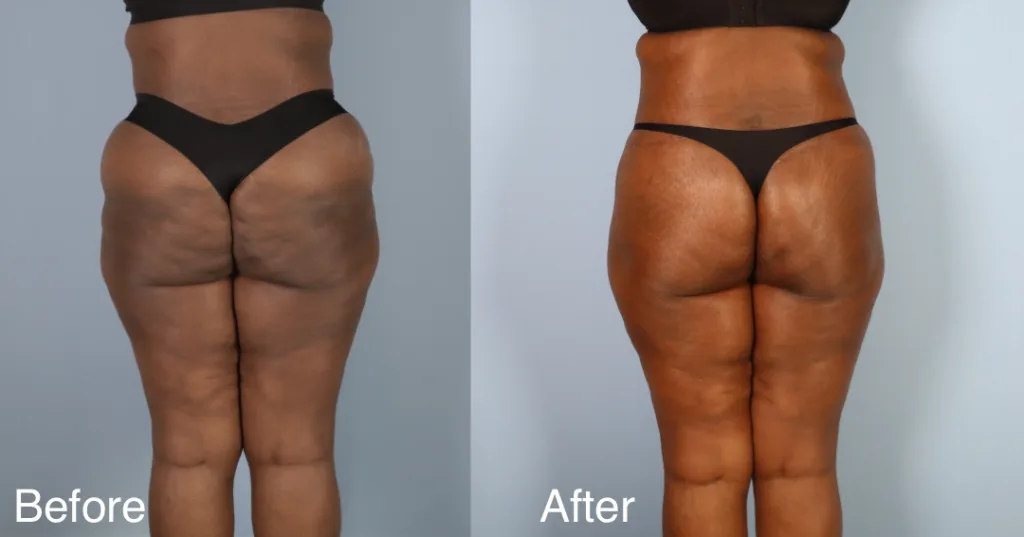
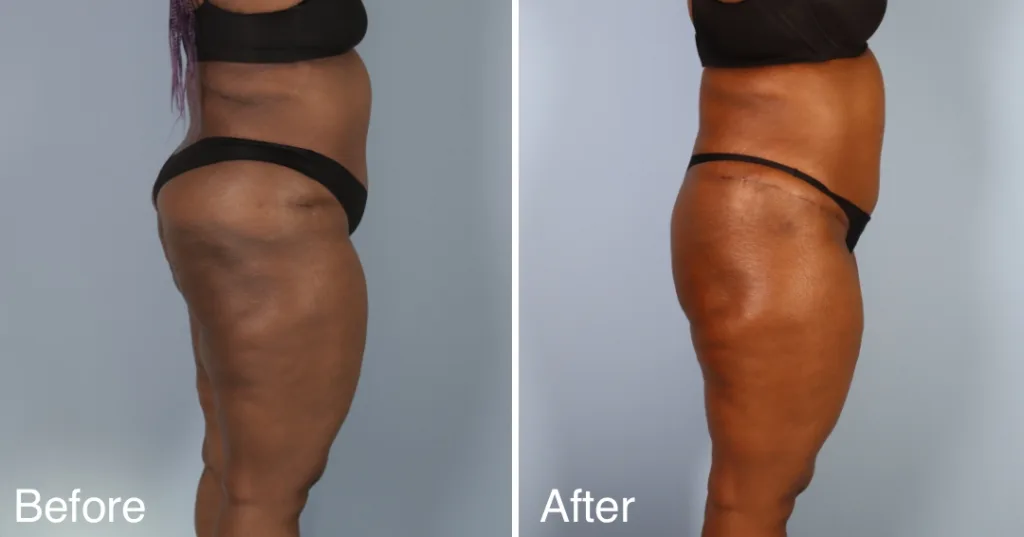
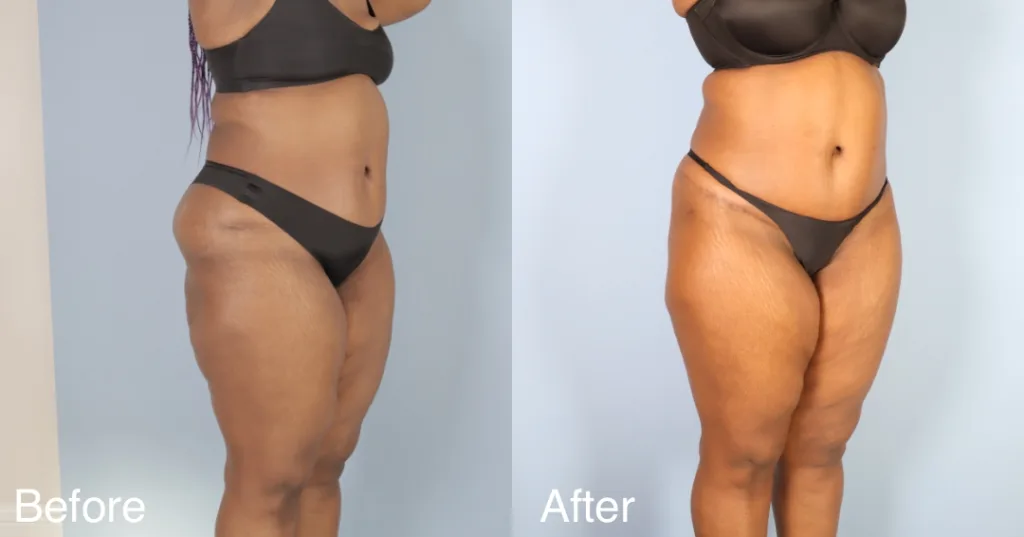
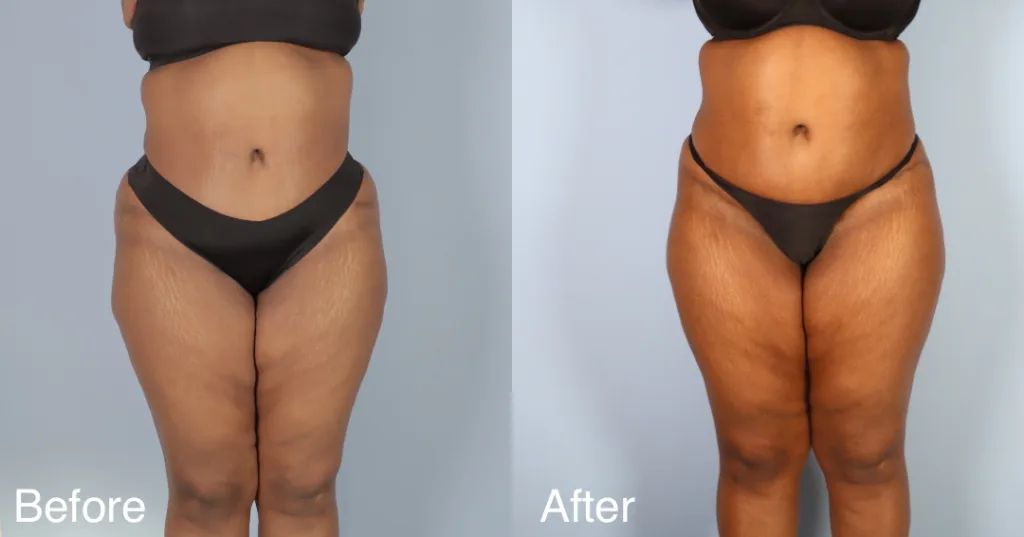
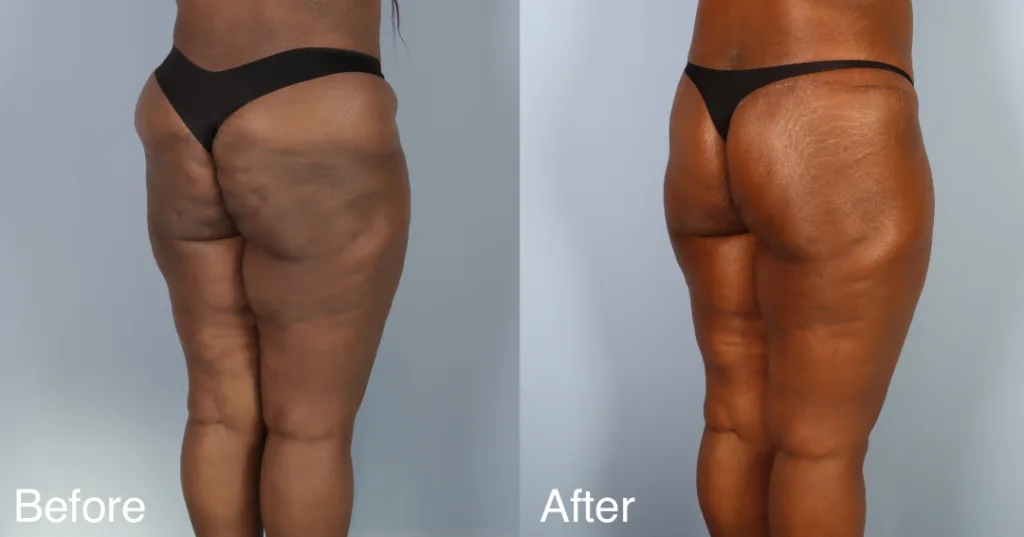
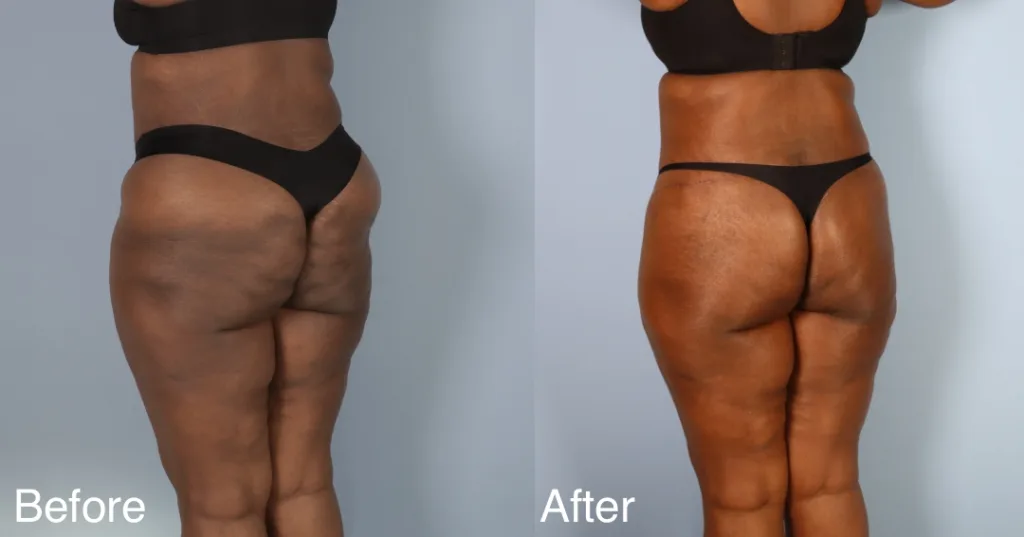
The gallery below provides illustrative examples of previous buttock lift outcomes. These images are intended to demonstrate the types of improvements that may be achievable, although results vary between patients based on factors such as anatomy, skin quality, and the extent of surgery required.
What results are typically achievable
Following buttock lift surgery, patients may notice a reduction of excess skin and an improvement in the overall shape and firmness of the buttock area. Improvements in comfort and symptoms associated with skin laxity, such as chafing or hygiene concerns, may also occur depending on the individual case.
How results vary between patients
As with any surgery, the results of a buttock lift are specific to the individual. Outcomes may be influenced by genetics, body composition, wound healing, lifestyle factors, and adherence to post-operative recovery guidance. Expected improvements and procedural limitations will be discussed during consultation to help establish realistic expectations.
Benefits of Buttock Lift Surgery
The effects of buttock lift surgery vary between patients depending on anatomy, skin quality, and the extent of tissue removal required.
Improved body contour and proportion
Removing excess sagging skin can help to smooth the surface of the buttocks and improve overall proportion in the area. Depending on the individual and the extent of skin laxity, a buttock lift may help create a firmer appearance and improve balance with the surrounding areas of the body.
Reduction of excess or hanging skin
Removing hanging skin folds can help reduce friction and trapped moisture that may contribute to hygiene concerns, chafing, and limitations during physical activity.
Improved comfort in clothing and movement
Excess hanging skin around the buttocks can affect clothing fit and physical comfort during exercise, sitting, or daily movement. Removing inelastic skin folds during buttock lift surgery may help improve comfort levels and movement, although outcomes vary between patients.
The CREO APEX Recovery System
What to Expect: Before, During & After
The CREO Clinic plans each surgical journey in detail to support consistency and informed preparation. Below is a general overview of the buttock lift timeline and the stages patients may expect before, during, and after surgery.
Preparing for surgery
– Maintain a stable BMI of 30 or below (Use our BMI calculator to check)
– Refrain from consuming nicotine products for four weeks prior to surgery
– Limit alcohol intake in the two weeks before surgery
– Stop taking oestrogen-based contraceptives or HRT medication for four weeks before surgery
– Prepare the home for recovery and arrange any pet or childcare responsibilities for the initial recovery period
The day of your procedure
Early recovery period
Longer-term healing and final results
Risks, Limitations & Considerations
As with any surgical procedure, a buttock lift carries potential risks and limitations that should be considered carefully during the decision-making process.
Scarring and how it is managed
Some degree of scarring is expected after any surgery and should be considered part of the recovery process. The post-surgical recovery package may include supportive treatments such as silicon tapes applied after surgery, compression garments to help manage swelling, and manual lymphatic drainage (MLD) massage to support circulation and fluid drainage. Where clinically appropriate, additional scar management treatments such as laser therapy or steroid injections may also be recommended.
The placement and extent of scarring depend on the surgical technique used, as upper, lower, butterfly, and lateral buttock lifts each involve different incision patterns. As part of the APEX recovery protocol, Dr Tillo uses advanced suturing techniques designed to help support scar healing, although scar appearance varies between patients.
Potential complications and how they are mitigated
As with any surgery, a buttock lift carries potential risks and complications. The surgical team works to reduce these risks through careful surgical planning, regulated operating environments, and appropriate post-operative monitoring.
Examples of potential complications include:
- Infection at wound sites
- Poor or delayed healing
- Asymmetry in final results
- Seroma
- Adverse reactions to anaesthetic
Limitations of the procedure
A buttock lift is designed to address excess skin and skin laxity rather than increase buttock projection or volume. A one-to-one consultation with Dr Tillo is therefore important in order to assess where the skin laxity issue is located (e.g. buttocks, lower back, upper thigh), and determine which procedure may be most appropriate for your goals and anatomy.
Possibility of revision surgery
Revision surgery may occasionally be required following a buttock lift, although this is relatively uncommon. Any concerns regarding healing or outcomes are assessed on a case-by-case basis by Dr Tillo with recommendations based on individual clinical findings and recovery progression.
Costs & Financing Options
The cost of buttock lift surgery in London at the CREO Clinic varies depending on factors such as the extent of skin laxity, the surgical technique used, and the complexity of the procedure.
The cost of a buttock lift typically ranges between £9,000 and £13,500.
Pricing is discussed following consultation, once Dr Tillo has assessed individual clinical requirements and surgical planning considerations.
What is included in the cost
All prices at the CREO Clinic include:
- Use of CQC-registered surgical facilities
- Nurses’ fees
- Surgeon fees
- Blood tests, including full blood count and urea and electrolytes
- Direct access to clinical advice throughout recovery
- The APEX aftercare package, including manual lymphatic drainage massage, laser scar treatments, and a detailed post-procedural recovery kit with immune-supportive vitamins, Hibiscrub, absorbent pads, and Bio-Oil to help improve healing.
- Compression garment
- Anaesthetic fees
- A specially designed pillow to aid comfortable sitting during recovery
Factors that influence pricing
The CREO Clinic clearly outlines the factors that influence the price of your procedure. These may include the complexity of the surgery, whether an overnight stay in the hospital is required, and whether any additional procedures are combined with the buttock lift.
Financing and payment options
Financing and payment options are available via CREO Clinic’s partner, Chrysalis Finance. Available options include 12-month interest-free loans, as well as longer-term loans with applicable rates of interest.
All borrowing is subject to approval.
Why Choose CREO Clinic
The CREO Clinic approaches buttock lift surgery through a surgeon-led model focused on clinical assessment, procedural planning, and structured aftercare support.
Specialist surgeons by anatomical area
A principle of the CREO Clinic is to provide surgeons who work within specific anatomical areas. Body contouring surgeon Dr Tillo exclusively focuses on procedures from the neck down and has experience in performing buttock lift surgery and related body contouring procedures.
Surgeon-led decision-making
Decisions regarding surgical planning are made by the surgical team and guided by clinical suitability, patient goals, and anatomical considerations. Recommendations are based on surgeries that are considered clinically appropriate following consultation and assessment.
Structured aftercare and recovery support
Aftercare at CREO is integrated into the surgical plan, with the APEX aftercare structure providing support throughout recovery. This may include supplemental vitamins, post-operative treatments, and ongoing clinical guidance where appropriate. Patients are also able to contact the surgical team during their recovery if clinical guidance and advice are required.
A selective, patient-first approach
Treatment recommendations at the CREO Clinic are based on clinical assessment, patient goals, and suitability for surgery. In some cases, surgery may not be considered appropriate if the potential limitations or risks outweigh the expected benefits for the individual patient. All borrowing is subject to approval.
Buttock Lift FAQ
What is the difference between a buttock lift and a BBL?
Will a buttock lift increase volume or only remove excess skin?
What kind of scarring should I expect after a buttock lift?
Over time, the appearance of scars may improve with adequate aftercare.