




A skinny BBL may be appropriate for patients with a naturally low body mass index (BMI) who still have sufficient donor fat available for transfer, as determined via clinical assessment.
The procedural technique is identical to a standard BBL, extracting fat from areas where it is in excess and transferring the fat cells to target areas of the buttocks to help improve shape and balance. The main difference is that the fat is typically extracted from more areas to reach an adequate amount of transferable fat.
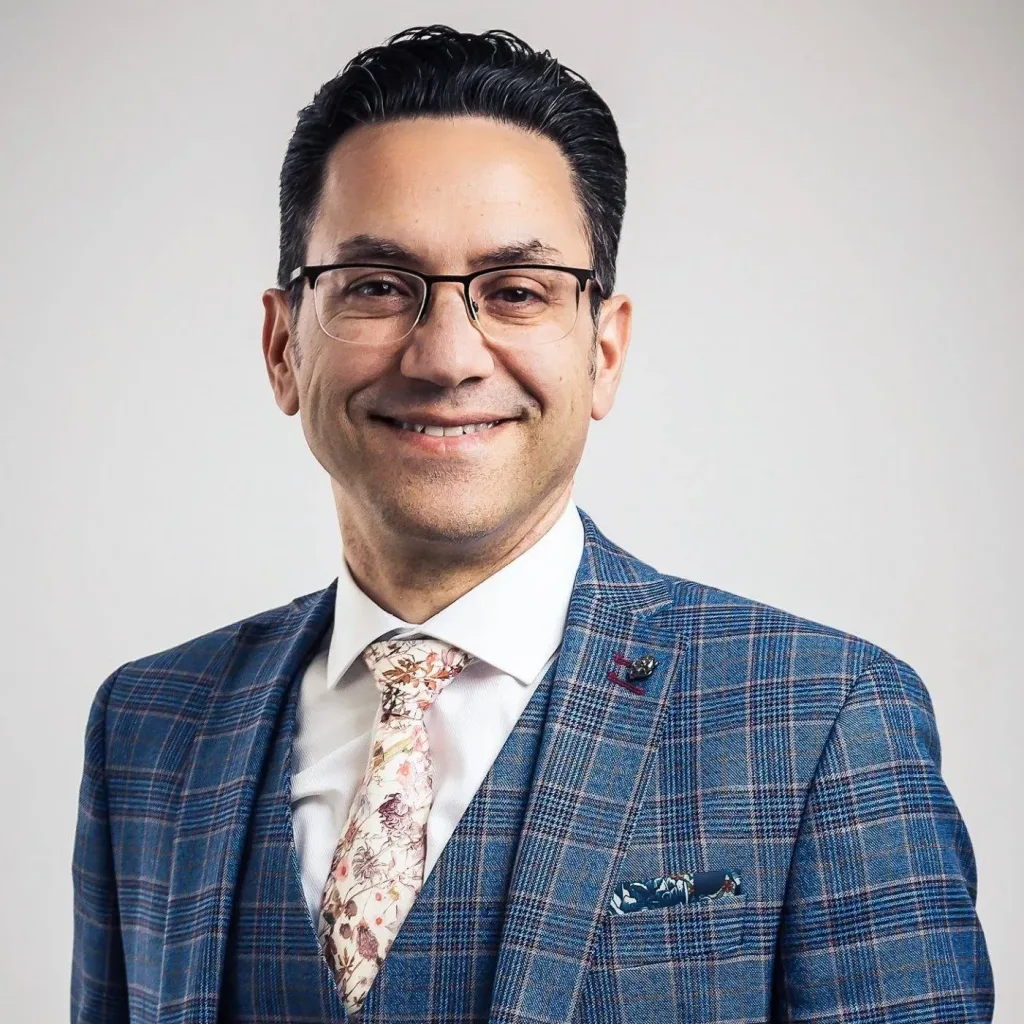
At CREO, all skinny BBLs are performed by Dr Omar Tillo, a member of the British Association of Aesthetic Plastic Surgeons (BAAPS) and Fellow of the Royal College of Surgeons (FRCS). He is a body contouring specialist who led the development of the current BBL safety guidelines in the UK, which he teaches to other BAAPS-accredited surgeons around the country. His approach to a skinny BBL aims to achieve positive long-term outcomes through careful planning, advanced surgical technique, and a focus on aligning results with the unique proportions of the patient.
Dr Tillo pioneered the BEST-F (Buttock and Superficial Transfer of Fat) technique: a surgical technique used to transfer fat above the gluteal muscles using ultrasound guidance; a safety-first approach to fat transfer.
Surgery at a glance
Treatments
1Results
6 monthsAnesthesia
Sedation or GeneralSurgery Time
2-4 HoursHospital Time
6 HoursMobility
24 HoursWashing
2 DaysOff-Work
10 DaysExercise
2-3 WeeksFull Recovery
4-6 WeeksWhy This Procedure Matters
A skinny BBL may be considered in a range of clinical scenarios where buttock volume or proportion does not align with the patient’s overall physique. The following outlines common contexts in which the procedure may be explored, subject to clinical assessment.
Restoring Proportion in Naturally Slim Patients
Some patients who are naturally slim may be considered for a skinny BBL where there is sufficient donor fat and a clinical indication to adjust buttock proportions. The procedure can subtly improve projection in the buttocks and provide adjustments to volume and shape that match your natural physique, following clinical assessment.
Post-Weight Loss or Lifestyle Changes
A skinny BBL may also be considered in cases where changes in body composition, such as weight loss, have affected buttock volume or contour. In these situations, the procedure may help adjust proportions, depending on factors such as skin quality, fat availability, and overall tissue quality, all of which are assessed during consultation.
When Subtle Change Is Preferred
Fat transfer typically results in incremental changes in volume and shape rather than large-volume enhancement. Many women prefer a subtle refinement of their curves, rather than changes that could disrupt their natural proportions. For patients seeking measured adjustments that align with their natural proportions, a skinny BBL may be considered if clinically appropriate, with outcomes dependent on individual anatomy, fat survival, and surgical planning.
How the Procedure Works
The skinny BBL procedure involves several stages, including fat harvesting, processing, and transfer. Each stage is adapted based on individual anatomy, fat availability, and overall treatment goals, and is planned in detail during consultation.
Fat Harvesting in Low Body Fat Patients
For patients with a lower BMI, identifying suitable donor areas for fat harvesting can be more limited, and fat is often distributed in smaller volumes across multiple sites. This typically requires careful, multi-site liposuction planning to obtain an adequate volume for transfer, where possible. A thorough clinical assessment is required to determine whether sufficient fat is available for the procedure and whether a skinny BBL is appropriate.
A skinny BBL uses relatively lower volumes of transferred fat to adjust buttock proportions, with outcomes dependent on individual anatomy, fat quality, and fat survival following transfer.
Fat Processing and Transfer Technique
Once sufficient excess fat has been extracted via liposuction, the fat is processed and purified before being strategically injected into specific areas of the buttocks, with placement planned to remain above the gluteal muscle in line with current safety protocols. This approach supports proportionate contouring while prioritising procedural safety.
Anaesthetic and Surgical Environment
The procedure is typically performed under general anaesthesia or sedation (if requested and clinically appropriate) and may take between 2-4 hours, depending on the number of liposuction areas and procedural complexity. All skinny BBL procedures are carried out in CQC-registered facilities to maintain appropriate clinical and safety standards.
Is This Right for You
Suitability for a skinny BBL is decided by Dr Tillo based on key factors such as body proportions, fat availability, and your overall physical and mental health.
Who it’s for
– Have a slimmer physique, but sufficient fat cells available for transfer.
– Have pockets of stubborn fat that cause asymmetry around the body
– Are 18 years old or above
– Are interested in making proportionate changes to the hips and buttocks, rather than drastic changes to projection and volume
– Have realistic expectations of fat survival and long-term outcomes
Who It May Not Be Right For
– Are under 18
– Do not have sufficient available fat cells
– Consume nicotine products regularly and feel unable to abstain for four weeks before surgery
– Are prone to fluctuations in weight
– Have underlying health conditions that could lead to surgical complications
– Have expectations beyond what can be realistically achieved by a fat transfer
Procedure Variants & Alternatives
In cases where a skinny BBL is not suitable, or where different outcomes are required, alternative approaches may be considered. These options vary in technique, suitability, and expected results.
Standard BBL
Staged Fat Transfer
Buttock Implants
Non-Surgical Alternatives
It should be noted that filler treatments are typically more limited in their impact and longevity when compared to fat transfer, but Dr Tillo will assess your suitability for filler applications during your initial consultation.
Benefits of Skinny BBL
The potential benefits of a skinny BBL depend on individual anatomy, treatment goals, and surgical planning. The following outlines commonly considered advantages in suitable patients.
Use of Your Own Tissue
The use of autologous fat (fat from your own body) allows for targeted contouring of donor areas where excess fat is present, depending on individual fat distribution and surgical planning. Secondly, it means that the transferred tissue is biologically compatible with the patient, which may reduce the likelihood of certain adverse reactions associated with synthetic materials.
No Implants or Foreign Materials
For some patients, the use of silicone implants or dermal fillers may be less appropriate or desirable as a long-term solution for addressing buttock proportions. A skinny BBL may be considered as an alternative in suitable cases, as it uses the patient’s own tissue rather than implanted or synthetic materials.
The CREO APEX Recovery System
What to Expect: Before, During & After Surgery
Understanding the surgical journey is an important part of decision-making. The process can be divided into pre-operative preparation, the procedure itself, and the stages of recovery that follow.
Before Surgery
Oestrogen contraceptives/HRT – In the four weeks leading up to the surgery, you will need to stop taking oral contraceptive pills or HRT medication, as this can help reduce the risk of thrombosis
Maintain your BMI – Try to keep a stable and healthy BMI of 30 or below, as this will reduce complication risk (use our BMI Calculator to check)
Reduce alcohol intake – Limit your consumption of alcohol in the two weeks leading up to the procedure to help improve post-surgical healing
Prepare your home for recovery – Try to adapt your home to your recovery needs in advance, making it as comfortable as possible and delegating pet care and child care for at least the initial stages of your recovery
Abstain from nicotine – Avoid smoking or any nicotine consumption for at least four weeks before your surgery, as nicotine can increase surgical risks
Day of Surgery
Once the surgery is complete, you will spend a period of time in a specialised recovery area while the effects of your anaesthetic subside. Discharge timing can vary according to the procedural steps and individual recovery.
Initial Recovery
The CREO Clinic provides manual lymphatic drainage massages to all BBL patients as a way to help reduce fluid retention, improve circulation, and support a more comfortable recovery overall.
Patients are typically advised to avoid sitting on their buttocks during the first three weeks of their recovery; this reduces the risk of disturbing the recently transferred fat cells. CREO provides a BBL pillow that should be used whenever patients need to sit during recovery.
As the swelling at your treatment site subsides, you may begin to see the skin of the buttocks become more elastic and soften into a more natural-looking contour. This stage is referred to as the ‘fluffing’ stage, and is a positive sign that the recovery is progressing as expected.
In many cases, patients feel comfortable returning to work and light activities after 2-3 weeks of recovery. A full recovery is typically expected after approximately six weeks, with gradual improvements in the months that follow.
Final Results
Your BBL results should become consolidated at the six-month mark, having completed the fluffing phase and settling into a softer, rounder contour. The results that remain after the fluffing phase are typically considered stable, but weight fluctuations and natural ageing processes may influence them over time.
Risks, Limitations & Considerations
As with any surgery, a skinny BBL carries risks that require careful consideration, including:
- Adverse reactions to anaesthetic
- Infection
- Asymmetrical results
- Delayed wound healing
- Complications associated with fat transfer (including pulmonary fat embolism, a rare but serious risk)
Fat transfer to the buttocks requires strict adherence to established safety protocols, including placement of fat above the gluteal muscle. Dr Tillo’s approach follows these principles, using ultrasound-guided techniques in line with current clinical guidance. While these measures are designed to reduce risk during a BBL, they do not eliminate it, and all surgical procedures carry inherent uncertainty.
His approach is consistent, but surgical results can vary and transferred fat is not always retained in the buttocks. As such, top-up procedures may be required depending on individual healing response, fat survival, and overall treatment goals.
Any potential risks and the typical limitations of a skinny BBL will be discussed during your consultation with Dr Tillo, as part of a process to determine whether the procedure is appropriate for your clinical profile and to ensure your expectations are aligned with realistic outcomes.
Costs & Financing Options
In general, the cost of a skinny BBL in London at the CREO Clinic starts from £7,900 for one area of liposuction.
This typically includes:
- Use of CQC-registered surgical facilities
- Blood tests, full blood count (FBC) and urea & electrolytes (U&E)
- Nurses fees
- Consultations and check up appointments
- Direct access to clinical advice throughout recovery
- Compression garments
- Our structured APEX aftercare package includes manual lymphatic drainage massage (MLD) for liposuction areas, and a post-procedure recovery kit that includes immune system supportive vitamins, Hibiscrub, absorbent pads, and bio oil for improved wound healing.
- Surgical and anaesthesia fees
Financing Options
For patients looking to spread the cost of their skinny BBL, CREO Clinic offers financing options through our financing partner, Medicred, who can provide eligible candidates with loans to repayable over multiple installments.
It is important to note that all financing is subject to approval.
Why Choose CREO Clinic
CREO Clinic is structured around clinically led surgical planning, with an emphasis on specialist expertise and staged aftercare, supporting patients through a considered treatment process.
Specialist Surgeons by Anatomical Area
Our specialist body contouring surgeon, Dr Tillo, focuses exclusively on procedures from the neck down. His experience performing BBL surgery on both men and women includes contributing to surgical education by teaching techniques to other BAAPS-accredited surgeons, reflecting a defined area of clinical practice.
Surgeon-Led Decision Making
All decision-making at the CREO Clinic is surgeon-led, with treatment plans based on clinical assessment, patient anatomy, and individual goals. Recommendations are made following consultation, based exclusively on your clinical needs.
Integrated Aftercare
Aftercare and structured clinical support are included as part of the surgical pathway, including supplemental vitamins, supportive treatments to assist recovery at home, and direct access to clinical guidance throughout the recovery period.
Clinically Selective Approach
Dr Tillo recommends a procedure only where it is considered clinically appropriate. Following a thorough consultation, he will assess the suitability of surgery in relation to your goals and clinical profile. If the procedure is not appropriate, alternative options may be discussed where relevant.