






An umbilicoplasty, also known as belly button surgery, is a procedure to address a protruding, asymmetrical or scarred umbilicus. Many patients choose an umbilicoplasty to remove the excess skin of their ‘outie’ belly button, thereby producing an ‘innie’ shape navel.
An outie belly button commonly develops in the weeks after birth, but not always, as it can also develop later in life. Umbilicoplasty can address changes to the umbilicus caused by pregnancy, rapid weight shifts, or prior abdominal surgery.
The CREO Clinic’s umbilicoplasties are performed by Dr Omar Tillo, a body-contouring specialist. All surgical plans at the clinic are created through one-to-one clinical assessment with Dr Tillo; we encourage all patients to take as much time as they need to discuss their goals with him and to return, free of charge, as often as is necessary to ensure their umbilicoplasty plan is right for them.
Book a consultation to discuss an umbilicoplasty at the CREO Clinic today.
Surgery at a Glance
Treatments
1Results
7 DaysAnesthesia
Sedation or Local AnaesthesiaSurgery Time
1 HourOff-Work
7 DaysExercise
2 WeeksFull Recovery
1-2 WeeksWhy this procedure matters
It is common for people to feel self-conscious about a protruding belly button, and an umbilicoplasty may be used to reshape and adjust the size of the umbilicus, depending on the underlying anatomy and clinical findings identified during consultation.
Changes after pregnancy or weight loss
Pregnancy expands the abdominal wall and can lead to structural changes in the umbilicus, including stretching and distortion of the surrounding tissue. Lax skin created by either pregnancy or significant weight loss can also affect the contour and internal structure of the inner umbilicus. An umbilicoplasty may involve excision of excess skin and soft tissue to refine the shape of the umbilicus, where clinically appropriate.
Correcting a protruding or asymmetrical belly button
To correct a protruding belly button, umbilicoplasty surgery typically involves the removal of excess skin and soft tissue from within and around the umbilicus, followed by reshaping to create a more concave (‘innie’) contour where appropriate. Any asymmetry can be addressed through selective excision and reshaping of internal tissue to improve balance and proportion, based on individual anatomy and surgical planning.
Understanding the cause of the umbilical shape
Issues with the umbilicus can have different root causes– most ‘outies’ develop in the weeks after birth, but life changes such as pregnancy or significant weight loss can also distort the shape and symmetry of the belly button.
In some cases, an umbilical hernia can cause the belly button to protrude. To address this, a separate hernia repair surgery can be combined with the umbilicoplasty to treat both the symptom and the underlying cause. Identifying the cause will guide the choice of surgery and the surgical techniques used.
How umbilicoplasty surgery works
Umbilicoplasty is a focused surgical procedure designed to reshape the inner umbilicus. The specific techniques used, type of anaesthesia, and overall surgical approach will depend on the patient’s anatomy and the underlying cause of the concern, as determined during consultation.
What happens during surgery
During surgery, Dr Tillo makes small incisions within the umbilicus, positioned to minimise the visibility of any scarring.
Any excess skin or tissue is removed to allow adjustments to the shape of the inner umbilicus. If an umbilical hernia is present, abdominal repair may be performed as part of the procedure. Any incisions are then closed with dissolvable sutures.
In general, the full surgery takes around one hour.
Anaesthetic and surgical duration
An umbilicoplasty is typically performed under local anaesthesia or, if requested, low-dose general anaesthesia. In general, the full surgery takes approximately one hour. If combined with hernia repair, the surgery takes approximately 1.5 hours.
Surgical setting and safety
The CREO Clinic places the highest emphasis on patient safety, which is why no patient is recommended for an umbilicoplasty unless it is appropriate and safe for them. Once a patient reaches the hospital, they are looked after by highly experienced clinical teams in a closely CQC-regulated surgical environment.
Patient Feedback & Outcomes
Is umbilicoplasty right for you?
It is important to note that an umbilicoplasty is typically appropriate for correcting asymmetry and protrusion in the inner structure of the umbilicus, as determined through clinical assessment. It is performed only when your concern relates to the umbilicus, rather than the skin around it.
If concerns about the appearance of the umbilicus are due to the wider abdominal skin laxity or changes in the surrounding abdominal contour, Dr Tillo will recommend more appropriate treatment options during your initial consultation, such as an abdominoplasty or non-surgical skin tightening.
Who it’s for
There are some key characteristics our surgical team looks for in suitable umbilicoplasty candidates, following clinical assessment by the surgeon:
- Scarring due to belly button piercing
- Change in the appearance of the umbilicus after pregnancy
- A confirmed ‘outie’ belly button
- Asymmetry of the umbilicus
Who it may not be right for
There are some candidates for whom an umbilicoplasty may not be appropriate, such as people whose issues stem from significant abdominal skin laxity that may be affecting the shape or position of the umbilicus beyond its inner structure. An umbilicoplasty exclusively addresses the shape of the inner umbilicus.
Some characteristics may indicate a patient is not suitable for umbilicoplasty, based on clinical assessment:
- Significant abdominal skin laxity affecting the surrounding contour
- Concerns primarily related to the wider abdominal area rather than the inner umbilicus
- Patients who are significantly overweight
- Plans for future pregnancies
These factors may influence surgical outcomes, as weight fluctuations or further abdominal stretching can affect the results of belly button surgery.
Procedure variants and alternatives
The approach to umbilicoplasty can vary depending on the underlying anatomical concern and whether the procedure is performed in isolation or as part of a broader abdominal surgery plan, as determined during consultation.
Umbilicoplasty for an outie belly button
To invert an outie belly button, umbilicoplasty surgery requires incisions within the belly button itself, removing excess skin and reshaping an internal, concave space within the belly button.
Bellybutton reconstruction
If the belly button is asymmetrical at birth, or the inner umbilicus has been altered by trauma or structural changes to the abdomen, umbilicoplasty can resculpt the inner umbilicus to create a more natural-looking shape and restore symmetry.
Umbilicoplasty during a tummy tuck
During a tummy tuck, the belly button is sometimes repositioned as part of the procedure if skin laxity is severe. In cases where there is no planned repositioning of the belly button, an umbilicoplasty can be performed during the tummy tuck to address issues in the existing umbilicus.
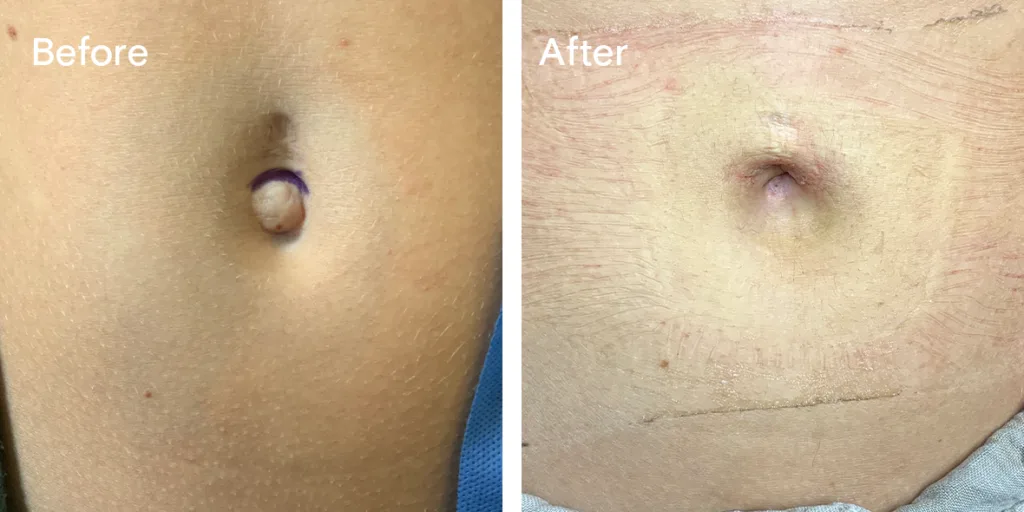
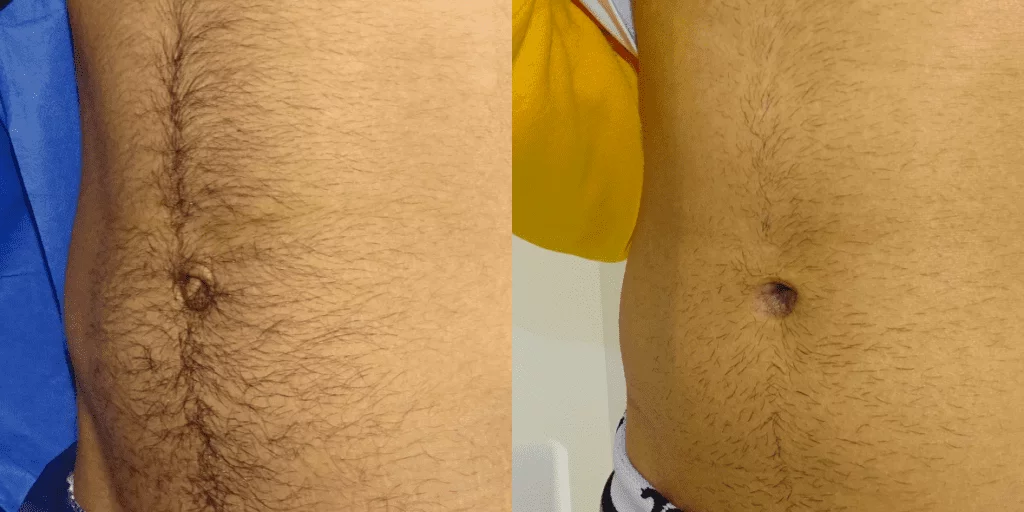
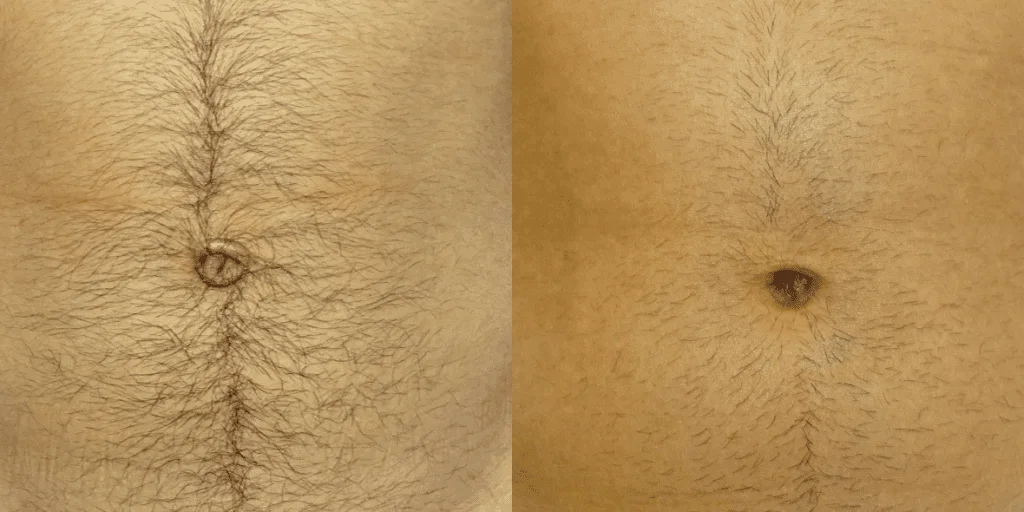
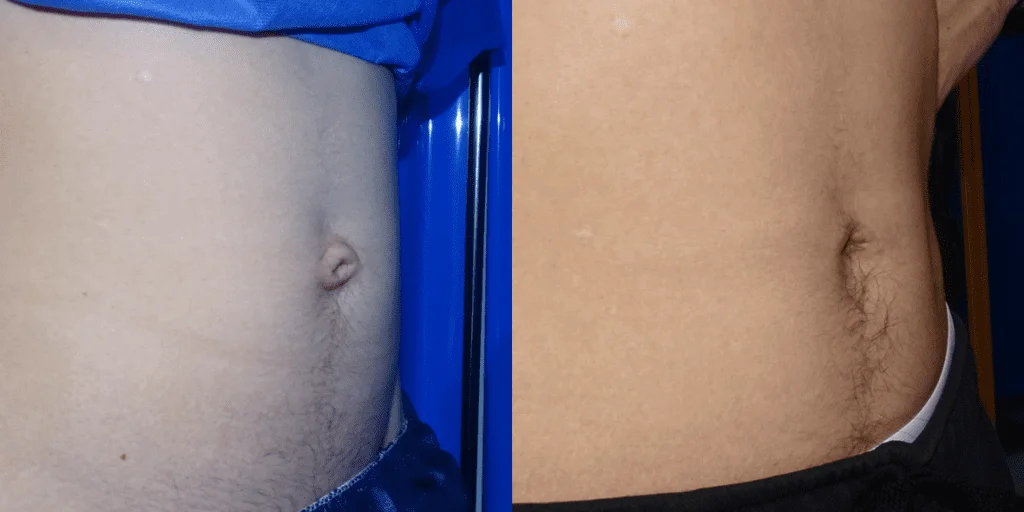
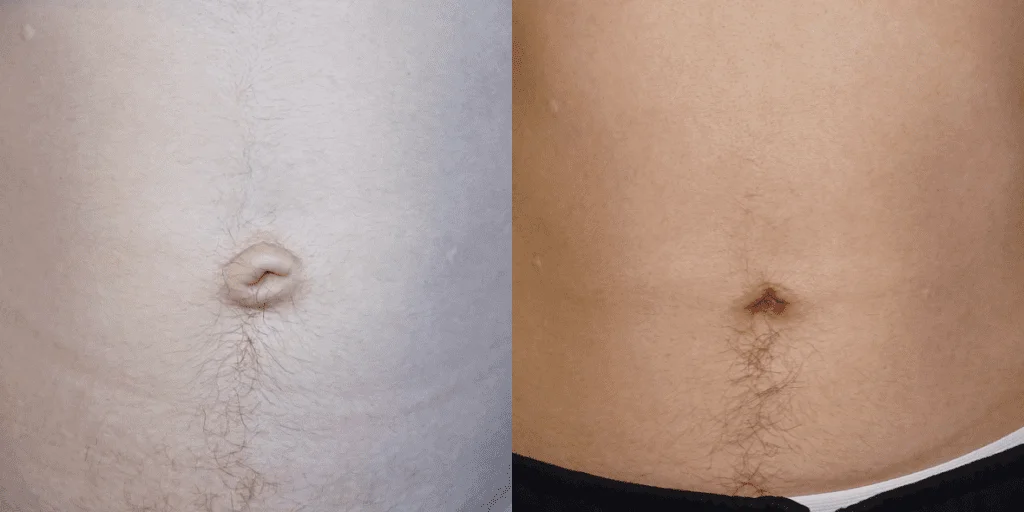
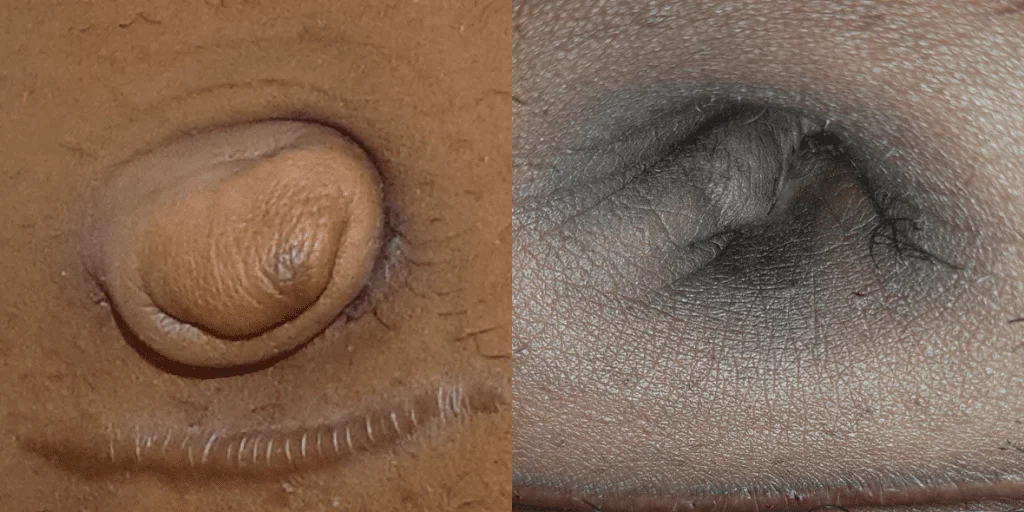
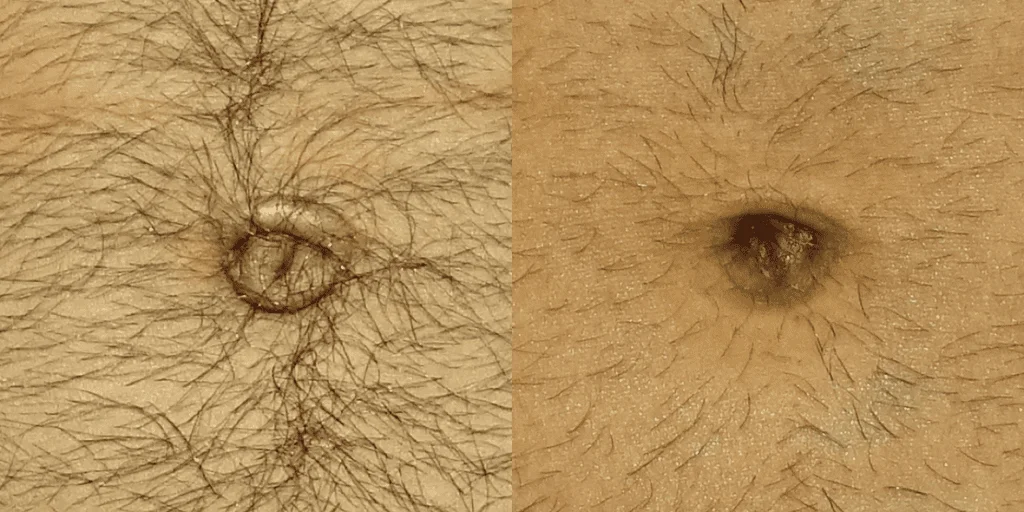
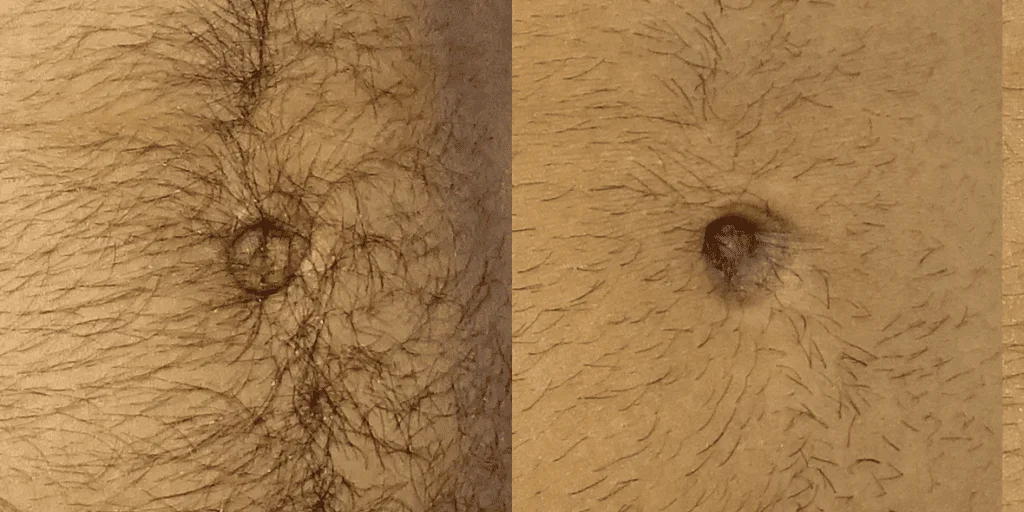
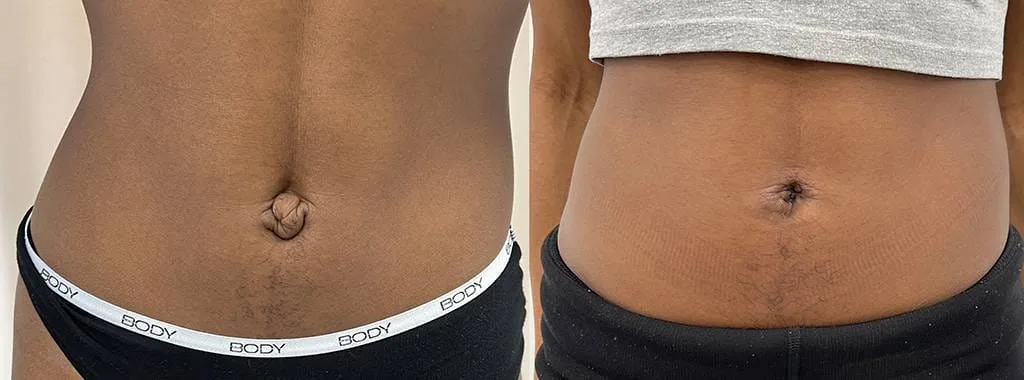
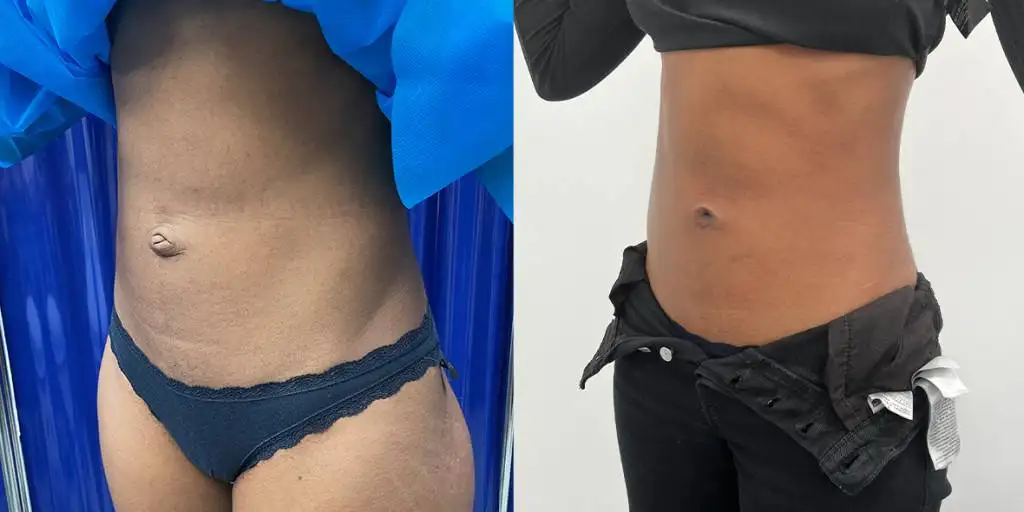
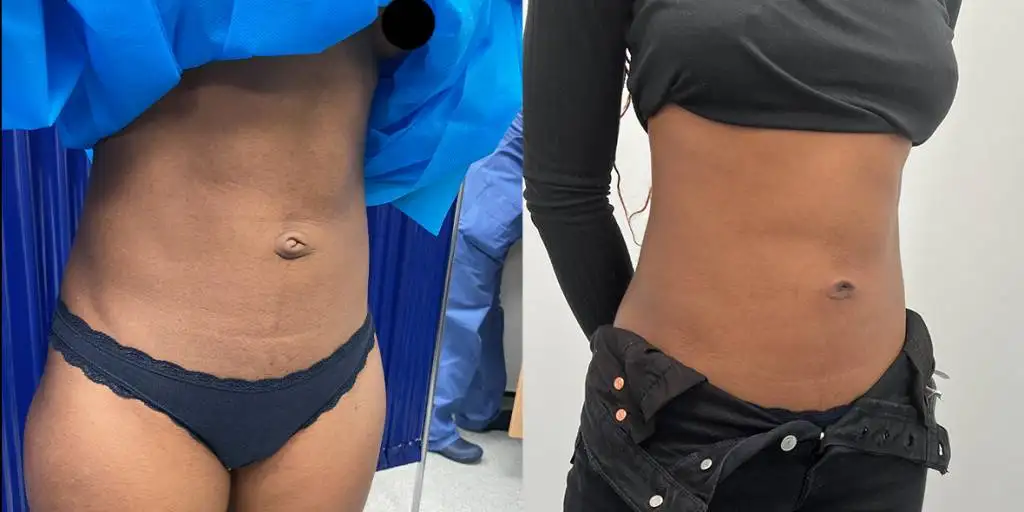
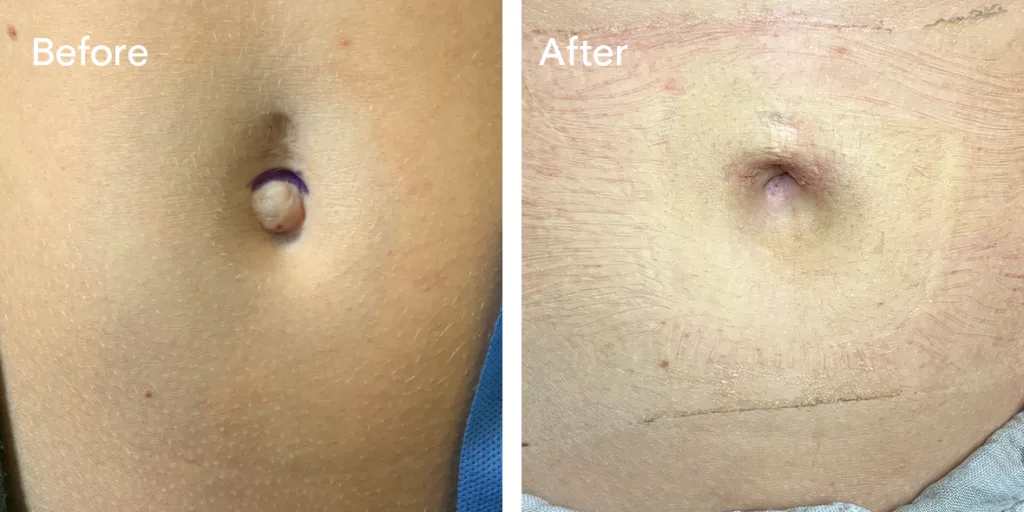
Before and after results
This gallery provides a visual insight into outcomes of umbilicoplasty. The CREO Clinic endeavours to deliver consistent results, but results may vary from patient to patient.

Benefits of umbilicoplasty
There are multiple potential improvements patients can experience from a belly button surgery, depending on individual anatomy and surgical planning:
- Invert an ‘outie’: Reshape a protruding belly button (an outie) to create a more concave inner umbilicus (‘innie’), where clinically appropriate
- Improve the appearance of scarring: Reduce the visibility of scars from piercings or trauma, where tissue quality allows
- Fix an umbilical hernia: An umbilical hernia is a small bulge in or around the belly button caused by the intestines or fat pushing through the abdominal muscle. A separate surgery can be combined with umbilicoplasty to repair the underlying defect, where indicated
- Correct prior abdominal surgery: Some patients find that the results of the previous procedure may have left them with an asymmetrical or altered belly button. Umbilicoplasty may be used to refine shape and symmetry, depending on the existing tissue and surgical history
- Change size: The belly button can enlarge due to pregnancy or significant weight loss, or it may have been large from birth. The surgery can adjust the size of the umbilicus, which aligns with the surgical plan and anatomical considerations
The CREO APEX Recovery System
What to expect: before, during & after
Understanding the stages of treatment can help patients prepare for surgery, recovery, and expected outcomes. The process is guided by clinical assessment and structured aftercare, with each stage tailored to the individual surgical plan.
Before surgery
To optimise your surgical results, there are some steps you need to follow in the weeks before your surgery:
Nicotine use: You will need to stop using any nicotine products in the four weeks leading up to your umbilicoplasty, as nicotine can increase the risk of complications
Abstain from alcohol: Try to reduce your alcohol consumption. We recommend no binge drinking alcohol in the two weeks before surgery
Prepare your home for recovery: Make your home as comfortable as possible for your recovery. Make sure there is a comfortable place to rest, and organise support for any home responsibilities, such as childcare or pet care
The day of the surgery
After the procedure, our surgical team monitor you for the initial recovery period, after which you will be discharged. Patients undergoing umbilicoplasty are typically discharged from the hospital within an hour of surgery when a local anaesthetic is used, and within a few hours if a general anaesthetic is used.
Initial recovery
Umbilicoplasty usually has a short recovery period, and patients can return to work and complete most light activities after a week. However, you must follow Dr Tillo’s guidance on when to engage in more strenuous exercise; this will be made clear during your initial consultation.
Final results
Risks, limitations & considerations
As a relatively straightforward procedure, umbilicoplasty still carries inherent surgical risks that should be carefully considered. The CREO Clinic’s planning, structured aftercare, and strict surgical practices are designed to reduce risk where possible, but patients are encouraged to understand any potential complications and limitations.
Some potential risks are:
- Infection or bleeding at incision sites
- Delayed healing
- Over/under correction of the belly button
- Asymmetrical results.
- Variation in healing and final appearance, which can depend on individual tissue response and anatomy.
Great care is taken to minimise scarring, concealing incisions within the umbilicus’s hidden areas. Scarring is an expected part of any surgery, and the visibility and quality of scars can vary between patients, although an experienced surgeon will plan incision placement carefully to reduce visibility where possible.
Cost of umbilicoplasty in London
The price of your belly button surgery depends on a few important factors, such as:
- If it is your first umbilicoplasty or a revision of a previous surgery
- If your surgery is combined with another procedure
- If an umbilical hernia needs to be repaired
- If your surgery is performed with a local or general anaesthetic
Prices for an umbilicoplasty at the CREO Clinic start from £3,750 with local anaesthetic, and £5,900 with general anaesthetic. Once you have been assessed by our surgical team, we can give you a specific price based on your needs.
What the price includes
The price of an umbilicoplasty covers a full surgical package. This typically includes:
- Fees for the surgeon and anaesthesia
- Use of CQC-registered surgical facilities
- All preoperative assessments and blood tests
- Post-operative monitoring and follow-up consultations
- Our APEX aftercare package, and laser scar treatments (if needed)
Financing options
The CREO Clinic offers financing options through our partner, Chrysalis Finance, allowing any eligible patients to spread the cost of an umbilicoplasty over multiple instalments.
Interest-free payment plans are available for 12 months. For longer-term plans, the CREO Clinic can offset interest costs through subsidies.
All borrowing is subject to approval.
Why choose CREO Clinic
People choose the CREO Clinic for its record of providing high standards of clinical expertise, detailed planning led by experienced surgeons, and its continued commitment to ensuring patient safety.
Specialist surgeons
Our clinic only offers procedures performed by specialists for body surgery; you can be certain your surgeon is experienced in body-focused surgeries. This ensures that the surgeon’s expertise and experience always match the demands of the surgery.
Surgeon-led planning
At the CREO Clinic, patient outcomes and safety always take precedence over marketing or sales considerations, which is why all final surgical planning decisions are made by the surgeon alone.
Integrated aftercare
Your recovery follows the CREO Clinic’s structured APEX aftercare system, which provides direct clinical access throughout your downtime and supplementary treatments to optimise outcomes. All aftercare is fully integrated into the surgical package, removing the need for optional extras.