






Thigh lift surgery is a body contouring procedure designed to address excess or lax skin around the thighs, which may develop following significant weight loss, natural ageing, or due to genetic factors. Depending on the patient’s anatomy and the extent of skin laxity, the procedure may help reduce physical concerns such as chafing or discomfort while improving the contour of the upper thighs and, where appropriate, the lower buttocks. Suitability and the most appropriate surgical approach are determined through an individual consultation and clinical assessment.
At the CREO Clinic, all thigh lifts are performed by Dr Omar Tillo, who has extensive experience in thigh lift and body contouring procedures. Dr Tillo is a GMC-registered specialist Plastic Surgeon, a fellow of the Royal College of Surgeons (FRCS) and a member of the British Association of Aesthetic Plastic Surgeons (BAAPS). His professional work includes training and education in body contouring techniques.
Quick Overview of Thigh Lift Surgery
Treatments
1Results
6 monthsAnesthesia
Sedation or General AnaesthesiaSurgery Time
2-4 HoursHospital Time
12 hoursMobility
24 HoursWashing
2 daysOff-Work
10-14 daysExercise
4-8 weeksFull Recovery
6-8 weeksWhy This Procedure Matters
Patients often consider thigh lift surgery because loose tissue around the thighs is contributing to functional concerns, aesthetic concerns, or both. Functionally, this may affect comfort, mobility, or clothing fit, while aesthetic concerns may relate to thigh contour or proportion. A thigh lift may help improve thigh symmetry and reduce areas of tissue folding, although the extent of change varies between patients and depends on clinical assessment.
After Significant Weight Loss
While significant weight loss can have many positive health impacts, it can also leave folds of skin that may not respond to exercise or lifestyle changes. Because the thighs are a common area of fat accumulation, the skin may not fully retract following weight loss. Where clinically appropriate, a thigh lift can remove some of this tissue to create a smoother contour rather than restore a previous shape.
Addressing Excess Skin & Tissue Laxity
In addition to weight loss, weight fluctuations, genetics, and natural ageing can affect skin elasticity and tissue support around the thighs. This combination of factors can mean some patients experience skin laxity more easily and more severely than others, and a thigh lift may be considered where these changes cause persistent discomfort or concerns about contour, following an individual assessment of suitability.
Improving Comfort, Mobility & Body Proportion
Common functional concerns associated with loose thigh tissue include painful rubbing or chafing against clothing, as well as limitations to mobility or movement. Skin folds may also make certain exercises less comfortable or restrict flexibility. Separate aesthetic concerns can include difficulties with clothing fit or a perceived imbalance in lower-body proportion. These factors are considered together during consultation to determine whether surgery is clinically appropriate.
How the Procedure Works
A thigh lift involves using skin excision (i.e. the removal of lax skin) to improve the contour of the thighs through surgical incisions that will leave visible, permanent scars. The length and location of these scars vary according to the technique used and may be extensive where a larger amount of tissue requires treatment. Different incisions may be used according to your treatment goals and the severity and distribution of lax skin; all of these surgical details are determined during a one-to-one consultation with Dr Tillo.
What Happens During Surgery
During a thigh lift, excess skin and, where required, underlying tissue may be removed or repositioned via incisions within the groin crease, vertically along the inner thigh, or around the outer hip or buttock fold; the exact area varies according to the patient’s clinical needs and the type of thigh lift performed. Once the targeted section of tissue has been treated, the incisions are closed using a technique appropriate to the surgical plan, which may include dissolvable sutures. This excision may have the effect of reshaping the contour of the thigh to have greater balance and symmetry.
Anaesthetic & Surgical Duration
A full thigh lift procedure generally lasts between two and three hours, and is performed under general anaesthetic. How long the procedure lasts in total varies according to the severity of lax skin being treated and the techniques used in the surgical plan.
Incisions, Tissue Removal & Contouring
There are multiple variants of thigh lift incisions used in accordance with different treatment goals and lax skin severity. A face-to-face assessment with Dr Tillo will help determine how much skin and underlying tissue may need to be removed or repositioned, based on the patient’s anatomy, the distribution of laxity and the trade-off between the intended correction and the resulting scars.
Hospital Stay & Surgical Environment
All thigh lifts are performed in CQC-registered facilities and are typically day cases. Overnight stays are available where clinically appropriate, but this will be assessed by the surgical and nursing team during the initial stages of recovery.
Patient Feedback & Outcomes
Is a Thigh Lift Right for You?
Whether a thigh lift surgery in London is right for you depends on an individual assessment of your anatomy, overall health, anaesthetic and wound-healing risks, and surgical goals. Below, we have outlined some of the main considerations around suitability.
Who It’s For
Thigh lift surgery may be appropriate for patients who:
– Have excess skin or tissue laxity in the thighs that has not resolved despite reaching a stable weight.
Are over 18 years old.
– Have experienced significant weight loss and are left with loose or sagging skin in the thigh area.
Are at a stable weight and have maintained this for a period considered appropriate by the surgical team, which may be around six months, depending on individual circumstances.
– Meet the clinic’s general BMI assessment criterion, which is typically 30 or below and remains subject to individual clinical review (Use our BMI calculator to check).
– Are in sufficiently good general health for anaesthesia and surgery, with psychological readiness considered as part of the wider assessment.
– Are non-smokers, or able to follow the nicotine cessation period confirmed by the surgical team, which may vary according to clinical circumstances.
– Have realistic expectations of what thigh lift surgery can achieve, including an understanding of scarring, recovery, and outcome variability.
Physical & Functional Considerations
Loose tissue may also restrict comfortable movement, make certain types of clothing difficult to wear, or contribute to discomfort during physical activity. These functional concerns are common in patients following significant weight loss, where the skin has not retracted at the same rate as underlying fat loss. Dr Tillo will discuss these factors as part of the wider clinical assessment at consultation, alongside your anatomy, health, surgical goals and individual risk profile.
Who It May Not Be Right For
– Have a BMI above the clinic’s general assessment threshold, which is typically 30, although individual circumstances are reviewed.
– Are actively losing weight or have an unstable weight, as further changes may affect surgical planning and results.
– Are under 18 years old.
– Smoke or use nicotine products and are unable to follow the cessation period specified by the surgical team.
– Have underlying health conditions that may increase anaesthetic, surgical or wound-healing risks.
– Are not psychologically ready for surgery or have unrealistic expectations of surgical outcomes, including expectations of minimal or invisible scarring.
– Are seeking thigh lift surgery as a substitute for weight loss, rather than to address skin laxity after a stable weight has been achieved and maintained for a clinically appropriate period.
Types of Thigh Lift Surgery
Several approaches may be used in thigh lift surgery, although terminology and incision designs can vary between surgeons. The appropriate technique depends on the location and direction of tissue laxity, skin quality, anatomy, surgical goals and the scars a patient is prepared to accept. Not every technique listed below will be suitable or offered in every case; the surgical plan is determined following assessment with Dr Tillo.
Mini Thigh Lift
Vertical (Medial) Thigh Lift
This approach permits skin and underlying tissue to be removed along a greater length of the thigh. However, it leaves a longer and more visible scar than a limited upper-medial lift and may involve a more demanding recovery, with greater potential for wound-healing concerns. These trade-offs are discussed during surgical planning.
Outer Thigh Lift
This approach may be considered when laxity is distributed across the lateral thigh, hip or lower trunk rather than being limited to the inner thigh. The resulting scar can be extensive and may pass around the hip or lower torso, with the exact position depending on the technique and anatomy.
Posterior Thigh Lift
This is not a standardised incision pattern, and suitability depends on the location of the tissue laxity and the effect that lifting may have on the buttock crease and surrounding contour. The procedure should not be regarded as a specific treatment for cellulite, although removing or repositioning tissue may alter the surface appearance in some patients.
Spiral Thigh Lift
Rather than removing skin in a uniform “360-degree” pattern, the procedure uses circumferential or multi-directional tissue correction tailored to the areas of laxity. It may be considered following significant weight loss when several regions require treatment, but it also produces more extensive scars and may involve a longer or more complex recovery. In some circumstances, surgery may be staged rather than completed as one procedure.
Thigh Lift vs Liposuction
Thigh lift surgery removes excess skin and may also lift or reposition underlying tissue. Some fat may be removed with the excised tissue, but fat reduction is not its only purpose. Liposuction may be used alongside a lift when both localised fat and tissue laxity are present, although combining procedures can affect surgical planning, risks and recovery. The appropriate approach is based on clinical assessment rather than the desired change alone.
Before & After Results
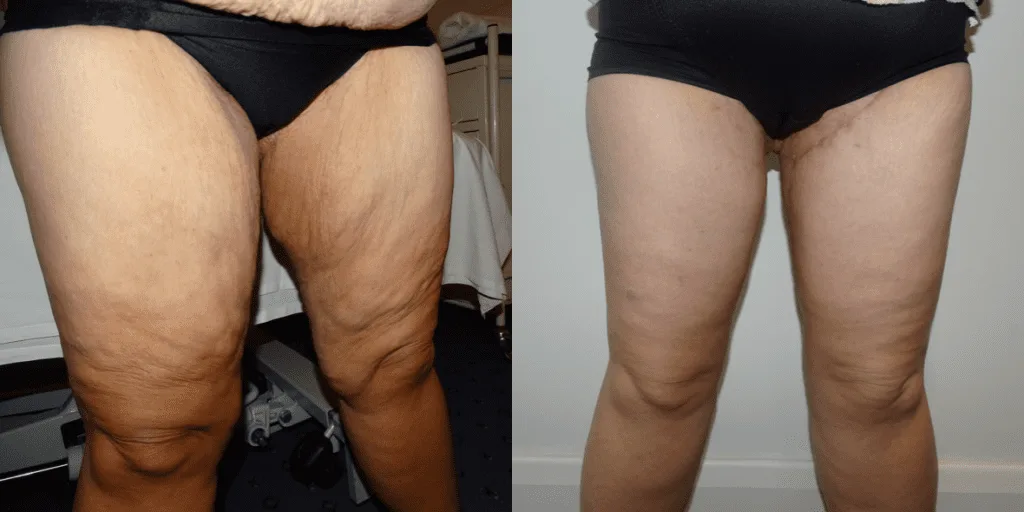
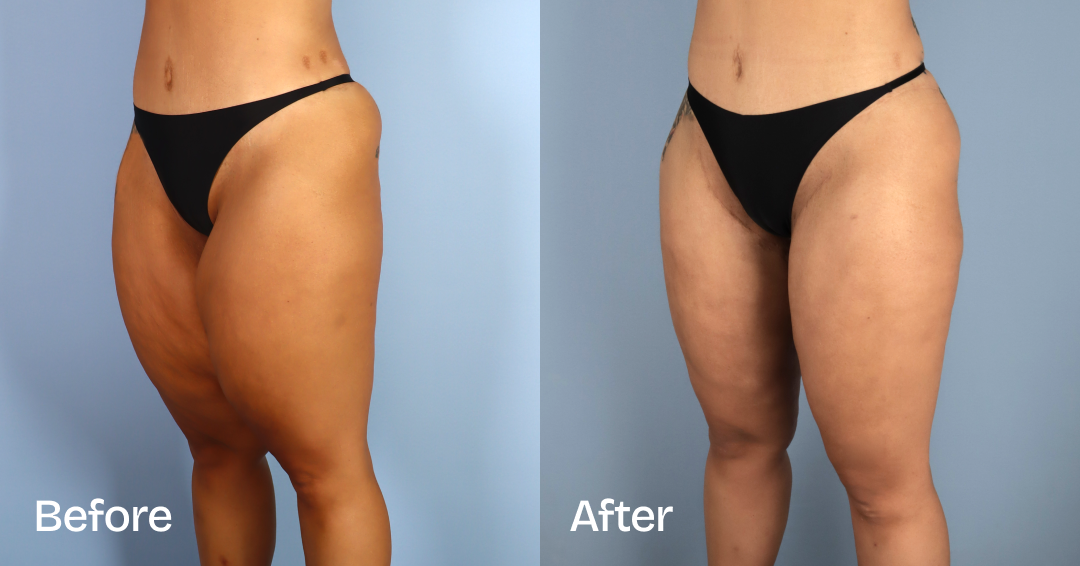
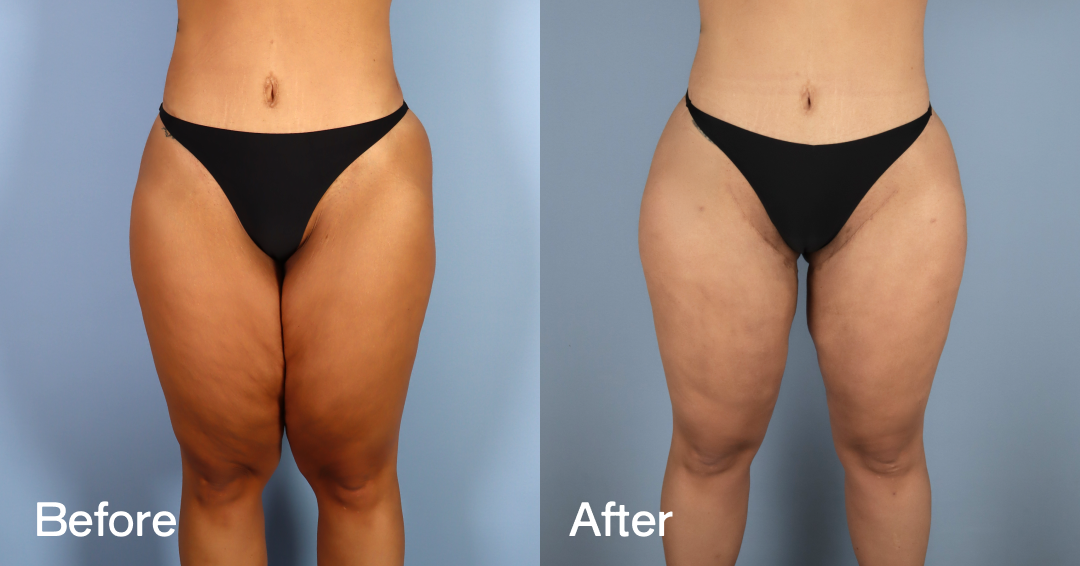
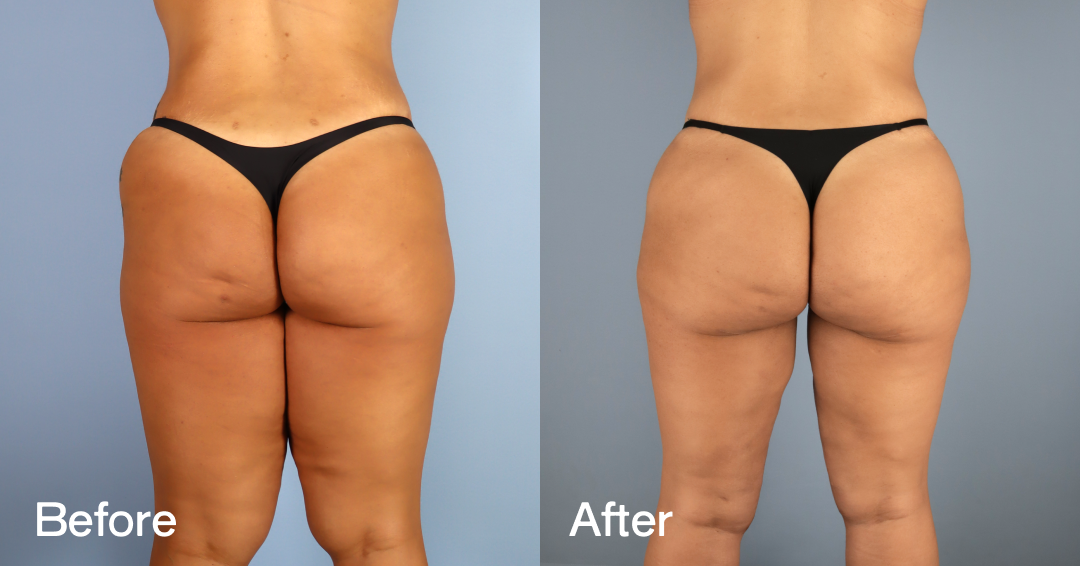
The gallery below provides before and after images of real patients who have undergone thigh lift surgery at the CREO Clinic in London. Patient outcomes vary due to differences between individual healing times and the types of incisions used, but these pictures provide an illustrative example of potential thigh lift results.
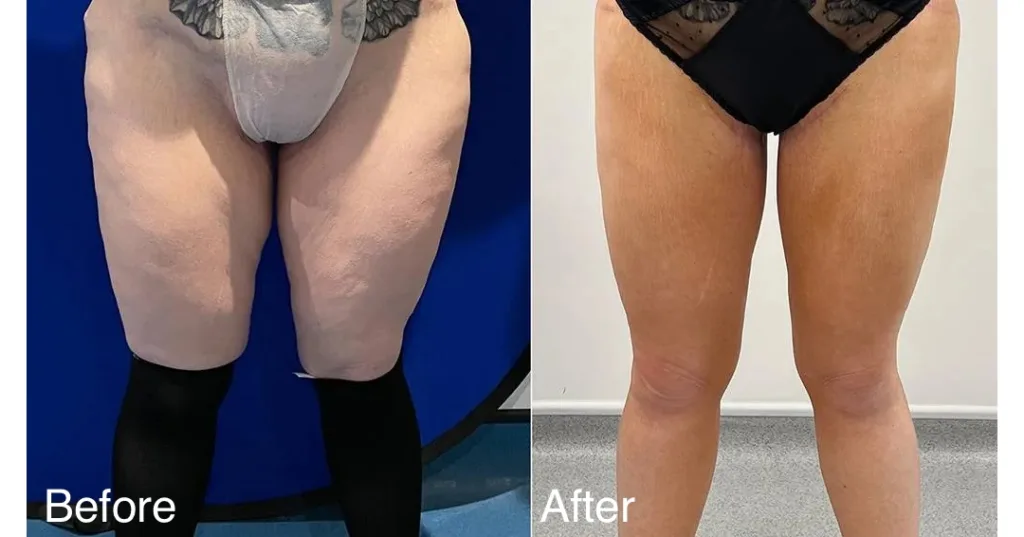
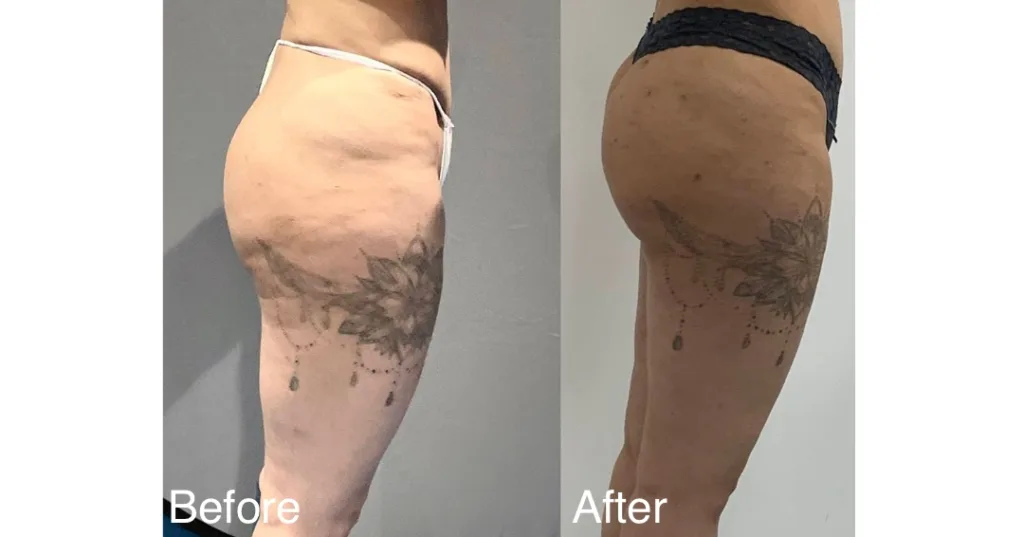
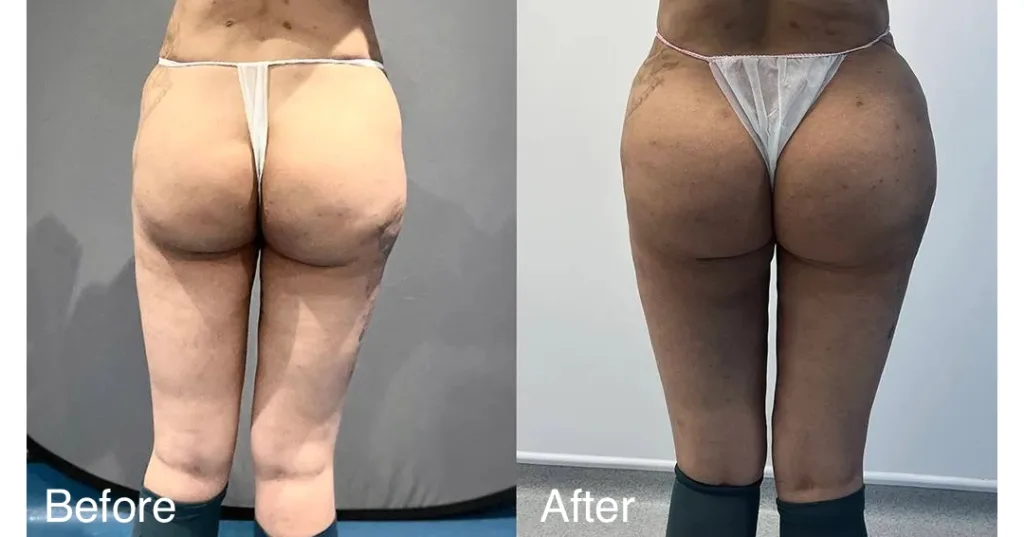
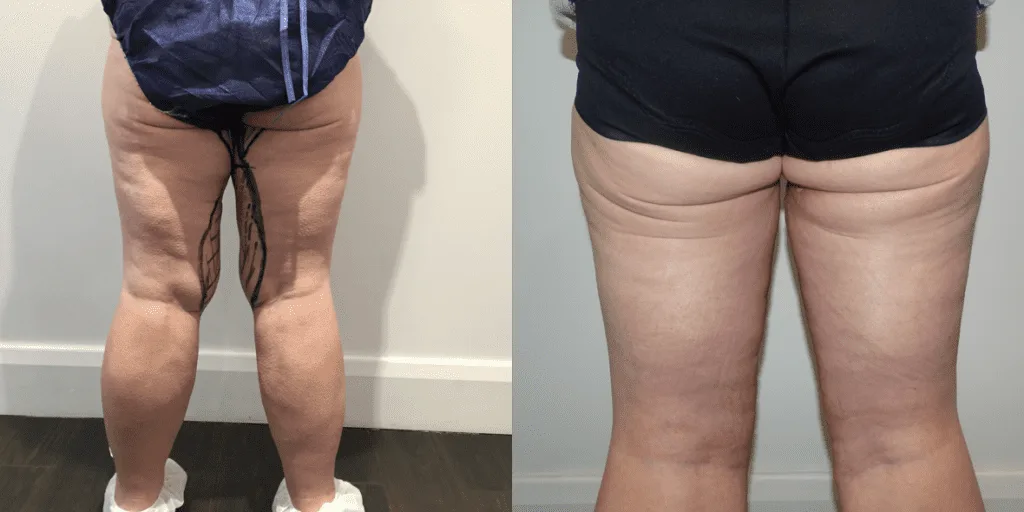
Expected Outcomes of Thigh Lift Surgery
There are many potential outcomes for thigh lift surgery patients. Below, we have outlined some of the key expectations surgeons typically have for a thigh lift surgery:
Improved comfort and movement: Removing excess thigh skin can help ease chafing and irritation, making it more comfortable to move around during everyday activities and exercise.
Better fit in clothing: With less excess skin around the thighs, trousers, skirts, and activewear may sit and fit more comfortably.
Refined thigh contour: Removing loose/sagging skin can leave the thigh looking smoother and more defined, particularly where laxity has built up following weight loss.
Improved lower body proportions: Addressing excess skin in the thighs may help bring the area into better balance with the rest of the lower body.
The CREO APEX Recovery System
What to Expect: Before, During & After
The treatment pathway is structured to help patients understand what to expect before surgery, on the day of the procedure and throughout recovery. Below, we divide the process into pre-operative preparation, the day of the procedure, and the recovery period.
Before Surgery
Nicotine consumption: You may be asked to abstain from smoking, vaping, and all nicotine products for a specified period before and after surgery, as nicotine can increase complications and wound-healing risks. The required cessation period will be confirmed during your pre-operative assessment.
Oestrogen-based contraceptives or HRT: Depending on your individual risk profile, you may be advised to pause oral contraceptives or HRT before surgery to reduce the risk of thrombosis. Do not stop hormonal treatment without approval from the clinician who prescribes or manages it, and follow the instructions agreed during your pre-operative assessment.
Maintain a stable weight: Keeping your weight stable and your BMI at or below 30 in the run-up to surgery supports safer outcomes and more predictable results.
Alcohol intake: You may be advised to reduce or avoid alcohol for a specified period before surgery. Individual guidance will be confirmed during your pre-operative assessment.
Review your medications: Inform Dr Tillo of all prescribed medicines, over-the-counter medications and supplements you are taking. Some may need to be adjusted or paused before surgery, but you should not stop any prescribed treatment without approval from the relevant clinician.
Arrange transport and support: Thigh lift surgery is commonly performed as a day case, but you will not be able to drive yourself home. Arrange for a responsible adult to collect you and remain with you for the first 24 hours.
Prepare your home for recovery: Set up a comfortable recovery space in advance, and arrange for anyone else to take on physically demanding responsibilities, such as childcare or pet care, until you have sufficiently recovered.
Day of Surgery
Discharge takes place once you meet the appropriate clinical recovery criteria and suitable transport and support are available at home. Many patients return home on the same day, although this is not guaranteed. An overnight stay may be recommended where clinically necessary.
Initial Recovery
Getting around may be limited at first, and walking may feel uncomfortable for the first few days. Most people are back to light everyday activity within one to two weeks, though this depends on the extent of the surgery and how quickly you heal.
Returning to Normal Activities
Driving may be possible once your mobility allows you to control the vehicle safely and perform an emergency stop, your pain is adequately managed, you are no longer taking medication that may impair driving, and any insurer requirements have been met.
Long-Term Results
However, due to the inevitable post-surgical swelling in the initial stages of recovery, the final contour may not be visible until at least six months after the surgery, with further tissue settling and scar maturation continuing over the following months. Scars may continue to change in colour, texture and prominence for 12 to 18 months or longer, depending on individual healing.
Risks, Limitations & Considerations
A thigh lift, like any other surgery, is not without risk. There are many potential benefits to the procedure, but the potential risks are always worth thinking through properly.
Possible risks and things to be aware of include:
- Visible scarring at the incision sites
- Some asymmetry in the final result
- Altered sensation in the area treated
- Wounds that break down or take longer than expected to heal
- Infection
- A build-up of blood or fluid beneath the skin (haematoma or seroma)
- Blood clots (Deep vein thrombosis/Venous thromboembolism)
- A reaction to the anaesthetic
- The need for a follow-up procedure
It is important to note that significant precautions are taken by our surgical team to minimise the risk of complications, but these measures cannot entirely eliminate risks.
Cost of Thigh Lift Surgery
The cost of thigh lift surgery depends on the techniques used and the amount of correction required. The final quote may also be affected by the procedure type, surgical extent, hospital requirements and whether any additional procedures are included. After your initial consultation with Dr Tillo, a detailed quote will be provided, setting out the fees included in your treatment plan.
At the time of publication, prices for thigh lift surgery at the CREO Clinic range from £8,900 to £10,500, depending on the complexity of the procedure and the amount of skin laxity being addressed. The exact cost will be confirmed following consultation.
What’s Included in Your Treatment Cost
Your final thigh lift quote will set out the fees included for your procedure and planned recovery support. Depending on the agreed treatment plan, these may include:
- Fees for your surgeon, anaesthetist, and nursing team
- Use of our CQC-registered facilities
- Assessments carried out before surgery
- Your compression garment
- Dressings and follow-up appointments after surgery
- Lymphatic drainage massage and laser scar treatment, both part of the APEX aftercare programme, where clinically appropriate
- A CREO recovery kit, which may include Hibiscrub, dressings, silicone tape and Bio-Oil as supportive postoperative and scar-management measures where clinically appropriate
Finance & Payment Options
Depending on your circumstances, the CREO Clinic may be able to provide finance through our financing partner, Chrysalis Finance. Available options may include 12-month interest-free finance and longer repayment terms at an interest-bearing rate. Finance is subject to status, an affordability assessment, lender approval and applicable terms and conditions. Current rates and terms will be confirmed before you apply.
Why Choose CREO Clinic
At the CREO Clinic, all thigh lift surgery treatment plans follow a surgeon-led approach based on detailed clinical assessment and individual treatment planning.
Specialist Body Contouring Expertise
The CREO Clinic assigns surgeons according to their principal area of practice. Dr Tillo focuses on body contouring procedures below the neck, which informs his assessment of skin laxity, tissue distribution, scarring and the potential need to combine or stage treatment.
Surgeon-Led Treatment Planning
All planning decisions at the CREO Clinic are made by the surgeon based on insights from the initial one-to-one consultation and any pre-operative consultations. This assessment informs whether surgery is suitable, which technique may be appropriate, whether treatment should be staged and how the potential benefits compare with the extent and position of the resulting scars. Recommendations are based on clinical considerations and the patient’s goals, rather than commercial factors.
Integrated Recovery & Aftercare
Aftercare is fully integrated into every treatment plan at the CREO Clinic with our APEX aftercare system. This system provides structured support throughout your recovery period, including supportive treatments where clinically appropriate. We provide follow-up appointments to check in at key points during recovery, and patients have direct access to clinical advice throughout this period. The type and timing of aftercare vary according to the procedure and individual healing.
A Selective, Patient-First Approach
To ensure our patients receive suitable treatments, the CREO Clinic only recommends procedures that are deemed appropriate and aligned with the patient’s clinical needs and treatment goals. Where the risks, likely outcome or required scar trade-offs do not support surgery, treatment may not be recommended.