

How to Limit Sun Damage
Use broad-spectrum sunscreen consistently
Use SPF 50 for prolonged outdoor time or holidays. SPF measures UVB protection (sunburn), but broad-spectrum also covers UVA (photoageing). Apply generously and evenly. Treat sunscreen as a daily routine, not just for “sunny” days.
Reapply when exposure continues
Reapply every two hours outdoors, and sooner if swimming, sweating, or towel-drying. Water-resistant sunscreen isn’t permanent – one morning application rarely covers hours outside.
Don’t miss easy-to-forget areas
Protecting the face isn’t enough. Protect the neck, chest, ears, and backs of the hands daily – they’re commonly missed and show visible sun damage quickly.
Windows don’t fully protect
Ordinary glass blocks UVB but lets most UVA through. Sitting by a window in a car, office, or train still exposes skin to UV, so daily sunscreen helps if you get lots of indoor daylight.
Check your medication and skincare list
Some medicines (antibiotics, diuretics, anti-inflammatories, antidepressants, acne treatments) and skincare products increase sun sensitivity. Check with your pharmacist or doctor if photosensitivity is a risk, and boost shade, clothing, sunscreen, and reapplication accordingly.
Add antioxidants, but don’t rely on them
Vitamin C, vitamin E, niacinamide, and ferulic acid can supplement sunscreen by reducing oxidative stress, but they don’t replace it. Sunscreen is the foundation; antioxidants are optional support.
Use the UV Index
The UV Index predicts UV strength and is in most weather apps. Always use sun protection but from UV Index 6+, be thorough: seek shade, wear sunglasses and hats, reapply sunscreen. At 8+, limit midday exposure if possible.
Make sure your sunscreen isn’t expired
Check the Period After Opening (PAO) symbol on the bottle and write the opening date on the packaging – if the product is past its recommended lifespan, it may not provide the level of protection you expect.
Methodology
This calculator evaluates a range of factors linked to sun exposure and skin ageing, including where you live, how much time you spend outdoors, travel to sunnier climates, weekend activities, skincare routines, sunbed use, history of sunburn, and your skin type.
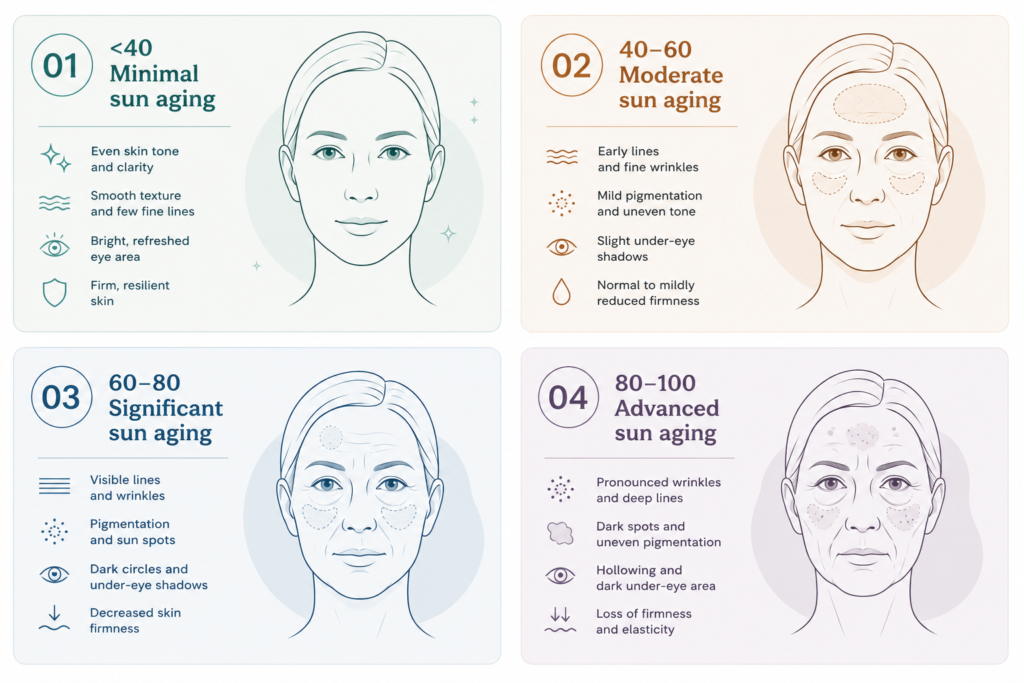
Using your responses, it generates a Sun Ageing Score out of 100, which will fall into one of the following sun aging categories:
We used several sources to back up our research on the lifestyle job factors likely to cause sun damage. Including the following:
- Cancer Research UK – How Does the Sun and UV Cause Cancer
- UK Health Security Agency – What You Need to Know About UV
- Met Office – UV and Sun Health
- Met Office – What Is UV Radiation and How Does it Affect Your Health?
- Health Harvard – Sun Damaged Skin
- Giving Mass General – The Safest Ways to Enjoy Sunny Days
- Medical News – Sunlight and Aging