






Breast reduction surgery, sometimes known as reduction mammaplasty, removes breast tissue, fat, and skin to help improve proportion and work towards alleviating the physical symptoms that can be caused by overly large breasts. Patients with large breasts that sag and cause discomfort may be considered for this procedure following a one-to-one clinical assessment.
Our breast reduction specialist, Dr Omar Tillo, is a Fellow of the Royal College of Surgeons (FRCS) and a member of the British Association of Aesthetic Plastic Surgeons (BAAPS). He focuses exclusively on surgeries from the neck down and is a specialist in breast reduction surgery and associated breast-focused procedures.
Dr Tillo takes a consistent approach that emphasises detailed planning and aftercare, as well as research-backed techniques and proportionate outcomes that align with the patient’s clinical needs and cosmetic goals.
Why Breast Reduction Surgery Matters
Patients may be considered for a breast reduction if they are experiencing troublesome physical symptoms as a result of disproportionately large breasts. The following sections outline some of the concerns that are common among suitable candidates.
Physical Discomfort and Functional Limitations
Overly large breasts can have multiple consequences for the physique over time, causing discomfort and limiting certain activities. Breast reduction may help alleviate these by addressing the root anatomical cause. Some common examples of physical symptoms include:
- Numbness in the breasts, arms, or hands due to posture issues and excess weight
- Skin rashes or infections (e.g. intertrigo) in the breast crease
- Difficulty exercising or maintaining an active lifestyle
- Shoulder indentations from bra straps
- Shortness of breath from excess chest weight
- Pain in the back, neck, or shoulders caused by the strain of heavy breasts
Post-Pregnancy and Weight-Related Changes
Natural changes to the body during pregnancy and breastfeeding can bring physical discomfort, as weight fluctuations may increase the size of the breasts and place greater strain on the physique. Once breastfeeding is complete and no further pregnancies are planned, a breast reduction may help reduce any uncomfortable physical symptoms resulting from pregnancy, breastfeeding, or weight change.
Proportion, Symmetry and Long-Term Comfort
A breast reduction may provide sustained functional improvement for patients by working to improve the symmetry and proportions of the breasts. By decreasing the size of the breasts, a reduction may help minimise postural issues, discomfort during sleep, and limitations on clothing fit, as well as working to improve aesthetic proportions.
How Breast Reduction Surgery Works
Breast reduction surgery in London typically involves removing excess breast tissue, skin, and fat to reduce breast size and improve overall proportion. The exact surgical approach used by Dr Tillo is determined during consultation and depends on factors such as, breast composition, skin quality, degree of breast enlargement, and the patient’s physical symptoms and treatment goals.
Surgical Techniques and Approach
Breast reduction surgery is planned on an individual basis, with surgical decisions guided by the patient’s anatomy and the degree of reduction required.
While techniques can vary, the procedure generally follows several main stages:
- Anaesthesia and incisions: The procedure is performed under general anaesthetic, and incision markings are made based on the agreed surgical plan
- Tissue removal: Excess fat, skin, and breast tissue are removed to reduce overall breast volume and improve breast shape
- Areola reshaping: The nipple–areola complex may be repositioned, and the areola may be resized where appropriate for balance and proportion
- Closing incisions: Incisions are closed using dissolvable sutures, and surgical dressings and a compression garment are applied
- Recovery support: Patients are monitored during recovery and provided with detailed aftercare guidance before discharge
Anaesthesia and Procedure Duration
Breast reduction surgery is typically performed under general anaesthetic and usually takes between two and a half and three hours, although timings can vary depending on the complexity of the procedure. In many cases, surgery is performed as a day case, though overnight stays may be recommended where clinically appropriate or where additional recovery time is needed.
Incision Types and Surgical Planning
The incision technique used during breast reduction surgery, is selected according to the patient’s anatomy, skin excess, breast position, and the amount of tissue reduction required. During consultation, Dr Tillo will explain which approach may be most appropriate and why.
| Technique | Incision | Best suited for | Scarring |
| Circular (periareolar) | Small cut around the areola only | Minor reductions | Minimal; around the areola |
| Lollipop (keyhole /vertical) | Around the areola + vertical cut to the breast crease | Moderate reductions and reshaping | Around the areola and a vertical line down to the breast crease |
| Anchor (inverted-T) | Lollipop incision + horizontal cut along the breast crease | Larger reductions, drooping, or asymmetry | Around the areola, a vertical line to the breast crease, and along the breast crease itself |
Is Breast Reduction Right for You?
Suitability for a breast reduction will be assessed during a one-to-one consultation with Dr Tillo. His recommendation is based on multiple clinical factors, designed to accurately establish whether breast reduction can help you achieve your physical and cosmetic goals.
Dr Tillo will only recommend breast reduction if it is deemed appropriate for your needs.
Who This Procedure Is For
– Are experiencing uncomfortable physical symptoms associated with larger breasts, such as back pain, neck pain, shoulder issues, skin irritation, or mobility limitations
– Are at least 18 years old
– Have a stable BMI of 30 or below (use our BMI calculator) to check
– Have clear, realistic expectations of breast reduction outcomes
– Are in good general physical and psychological health
– Have completed all of their planned pregnancies
When Surgery May Not Be Appropriate
– Have a BMI above 30
– Are currently pregnant or breastfeeding
– Have underlying health conditions that could raise the risk of complications
– Are planning future pregnancies
– Do not have realistic expectations of breast reduction outcomes
– Use nicotine products and are unable to abstain for at least four weeks before surgery
Breast Reduction vs Breast Lift: Understanding the Difference
A key difference between a breast lift and breast reduction surgery is that a breast lift primarily focuses on reshaping and elevating the breasts, whereas a breast reduction is designed to reduce overall breast volume while also improving shape and position.
The following table outlines the main differences between the approaches:
| Approach | What it involves |
| Reduction alone | Removes excess breast tissue, fat, and skin to reduce breast size; in many cases, this also includes reshaping and lifting the breasts as part of the procedure |
| Lift alone | Focuses on reshaping and elevating the breasts by adjusting skin and breast position, without significantly reducing overall breast volume |
| Reduction + augmentation with + implants | Combines breast reduction and reshaping with the use of implants in selected cases where additional upper-pole fullness may be desired after tissue removal. |
Whether a reduction, lift, or combination approach is most appropriate depends on factors such as breast composition, degree of ptosis (sagging), skin quality, and the patient’s treatment goals; these factors are assessed during consultation with Dr Tillo, who will explain which surgical approach may be most appropriate for the individual patient.
Clinical Setting and Hospital Stay
All breast reduction procedures at the CREO Clinic are performed in CQC-registered surgical facilities, following established surgical standards designed to support patient safety and appropriate clinical care.
Breast reduction surgery is generally performed as a day case, although overnight stays can be arranged where clinically indicated or where patients may benefit from additional recovery support.
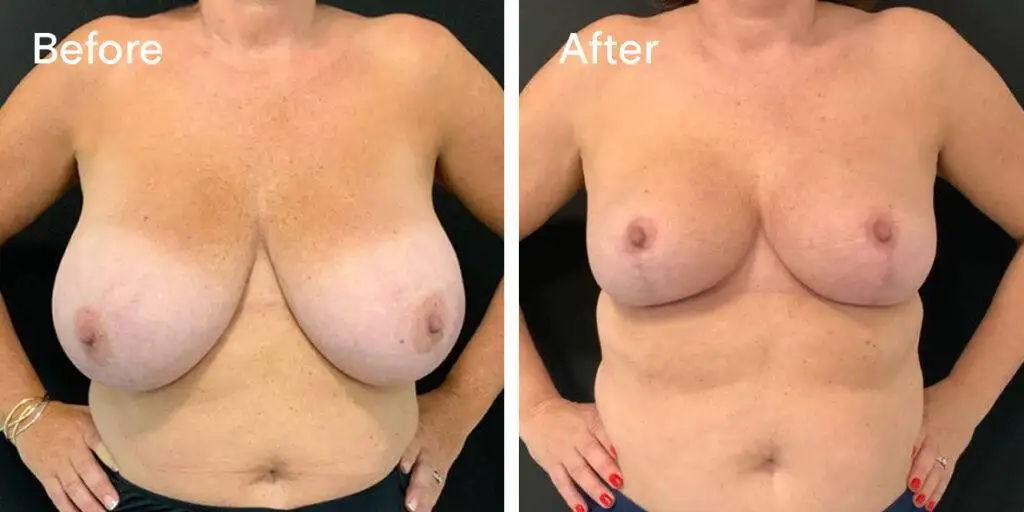
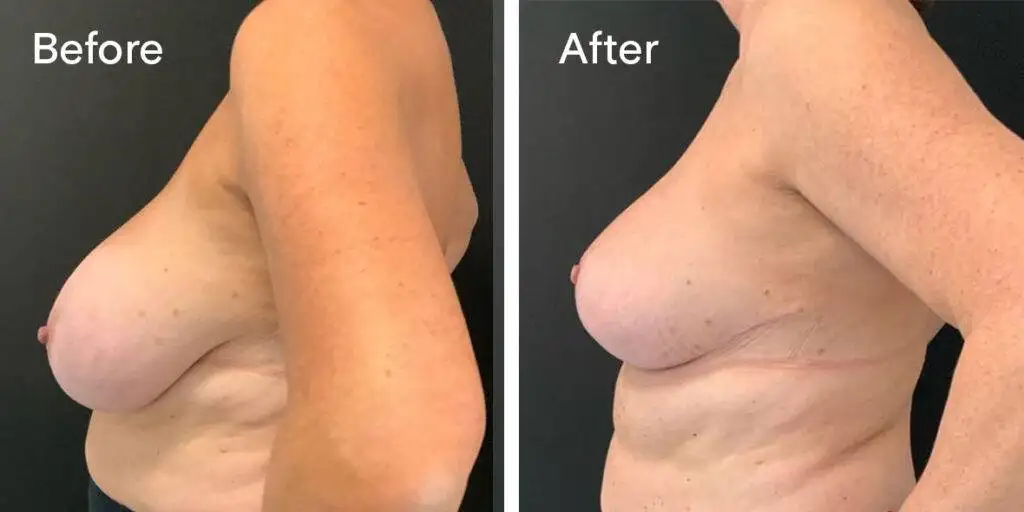
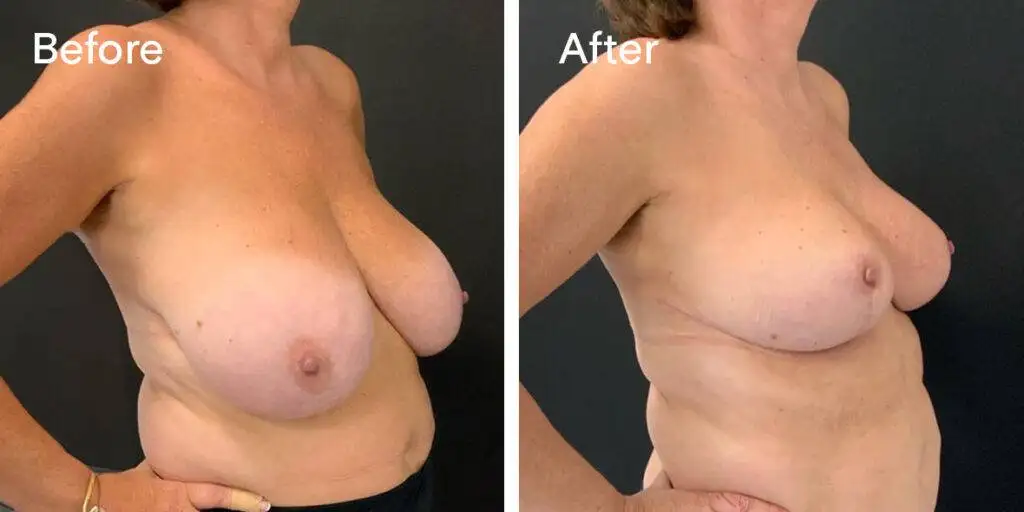
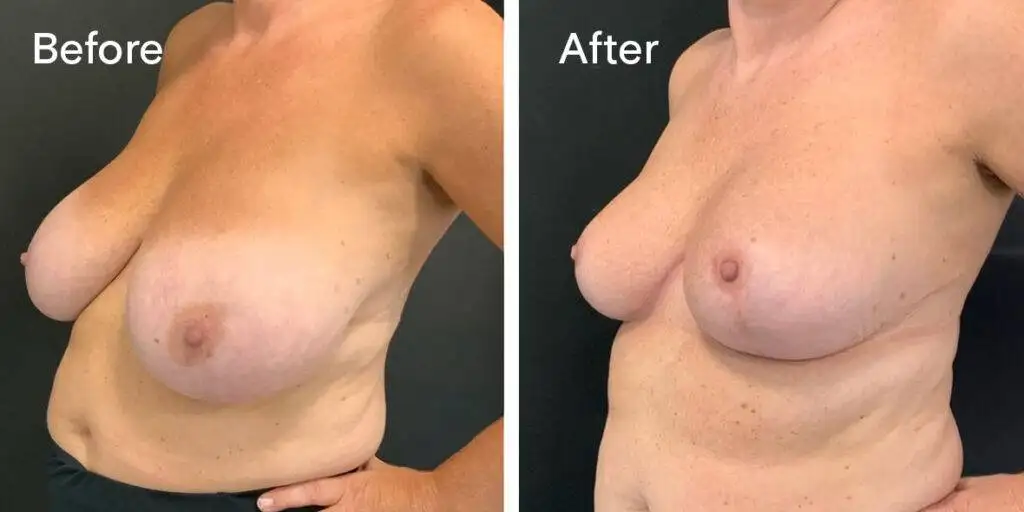
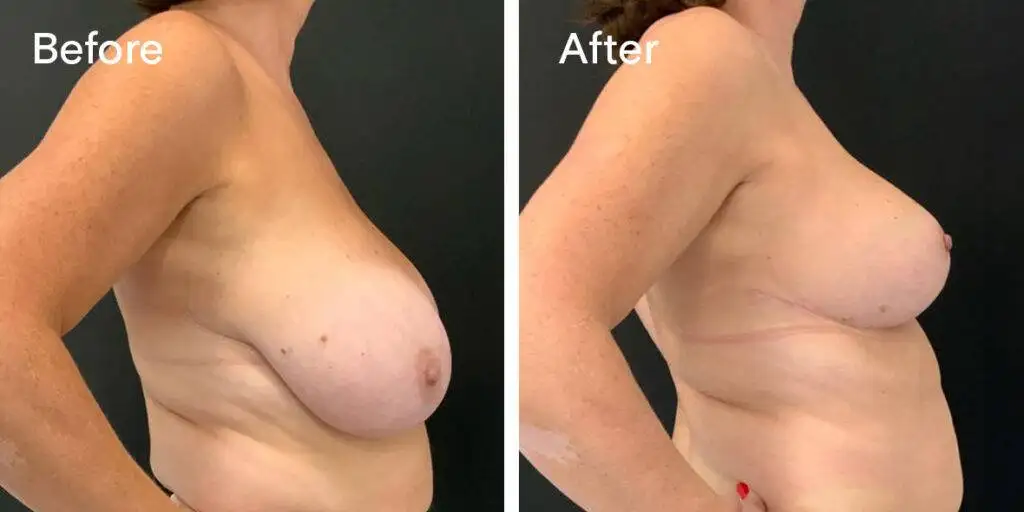
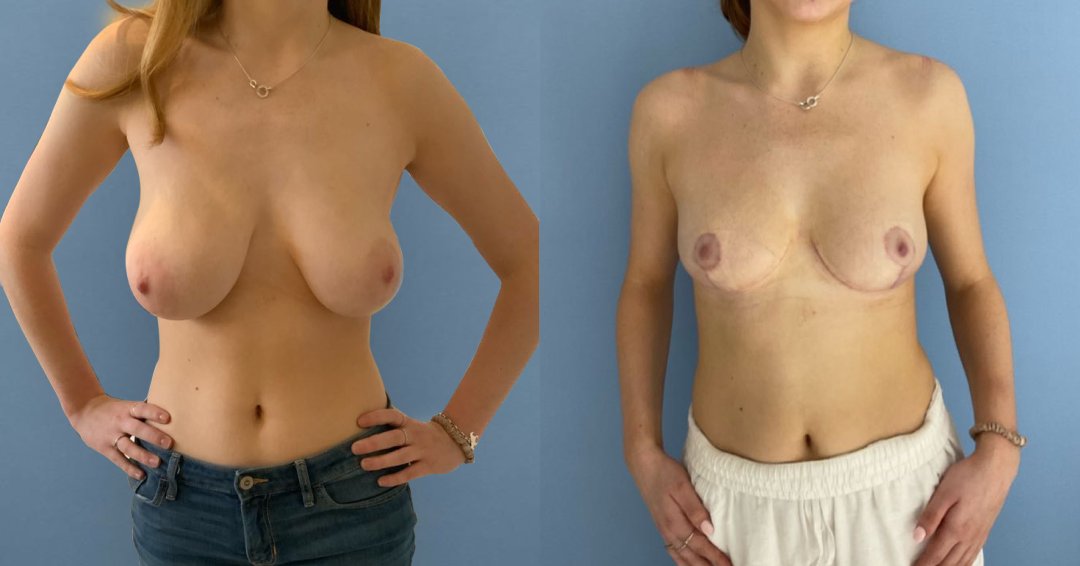
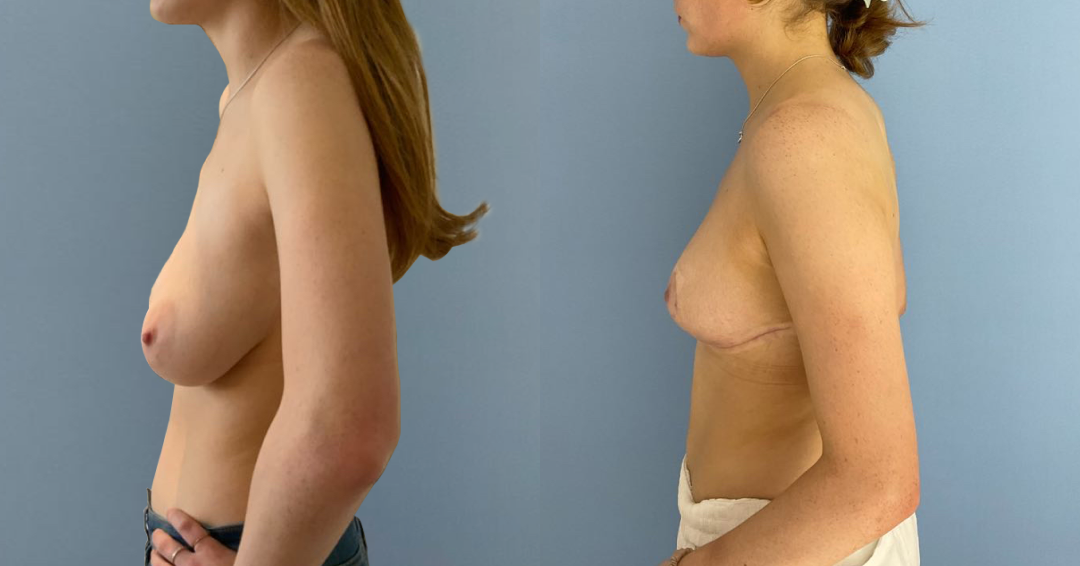
Before and After Breast Reduction Results
The images below show real-life breast reduction results from CREO Clinic patients. The images are illustrative of past results, but outcomes can vary from patient to patient according to individual biology, the techniques used, and the quality of post-surgical aftercare.
Benefits of Breast Reduction Surgery
The following outlines potential benefits for appropriate candidates. Individual outcomes depend on anatomy, degree of reduction, and recovery adherence.
- Pain relief: A reduction may help ease neck, back, and shoulder strain caused by heavy breasts
- Reduced skin irritation: May alleviate friction that can lead to chafing and bra strap irritation
- Improved physical freedom: May reduce limitations on mobility during physical exercise
- More comfortable sleep: May allow for more comfortable rest and a greater range of sleeping positions
- Better posture: May help reduce the forward pressure associated with poorer posture
- Improved clothing fit: Better clothing fit due to adjusted upper body proportion
The CREO APEX Recovery System
What to Expect: Before, During and After
Understanding the surgical journey is an important part of the decision-making process. The following outline of each stage is designed to help patients understand what to expect from preparation through to final results.
Before Surgery
Maintain a stable BMI of 30 or below: Keep your weight stable before surgery, as this helps minimise the risk of complications (use our BMI calculator to check)
Stop nicotine consumption: Abstain from smoking, vaping, and all nicotine products for at least four weeks before surgery, as nicotine can significantly increase the risk of surgical complications and impair wound healing
Limit alcohol intake: Reduce alcohol consumption in the two weeks before surgery to support post-surgical healing
Stop oestrogen-based contraceptives or HRT: In the four weeks leading up to surgery, you will be advised to stop taking oral contraceptive pills or HRT medication, as this can help reduce the risk of thrombosis. Please discuss this with your GP
Prepare your home for recovery: Arrange your home to be as comfortable as possible in advance, and delegate responsibilities such as childcare and pet care for the initial stages of your downtime
Day of Surgery
Most patients find they can be discharged within a few hours of surgery, following a period of rest in a specialised recovery room while the effects of the anaesthetic wear off. Discharge times vary between patients according to individual recovery rates.
Initial Recovery
In many cases, patients feel comfortable returning to work after approximately one week, depending on individual recovery rate and the nature of their role. Patients should refrain from strenuous activity for at least six weeks, during which time they should wear their compression garment daily to help reduce swelling.
The CREO Clinic provides laser scar management treatments and manual lymphatic drainage (MLD) massage as part of its APEX aftercare system. These are administered as part of your aftercare plan as soon as is clinically appropriate.
Final Results
Risks, Limitations and Considerations
As with any surgical procedure, breast reduction carries recognised risks that should be carefully considered. All risks and limitations will be outlined in detail during the initial consultation with Dr Tillo. These factors are discussed to ensure the procedure is appropriate and that expectations are realistic.
Some of the risks that warrant careful consideration include:
- Scarring: some degree of scarring after breast reduction is inevitable, though its extent depends on the technique used. Scars lose prominence over the 12 to 18 months following surgery and are actively managed through the APEX aftercare programme
- Changes in breast or nipple sensation: manipulation of the nipple–areola complex (NAC) during surgery may affect the tissue and nerves in the breasts, which could cause temporary or, in some cases, longer-lasting changes to sensation
- Impact on breastfeeding: due to the position of milk glands in and around the NAC, breast reduction may disrupt milk production
- Asymmetry: a breast reduction typically improves any pre-existing asymmetry in the breasts, but slight differences in outcome can still occur
- Infection: clinical regulations are followed carefully, and all procedures are performed in CQC-registered surgical facilities, but this does not eliminate the possibility of infection at wound sites
- DVT: deep vein thrombosis is a recognised risk under general anaesthesia and is monitored carefully by the surgical team
- Adverse reaction to anaesthesia: a standard risk associated with general anaesthesia, discussed during pre-operative assessment
- Breast regrowth: in cases of hormonal changes or significant weight gain, overall breast volume can increase in future
All surgical procedures carry some degree of risk. Individual risk is discussed in detail during consultation, and Dr Tillo will only recommend surgery where the clinical case supports it.
Cost of Breast Reduction in London
The cost of breast reduction surgery in London at the CREO Clinic starts from £9,550. As all procedures are planned around the patient’s individual anatomy, clinical needs, and treatment goals, pricing may vary between patients. A personalised quotation is provided following consultation with Dr Tillo, once the most appropriate surgical plan has been established.
The surgical fee typically includes:
- Preoperative assessments and blood tests
- Surgeon, anaesthetist, and nurses’ fees
- Use of CQC-registered hospital facilities
- Post-operative monitoring and follow-up consultation
- Aftercare treatments, including laser scar management and manual lymphatic drainage (MLD) massage
- The CREO recovery kit, including a compression garment and scar care products
Where appropriate, financing options may be available through CREO Clinic’s external finance partner, Chrysalis Finance. Any financing arrangements are discussed separately following consultation and are subject to approval and eligibility criteria.
Why Choose CREO Clinic
CREO Clinic is structured around consultation-led surgical planning and specialist care, with treatment recommendations guided by individual anatomy, clinical assessment, and patient goals. All surgical decision-making is led directly by the operating surgeon through one-to-one consultation.
Specialist Surgeons by Anatomical Area
Patients undergoing breast reduction surgery in London at CREO are treated exclusively by Dr Omar Tillo, who is highly experienced in breast reduction and reconstruction across a range of complexity levels. Surgical planning is based on the specific clinical considerations of each case, with treatment recommendations tailored to the patient’s anatomy and goals.
Consultation-Led Decision-Making
Consultation forms a central part of the decision-making process at CREO Clinic. During assessment, patients are able to discuss their physical concerns, treatment goals, and expectations directly with Dr Tillo. Suitability for surgery is assessed carefully, and recommendations are made according to what is considered clinically appropriate for the individual patient.
Integrated Aftercare and Recovery
The CREO Clinic’s APEX aftercare system is designed to provide structured support throughout recovery. This includes post-operative monitoring alongside supplementary aftercare treatments, such as manual lymphatic drainage (MLD) massage and laser scar management, where clinically appropriate. Recovery planning begins before surgery and continues throughout the healing period as part of the wider surgical care pathway.
Long-Term Outcome Focus
Follow-up care and recovery monitoring form part of the clinic’s longer-term approach to patient care. Patients are reviewed throughout recovery so that healing progress, comfort, and any post-operative concerns can be assessed appropriately over time.