





Breast implant removal is a surgical procedure in which existing breast implants are removed. It may be considered because of implant-related complications, changing personal preferences, findings from implant surveillance or other individual clinical factors.
Explantation refers specifically to the removal of the implants. Implant replacement, also known as implant exchange, is a separate surgical option. Depending on the patient’s anatomy, clinical needs and treatment goals, removal may also be combined with a breast lift or fat transfer.
At CREO Clinic, breast implant removal is performed by Dr Omar Tillo, a BAAPS-listed plastic surgeon with interests in breast and body surgery. The appropriate surgical approach is determined through an individual consultation and clinical assessment.
Surgery at a Glance
Results
3-6 MonthsAnesthesia
General AnaestheticSurgery Time
1 HourHospital Time
Day CaseOff-Work
1 WeekWhy Patients Choose Breast Implant Removal
There are a number of reasons patients may choose breast implant removal. Personal changes in preference or clinical concerns can all be factors in the decision; the choice is individual and does not require a specific justification. Suitability for the procedure is always assessed during an individual consultation with Dr Tillo.
Changes in Lifestyle or Aesthetic Preference
Over time, preferences around breast size and appearance can shift. Patients may feel that the size or shape of their breasts no longer aligns with their lifestyle or levels of physical activity. For some, their aesthetic priorities have changed, and they may no longer feel that their implants are proportionate to their physique. In these circumstances, they may consider implant removal or exchange.
Post-Pregnancy or Body Changes
The effects of pregnancy, breastfeeding, significant weight change, and natural ageing vary between patients and may alter breast tissue, skin elasticity, breast shape or implant position. Depending on the extent of these changes and the patient’s goals, implant removal may be considered alone or alongside another procedure, such as a breast lift.
Confidence, Symmetry & Proportions
Breast implants that may have previously suited a patient’s preferences can begin to feel less consistent with their self-image or physical activities over time. Some patients may therefore consider explant surgery as part of a change in breast size, shape or overall proportion, although the likely post-operative appearance will depend on individual anatomy and tissue quality.
Concerns About Implant Ageing or Complications
Patients may consider removal or replacement because of changes in implant condition, surveillance findings or complications affecting the implant or surrounding tissue, such as capsular contracture, implant rupture or displacement. Concerns about symptoms associated with breast implant illness (BII) may also prompt patients to seek specialist assessment to discuss possible causes and whether implant removal is clinically appropriate.
How Breast Implant Removal Surgery Works
The most appropriate surgical approach for breast implant removal depends on the reasons for removal, the condition of the implants and surrounding capsule, the patient’s anatomy and any symptoms or clinical findings. Treatment goals and whether any combined procedures are planned may also influence the incision used and the sequence of surgery.
What Happens During Surgery
A breast implant removal begins with pre-operative markings to guide incision placement, followed by the administration of a general anaesthetic. Wherever possible, the initial incision is placed along the existing scar lines from the implantation surgery. This helps to avoid new scarring.
In most cases, the incision is made in the inframammary fold but may occasionally be placed around the areola. The implant is carefully separated from the surrounding tissue and removed. Management of the capsule, which is the tissue pocket that forms around the implant, is determined by clinical findings, implant condition, symptoms, patient anatomy and the surgical risks associated with removal. It may be retained, partially removed or fully removed where clinically appropriate. Any combined procedures, such as a lift or fat transfer augmentation, may be performed during the same anaesthetic where this forms part of the agreed treatment plan.
Anaesthetic Type & Procedure Duration
Breast implant removal is typically performed under general anaesthetic and is often planned as a day-case procedure. Operating time varies according to surgical complexity, capsule management and whether combined procedures are performed. Implant removal alone may take less than one hour, while more complex surgery may take between one and three hours or longer in some cases.
Techniques Used During Surgery
To adapt the explant surgery to the patient’s specific treatment needs, Dr Tillo will choose between a variety of explant techniques. The table below gives an outline of the techniques that may be used and why.
| Technique | What it involves | When it is used |
| Implant removal only (capsule retained) | The implant is removed while some or all of the capsule is left in place | May be considered where the capsule is thin, soft and not causing clinical concern, and where removal would offer no clear benefit or may introduce unnecessary surgical risk |
| Partial capsulectomy | A selected portion of the capsule is removed | May be used where part of the capsule is thickened, symptomatic, damaged or otherwise clinically concerning, but complete removal is not considered necessary or proportionate |
| Total capsulectomy | The entire capsule is removed, although this may not always be technically possible without increasing surgical risk | May be considered in selected cases, such as significant capsular contracture, implant rupture with silicone outside the implant shell, abnormal capsule findings or other specific clinical indications. Concerns about BII alone do not automatically require total capsulectomy |
| En bloc capsulectomy | The implant and capsule are removed together without intentionally opening the capsule, where this can be achieved safely | Generally reserved for specific indications where maintaining capsule integrity is clinically necessary. It is not a standard response to suspected rupture or BII concerns and may not be technically possible or clinically appropriate in every patient |
NB. En bloc is not required in most cases. Whether implant removal alone, partial capsulectomy, total capsulectomy or en bloc removal is appropriate is determined after consultation, examination and review of relevant imaging or operative findings.
Operating Environment & Overnight Stay
The CREO Clinic performs all procedures in CQC-registered and regulated hospital facilities with established reputations for high clinical standards. Breast implant removal is typically planned as a day case, although an overnight stay may be recommended where clinically indicated following assessment and post-operative monitoring.
Patient Feedback & Outcomes
Is Breast Implant Removal Right for You?
Suitability for breast explant surgery is assessed during a one-to-one clinical consultation with Dr Tillo. Below is a list of criteria that offer a general indication of eligibility, but final suitability can only be confirmed after an assessment of the implant condition, tissue quality, and the patient’s individual circumstances.
Who It’s For
Breast implant removal may be considered for patients who:
– Wish to have existing breast implants removed, whether for personal, aesthetic, or health-related reasons
– Are experiencing implant-related complications such as capsular contracture, rupture, displacement, or persistent discomfort
– Have symptoms they associate with breast implant illness (BII) and wish to discuss explantation as part of their assessment
– Have noticed changes in implant appearance or feel following weight change, pregnancy, breastfeeding, or ageing
– Prefer a return to natural breast anatomy without implants
– Have maintained a stable weight for at least six months
– Have a BMI at or below 30 (Use our BMI checker)
– Are in good general physical and psychological health
– Do not currently smoke, or are able to abstain from all nicotine products for at least four weeks before and after surgery
Understand that the post-explant appearance of the breasts will vary depending on skin elasticity, tissue quality, original breast volume, and whether any combined procedure is performed
Who It May Not Be Right For
– Have a BMI above 30
– Are pregnant or currently breastfeeding
– Smoke or use nicotine products and are unable to stop for at least four weeks before and after surgery
– Have health conditions that may increase the risk of surgical complications
– Expect the breasts to return to their exact pre-augmentation state; skin stretch and tissue change caused by implants mean that this is not a predictable outcome, and the post-explant appearance depends on multiple individual factors
– Are considering explantation without having discussed the clinical implications of skin laxity or ptosis with their surgeon, where these are relevant to the likely outcome
Procedure Variants & Alternatives
There are several surgical approaches that may be considered alongside or instead of breast implant removal alone. The most appropriate option depends on the condition of the implants, the surrounding breast tissue and skin, and the patient’s individual preferences, as assessed during consultation.
Breast Implant Removal Only
Breast Implant Removal With Breast Lift
Breast Implant Removal With Fat Transfer
The amount of volume that can be achieved and the proportion of fat that survives vary between patients. In some cases, more than one fat-transfer procedure may be required.
Breast Implant Replacement Surgery
Whether the existing capsule can be retained or requires modification depends on the implant condition, pocket dimensions, tissue quality and the proposed replacement implant.
Before & After Results
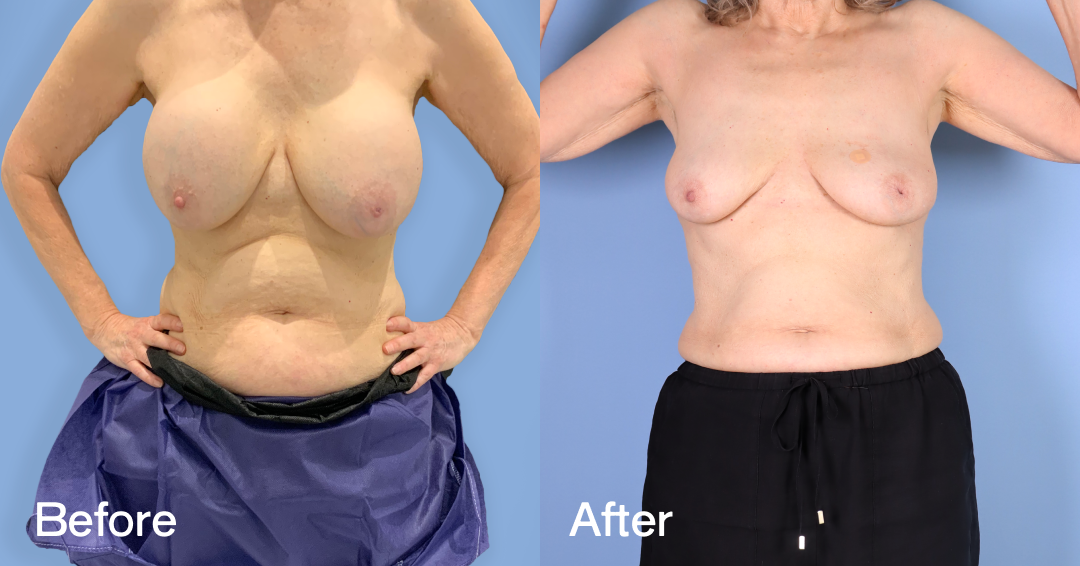
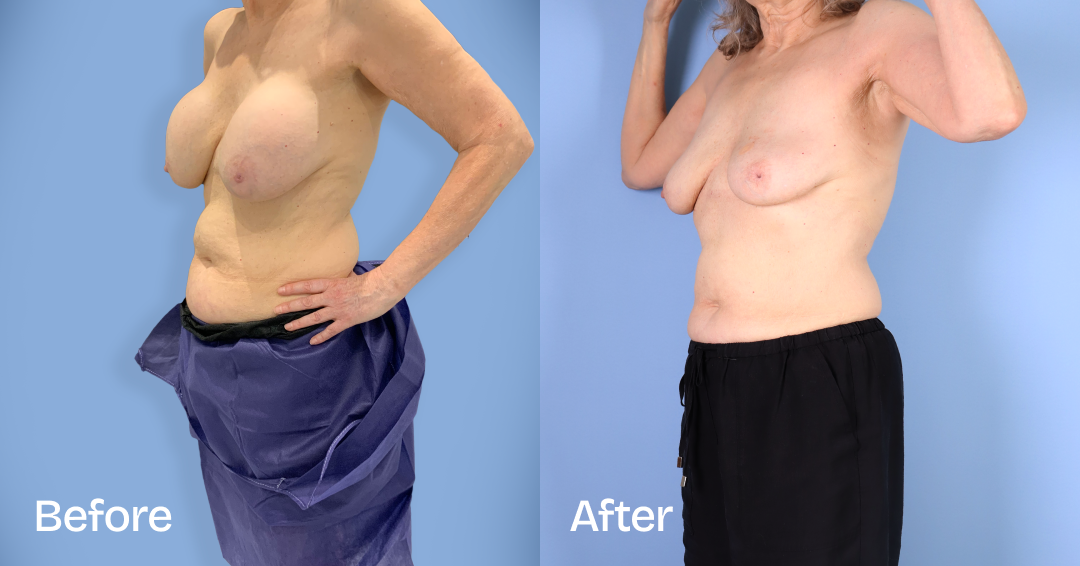
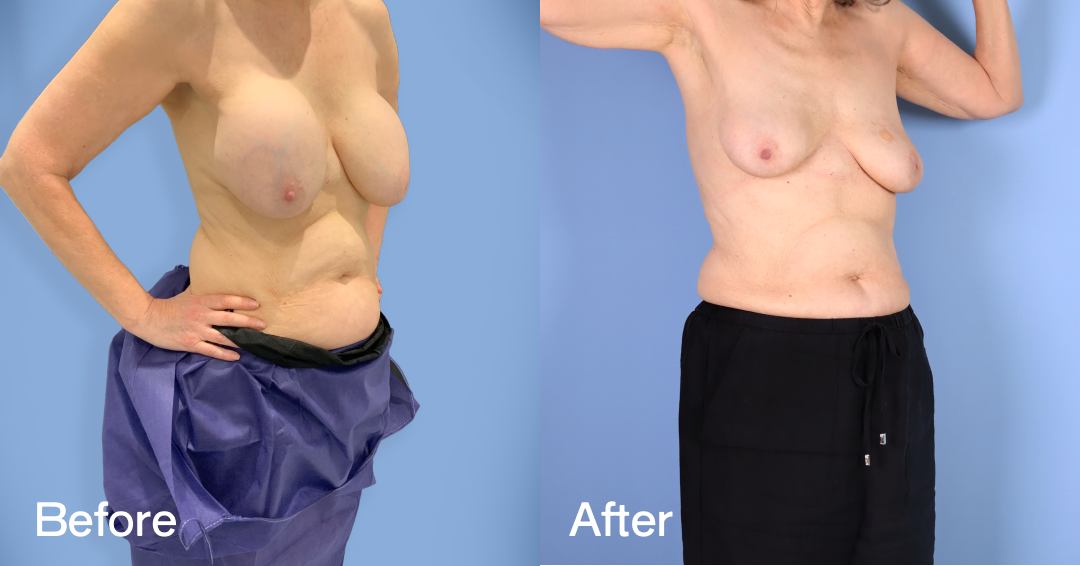
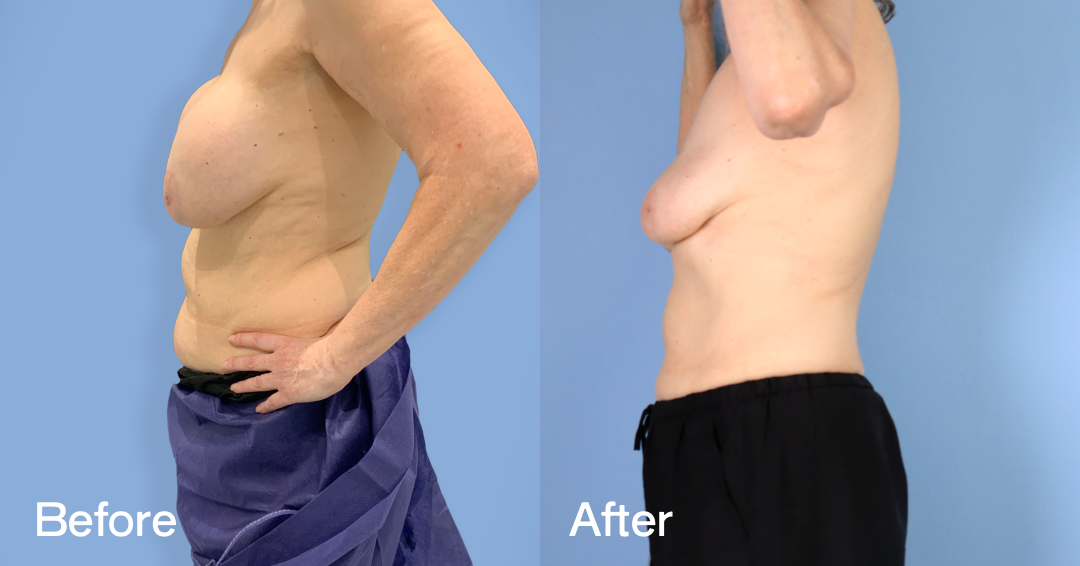
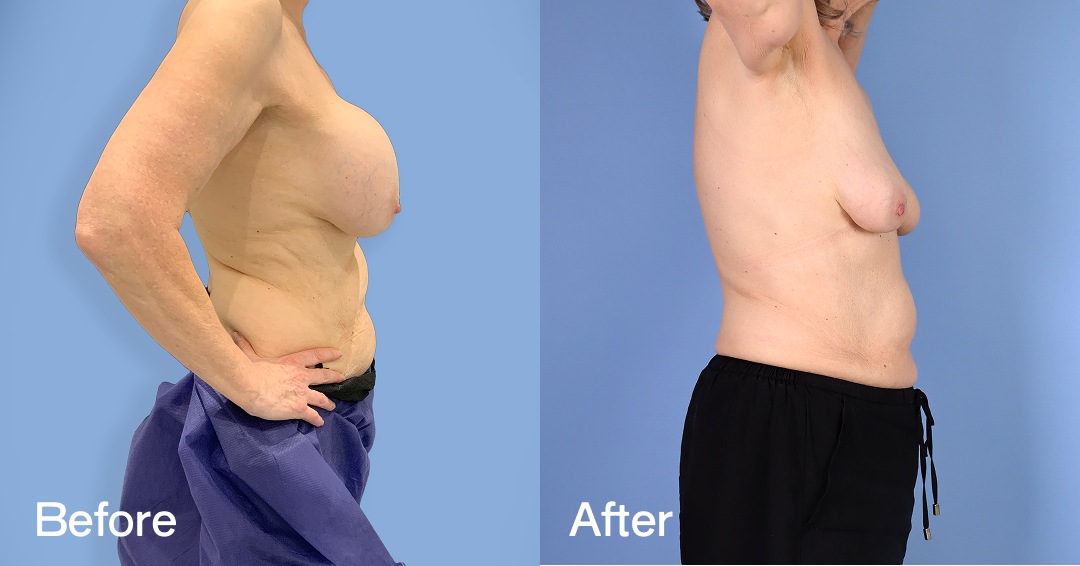
The gallery below shows images of real-life CREO patients who have undergone breast explant surgery. These pictures are illustrative of previous outcomes, but results vary between patients according to multiple factors, such as individual healing times, the techniques used, and whether the surgery was combined.
The CREO APEX Recovery System
What to Expect Before, During & After Surgery
At the CREO Clinic, we value communicating the surgical journey to our patients, as it is an important part of the decision-making process. The stages below give an outline of what patients can expect from a breast implant removal surgery.
Before Surgery
Stop all nicotine products: Cigarettes, vapes, patches, and all other nicotine-containing products may need to be stopped before surgery in line with your surgeon’s advice. The recommended period will depend on your treatment plan and individual risk factors. Nicotine reduces blood flow to healing tissue and can increase the risk of wound complications and infection.
Review oestrogen-based contraceptives or HRT: Recommendations regarding oral contraceptives and HRT depend on your individual thrombosis risk, medical history and current clinical guidance. Do not stop prescribed medication unless advised by the prescribing clinician and surgical team.
Keep your weight stable: Where possible, aim to maintain a stable weight and a BMI at or below 30 in the weeks leading up to surgery, as changes in body composition can alter the surgical plan and affect your outcomes.
Attend any recommended imaging appointments: Where the condition of your implants is uncertain, an MRI or ultrasound may be arranged before surgery to assess implant integrity when clinically indicated. Complete any requested imaging before your surgery date.
Provide a full medication and supplement list: Let your surgeon know about everything you are taking, including prescribed medications, over-the-counter drugs, and supplements such as fish oil or vitamin E. Some may need to be temporarily stopped. Do not discontinue prescribed medication without advice from the prescribing clinician and surgical team.
Arrange your journey home: You will not be fit to drive after surgery. Ask a responsible adult to collect you and be available for the first 24 hours after you are discharged.
Set up your home before surgery day: Organise a comfortable place to rest with everything you need within easy reach. Upper-body movement and lifting may be restricted during the initial recovery period, depending on your procedure and post-operative guidance. Make any necessary arrangements for work, childcare, or daily responsibilities in advance.
Day of Surgery
Following your surgery, you will be monitored in a specially designed recovery room before being discharged when clinically appropriate. Many patients return on the day of surgery, although an overnight stay may be recommended where necessary.
Initial Recovery
From the first day of your recovery, you may be advised to wear a compression bra for approximately four to six weeks, depending on CREO’s post-operative protocol and your individual surgical plan. You will not be able to drive on the day of your surgery, so a responsible adult must be present to escort you home.
Many patients find they can return to desk work after around one week of recovery, but this varies according to the extent of surgery and the demands of their role. Strenuous exercise and activities that load the upper body are usually restricted until the surgical team confirms that they can be resumed. By four to six weeks, many patients have progressed through the main stages of early recovery, although swelling, tissue settling and activity restrictions may continue. Combined procedures typically require longer recovery periods.
Final Results
Risks, Limitations & Considerations
Breast implant removal carries recognised risks and limitations that should be considered carefully before proceeding. Outcomes vary between patients and are shaped by factors including implant condition, capsule characteristics, tissue quality, surgical complexity, and individual healing response.
Some potential risks and considerations include:
- Changes to breast shape, volume, or symmetry following removal
- Skin laxity or ptosis, where the skin envelope has stretched around the implant and does not fully retract
- Scarring at the incision site
- Asymmetry in final results
- Changes to nipple or breast sensation
- Wound breakdown or delayed healing
- Infection
- Haematoma or seroma formation
- DVT/VTE
- Adverse reaction to anaesthesia
- Incomplete capsule removal, where relevant, which may require revision
- Need for further surgery (such as a breast lift or fat transfer) to address post-explant appearance
Not all limitations are related to surgical complications. In some patients, the degree of skin laxity, pre-existing breast tissue changes, or the extent of implant-related tissue distortion may affect the final contour achieved following removal, regardless of surgical technique.
The likelihood of specific risks varies according to individual patient factors, medical history, and the nature of the procedure. During consultation, Dr Tillo will explain the potential risks and benefits relevant to your circumstances.
Costs & Financing Options
The cost of breast implant removal at the CREO Clinic depends on the surgical approach used, the complexity of the capsule removal required, and whether combined procedures are planned.
All of the CREO Clinic’s breast implant removal prices can be found in the table below:
| Procedure | Starting price |
| Removal of implants only | From £5,400 |
| Capsulectomy and removal of implants | From £8,250 |
| En bloc capsulectomy and removal of implants | From £9,000 |
A full, personalised quote is provided following consultation with Dr Tillo once the most appropriate treatment plan has been agreed.
What Your Quote Includes
Surgical fees at the CREO Clinic are all-inclusive. Your quote will cover:
- Surgeon, anaesthetist, and nursing fees
- Use of CQC-registered surgical facilities
- Pre-operative assessments, investigations, and blood tests
- Surgical bra and post-operative dressings
- The CREO recovery kit, containing immune-supportive vitamins, Hibiscrub, absorbent pads, and Bio-Oil
- Manual lymphatic drainage massage and laser scar management treatments as part of the APEX aftercare programme
- Follow-up appointments and routine post-operative care
Where a combined procedure is planned, such as removal with a breast lift or fat transfer, this is included within the same all-inclusive quote. There are no additional charges for standard aftercare.
Financing Options
Where appropriate, financing options may be available through CREO Clinic’s external finance partner, Chrysalis Finance, including interest-free loans over a 12-month period, with longer-term plans available at increased rates of interest.
Any financing arrangements are discussed separately following consultation and are subject to approval and eligibility criteria. Financing should be considered only after the clinical suitability of the procedure has been established.
Why Choose CREO Clinic
The CREO Clinic is built around detailed, clinically led surgical planning, anatomical specialisation and treatment plans adapted to the patient, supported by coordinated aftercare. All clinical recommendations are made by the surgeon following a one-to-one consultation and assessment.
Trusted Expertise: Dr Omar Tillo & Team
Surgeries at the CREO Clinic are performed by specialist plastic surgeons working within their areas of anatomical focus. All breast implant removal procedures are performed by Dr Omar Tillo, whose listed clinical interests include breast and body surgery.
Surgeon-Led Planning
Treatment recommendations at the CREO Clinic are made by the surgeon following a one-to-one consultation and clinical assessment. Each patient’s individualised surgical plan is created to align their procedure with their clinical and aesthetic needs, with an emphasis on supporting their long-term treatment goals.
Integrated Aftercare, Always Included
The CREO Clinic’s APEX Recovery System includes surgical and post-operative measures selected according to the operation and the patient’s clinical needs. This may include specific suture techniques, manual lymphatic drainage massage and laser scar management where appropriate. These elements form part of the planned aftercare pathway and do not guarantee a particular healing or scar outcome.
Breast Implant Removal FAQs
What is the difference between breast implant removal and explant surgery?
Will I need a breast lift after breast implant removal?
Can breast implants be removed and replaced during the same surgery?
What is a capsulectomy?
How long does recovery after breast implant removal take?
When will I see the final results after explant surgery?
Can breast implant removal help with implant-related discomfort or symptoms?
How much does breast implant removal cost in London?
The CREO Clinic offers personalised, all-inclusive quotes following a consultation with Dr Tillo and the establishment of an individualised treatment plan. Financing options may also be available, subject to eligibility and separate approval.