





What is Inverted Nipple Correction Surgery?
Inverted nipple correction is a surgical procedure for patients with nipples that turn inward or appear flat rather than having the typical forward projection. An inverted nipple is typically harmless but may cause some physical discomfort for certain patients. A correction surgery may help make aesthetic improvements and help address any physical symptoms.
All nipple correction at the CREO Clinic is performed by our experienced plastic surgeons, all of whom are listed on the GMC Specialist Register.
Surgery at a Glance
Treatments
1Results
ImmediateAnesthesia
Local AnaesthesiaSurgery Time
1-2 HoursHospital Time
3-6 HoursMobility
ImmediateWashing
2 DaysOff-Work
1-2 DaysExercise
2 WeeksFull Recovery
2 WeeksWhy Nipple Correction Surgery Matters
There is a range of physical, functional and personal motivations for nipple correction; inverted nipple correction surgery may help address these concerns, depending on the individual anatomy and degree of inversion. Suitability for the procedure should follow a thorough clinical assessment of nipple anatomy and the degree of nipple inversion.
Inverted Nipples
An inverted nipple can be described as a nipple that sits flat or turns inward from the breast, rather than projecting outwards. There are three grades, from 1 to 3:
- Grade 1: flat or slightly inverted
- Grade 2: inverted but reverts with stimulation
- Grade 3: a permanent inversion that does not respond to stimulation
The grade of inverted nipple directly impacts which techniques are most appropriate, and if breastfeeding may be affected by the surgery.
Nipple Asymmetry or Shape Concerns
Some patients present with a degree of asymmetry between the nipples; projection, shape, or position may be asymmetrical. In such cases, nipple correction to one nipple may be a more appropriate treatment plan.
Functional or Comfort-Related Concerns
Physical discomfort, including irritation, inflammation, rashes, and difficulty maintaining hygiene, can all be issues for patients with inverted nipples. Grade 3 inversion may affect the ability to breastfeed in some patients; this is an important functional consideration that can be discussed during consultation.
How Nipple Correction Surgery Works
There are multiple approaches to inverted nipple correction. The exact approach used is determined during a clinical consultation where the surgeon is able to assess key variables such as inversion grade and breast anatomy. Technique selection can have implications for future breastfeeding, which will be discussed in full at consultation.
What Happens During Surgery
Local anaesthetic is used for inverted nipple correction. This allows a small incision to be made at the base of the nipple, releasing it from the surrounding connective tissue that holds it inverted. The nipple is then repositioned in the forward projecting position and secured with a dissolvable suture. The incision is then closed with further dissolvable sutures.
Anaesthetic Type and Procedure Duration
While local anaesthetic is the standard for nipple inversion surgery, general anaesthetic may be used where clinically appropriate. The procedure itself lasts between 1 and 2 hours with same-day discharge (generally within 3 to 6 hours of the surgery).
Surgical Techniques Used
There are multiple techniques used to correct inverted nipples, each chosen according to its suitability and potential effectiveness for the individual case. Below you can find a table of the different techniques and their use cases.
Techniques used in inverted nipple correction that involve division of the milk ducts may impact the ability to breastfeed. Patients who wish to breastfeed in the future must discuss this during their consultation.
| Technique | Mechanism | Suited to | Breastfeeding |
|---|---|---|---|
| Release of ducts (duct-sparing) | Fibrous tissue holding the nipple inward is released without cutting the ducts | Grade 1; some grade 2 | May be preserved |
| Partial duct division | Some ducts are divided to allow the nipple to project where release alone is insufficient | Grade 2 | May be affected |
| Full duct division | All ducts are divided to achieve correction in more severe cases | Grade 3; severe cases | Affected |
| Dermal sling | A flap of dermal tissue holds the nipple in its corrected position; used alongside duct-sparing or dividing approaches | Combined with other techniques | Depends on approach used |
| Dermal fillers (non-surgical) | Filler placed at the base of the nipple to project it forward; results are not permanent | Grade 1 only | Not affected |
Day Case Treatment and Clinical Setting
All inverted nipple corrections at the CREO Clinic are performed in CQC-registered facilities across London. They are typically a day case, which means the majority of patients will return home on the same day.
Patient Feedback & Outcomes
Is Nipple Correction Surgery Right for You?
Whether nipple correction surgery is appropriate depends on the cause and grade of inversion, your individual anatomy, general health, and treatment goals. These factors are assessed during consultation before a surgical approach is recommended.
Who It’s For
Nipple correction surgery may be suitable for patients who:
Have one or both nipples that sit flat or turn inward and wish to have them corrected. The procedure aims to reposition the nipple so that it projects forward. Whether correction of one or both nipples is planned is discussed at consultation.
Have realistic expectations about the outcome and the limitations of surgery. Results depend on the grade of inversion, the technique used, and individual healing. The likelihood of recurrence varies by technique and inversion grade and will be discussed at consultation.
Have considered the implications for breastfeeding. Some surgical techniques involve division of the milk ducts, which may affect the ability to breastfeed in future. Patients who wish to breastfeed must discuss technique selection with Dr Tillo before surgery is confirmed.
Are in good general health and are non-smokers, or are willing to abstain from all nicotine products for a specified period. The required period of abstinence will be confirmed at pre-operative assessment. Nicotine impairs healing and increases the risk of wound complications.
Are not currently pregnant or breastfeeding. Surgery is not performed during pregnancy or while breastfeeding. This is a temporary deferral rather than a permanent contraindication.
Physical or Functional Considerations
The three grades of inversion each carry different clinical implications. Grade 1 inversion is the mildest form, where the nipple is flat or slightly inverted but can be drawn out manually and may respond to stimulation. Grade 2 inversion is more pronounced; the nipple responds to stimulation but reverts to its inverted position immediately afterwards. Grade 3 inversion is permanent, with very short milk ducts that prevent the nipple from responding to stimulation at all. Grade 3 inversion may affect the ability to breastfeed, although this varies between patients and should be discussed during consultation.
Technique selection is determined by the inversion grade and breastfeeding goals. Where duct-sparing techniques are used, the milk ducts are preserved as far as possible, which may maintain breastfeeding potential. Where duct division is required, particularly for grade 2 and grade 3 inversions, the ability to breastfeed will be affected. Patients should discuss these implications in detail with Dr Tillo at consultation before a treatment plan is confirmed.
Physical concerns associated with inverted nipples, including inflammation, skin irritation, rashes, and hygiene difficulties caused by the skin fold of the inversion, are relevant functional considerations that may support the clinical case for surgery. These are assessed alongside aesthetic concerns during consultation.
Who It May Not Be Right For
Have not undergone prior investigation of a sudden change in nipple inversion. Recent or unexplained nipple inversion, particularly where accompanied by a lump, skin changes, nipple discharge, or pain, which should be assessed by a GP or breast specialist before any cosmetic treatment is considered.
Are currently pregnant or breastfeeding. Surgery is not performed during pregnancy or breastfeeding. This is a temporary deferral.
Currently smoke or use nicotine products and are unable or unwilling to abstain. You may be asked to abstain from all nicotine products for a specified period before and after surgery. Nicotine significantly increases the risk of wound complications and poor healing around the incision sites.
Have active skin conditions, infections, or wounds near the treatment area. These should be resolved before surgery is considered.
Have unrealistic expectations about the degree of correction achievable. The degree of correction achievable depends on inversion grade and anatomy. Some residual variation may remain. Recurrence is possible, particularly with duct-sparing techniques. Surgery will not be recommended where expectations are not consistent with what the anatomy supports.
Have unresolved medical concerns in the breast or chest area. Any unresolved clinical concerns should be assessed and managed before cosmetic surgery is considered.
Procedure Variants & Alternatives
Correction of the shape, size, or inversion of the nipple may be addressed with separate or complementary procedures, depending on the outcome of a one-to-one assessment. The procedures below address distinct presentations and may be complementary but not interchangeable.
Inverted Nipple Correction
Nipple Reduction
Areola Reduction
This can also be performed alongside nipple correction surgeries, but it’s important to note that areola reduction is typically a longer surgery requiring general anaesthetic.
Before & After Results
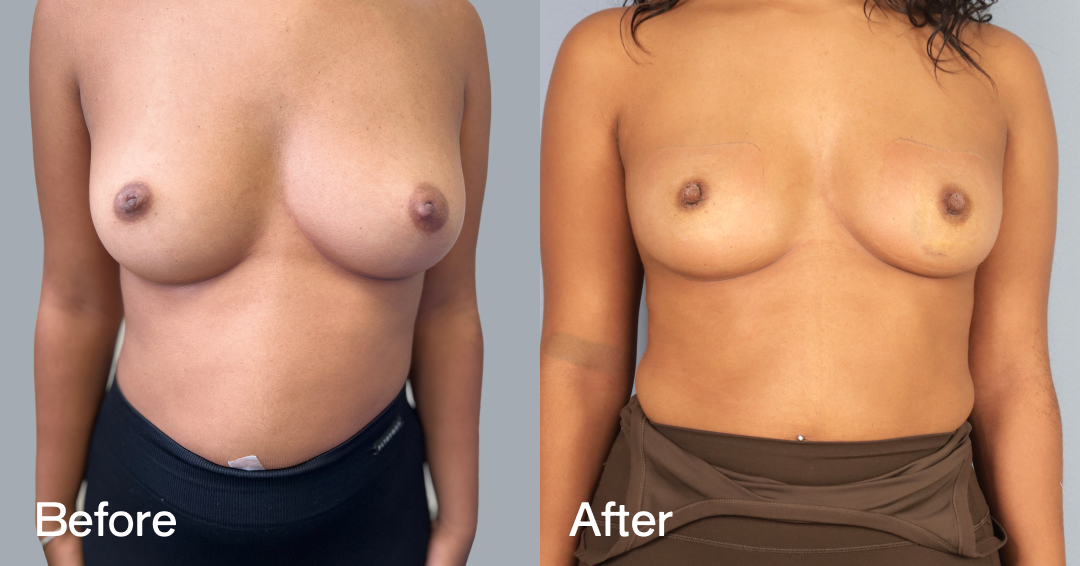
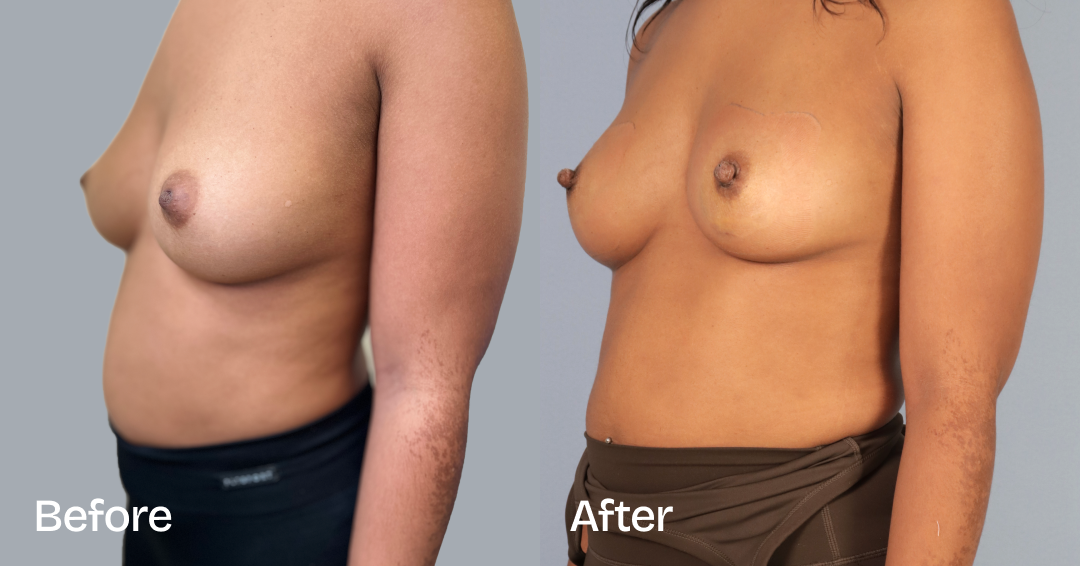
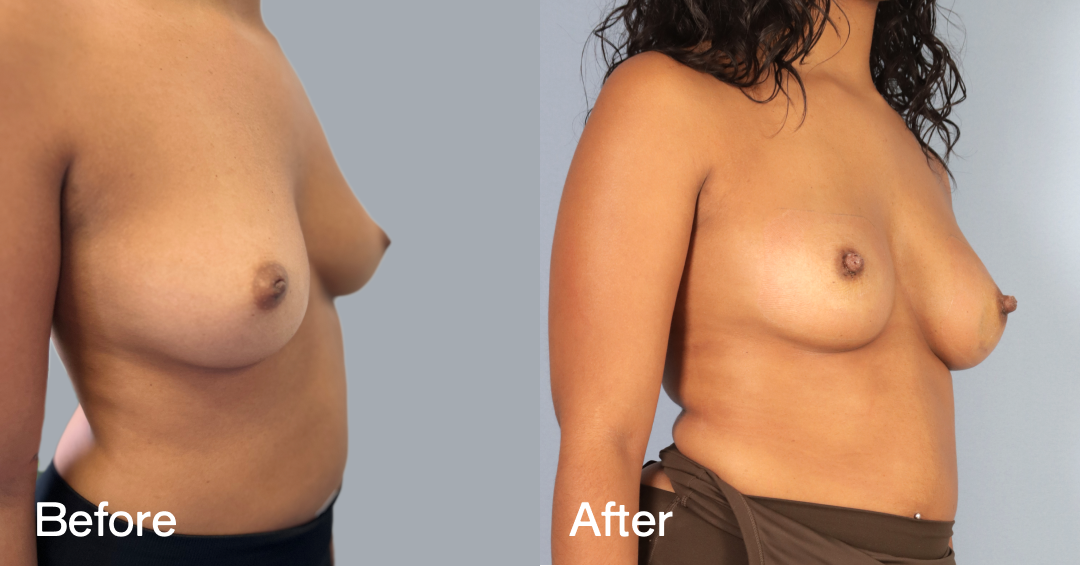
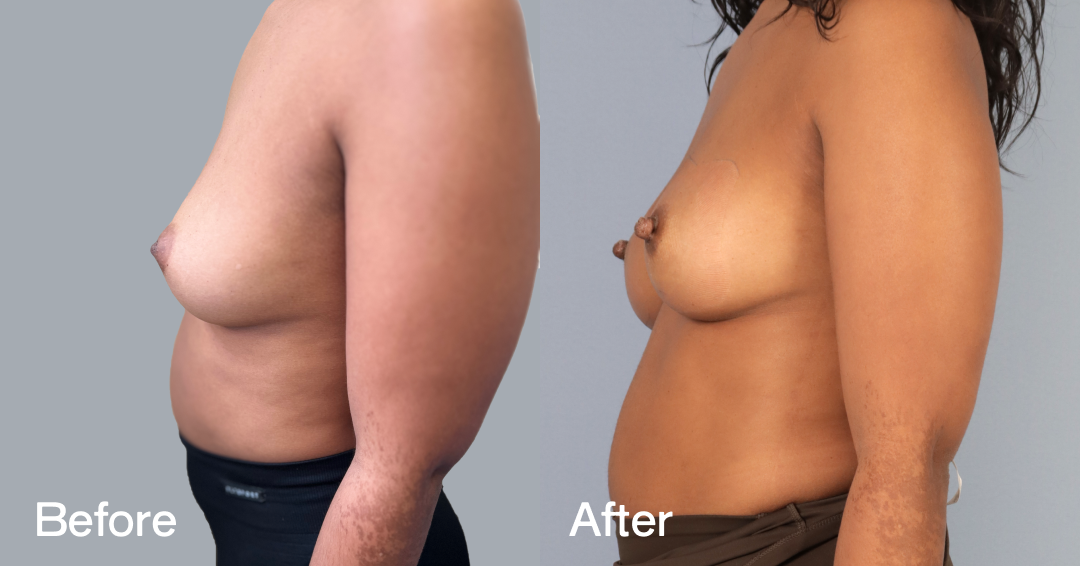
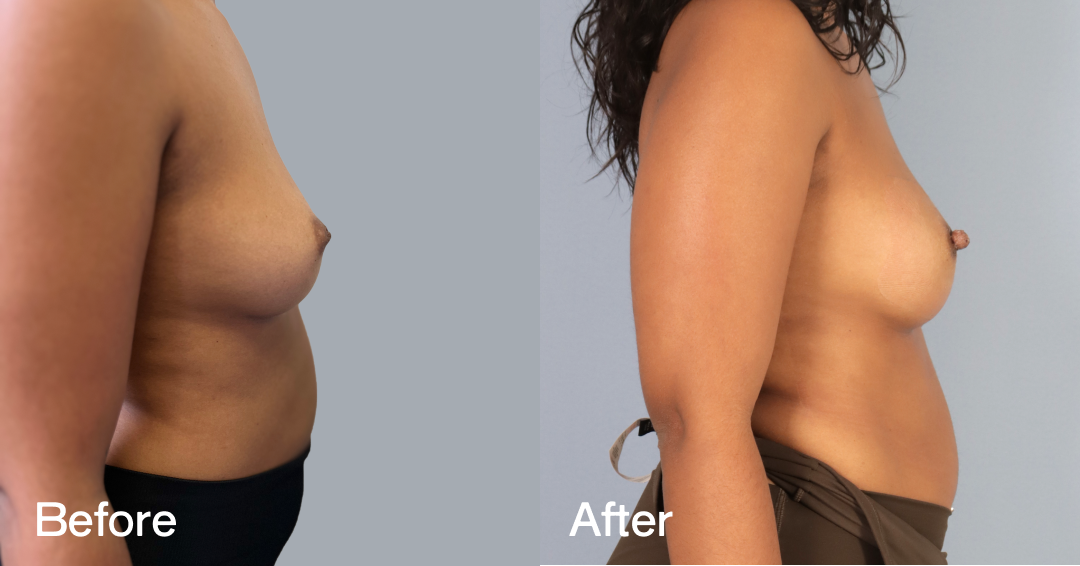
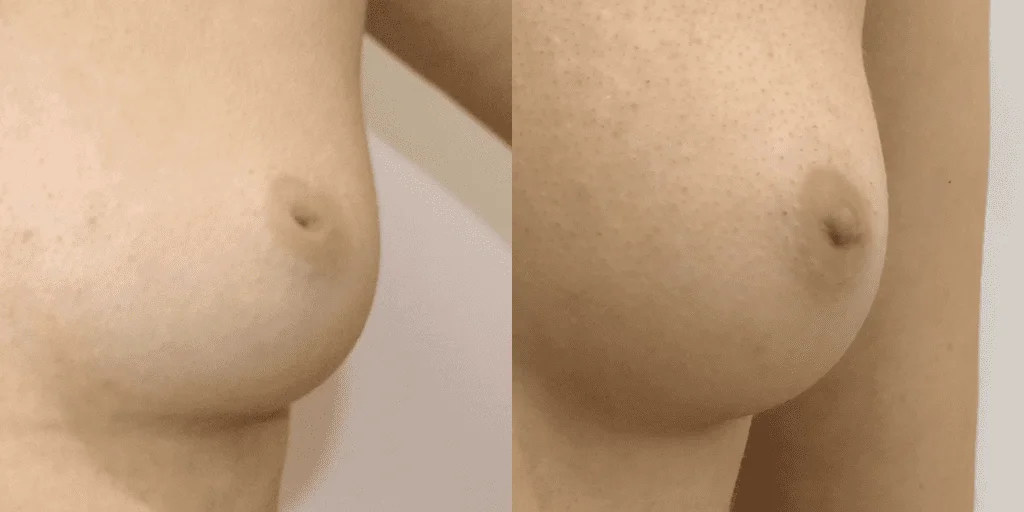
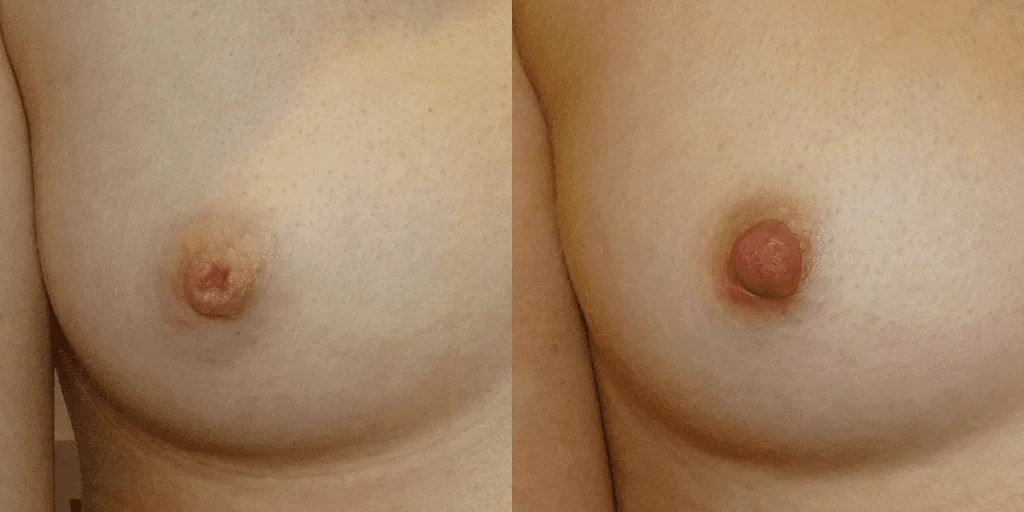
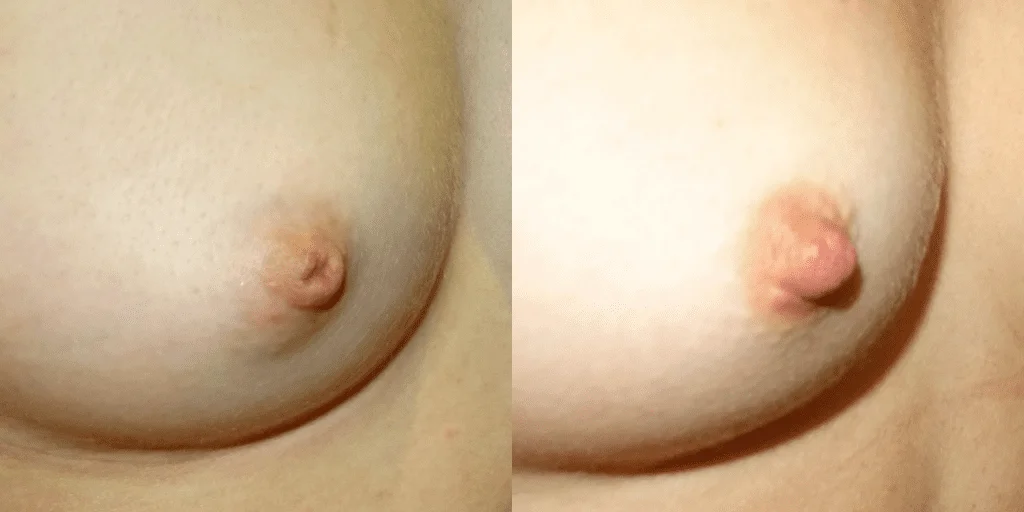
Below we have provided images of real inverted nipple correction surgery patients who attended the CREO Clinic. Outcomes vary from patient to patient, but the images below help offer an illustration of the potential results the surgery can provide.
What to Expect: Before, During & After
To ensure our patients understand the full surgical timeline, we keep the treatment process as consistent as possible. Below, we have outlined the different stages of the surgical journey from the lead-up and preparation through to recovery.
Before Surgery
Stop using nicotine: You may be asked to abstain from cigarettes, vapes, patches, and all other nicotine-containing products for a specified period before and after surgery. The required period will be confirmed at pre-operative assessment. Nicotine impairs healing and increases the risk of complications at incision sites.
Review medications and supplements: Provide a full list of all prescribed medications, over-the-counter drugs, and supplements. Some may need to be temporarily adjusted or paused before surgery. Do not discontinue any prescribed medication without approval from the relevant clinician.
Reduce alcohol intake: You may be advised to reduce or avoid alcohol for a specified period before and after surgery. Guidance will be confirmed at pre-operative assessment.
Arrange transport home: If local anaesthetic is used, you may be able to arrange your own transport home, but having a responsible adult available is advisable. If sedation or general anaesthetic is used, a responsible adult must be available to collect you and remain with you for the first 24 hours after discharge.
Attend pre-operative appointments: Attend any assessments or appointments requested by the surgical team before the procedure.
Day of Surgery
Initial Recovery
Some swelling, bruising, and tenderness around the treated nipple or nipples are expected in the first few days. Dressings are applied following surgery and should be kept clean and dry. You may be asked to avoid washing the area for up to two days. Avoid wearing tight or padded bras and fitted tops for approximately two weeks to avoid placing pressure on the healing tissue.
Strenuous exercise should be avoided for approximately two weeks, or until cleared by the surgical team. Light daily activity can generally be resumed within a day or two of surgery. Some firmness or altered sensation in the nipple is expected and may persist for up to three months as the tissue settles.
Final Results
Sensation in the nipple may be temporarily altered following surgery. In most cases, normal sensation returns gradually over the weeks following the procedure, though it may take up to six weeks to fully return. In some patients, changes to sensation may be more prolonged.
Scars from the small incisions made during surgery are placed at the base of the nipple where they are as discreet as possible. Scars may continue to change in colour, texture and appearance for 12 to 18 months or longer, depending on individual healing.
Recurrence of inversion is possible, particularly where duct-sparing techniques are used. The risk of recurrence varies by inversion grade and technique. Where recurrence occurs, revision surgery may be considered and will be assessed individually.
Risks, Limitations & Considerations
Inverted nipple correction is a relatively minor surgical procedure, but it carries recognised risks and limitations that should be considered before proceeding.
Some potential risks and considerations include:
- Recurrence of inversion: Particularly with duct-sparing techniques, there is a risk that the nipple may gradually return to its inverted position over time. The risk of recurrence varies by inversion grade and the technique used and is discussed at consultation.
- Impact on breastfeeding: Techniques that involve division of the milk ducts will affect the ability to breastfeed. Patients who wish to breastfeed in the future must discuss this with Dr Tillo before a technique is confirmed. Duct-sparing techniques aim to preserve breastfeeding potential but cannot guarantee it.
- Changes to nipple sensation: Temporary or permanent changes to sensation in the nipple may occur following surgery. In most patients, altered sensation resolves over weeks to months. Permanent changes are possible.
- Scarring: Small incision scars are placed at the base of the nipple and are typically discreet. Scarring varies between individuals; some patients may develop more prominent scars.
- Asymmetry: Where both nipples are treated, some degree of residual asymmetry may remain. Where only one nipple is corrected, achieving symmetry with the opposite side depends on the anatomy of both nipples.
- Infection: There is a risk of infection at the incision sites. Infection is uncommon but may require antibiotic treatment.
- Haematoma or delayed healing: A collection of blood beneath the skin may occur following surgery. Wound healing complications are uncommon but may require additional treatment.
- Need for revision surgery: In some cases, particularly where recurrence occurs or the correction is incomplete, a secondary procedure may be required.
The likelihood of specific risks varies according to individual patient factors, medical history, and the nature of the procedure. During consultation, your surgeon will explain the potential risks and benefits relevant to your individual circumstances.
Costs & Financing Options
Nipple Correction Surgery Cost
Inverted nipple correction at CREO Clinic starts from £3,900 under local anaesthetic. The exact cost is confirmed following consultation with Dr Tillo once the treatment plan has been established.
Factors that may affect the final cost include:
- Anaesthetic approach: Procedures under local anaesthetic are priced lower than those requiring general anaesthetic or sedation, as theatre time and staffing requirements differ.
- Number of nipples treated: Correcting both nipples in the same procedure affects surgery time and is reflected in the final quote.
- Technique used: The surgical approach required depends on inversion grade and anatomy. More complex cases involving duct division or combined techniques may require additional time.
A personalised all-inclusive quote is provided following consultation with Dr Tillo once the treatment plan has been confirmed.
Financing Options
Where appropriate, financing options may be available through CREO Clinic’s external finance partner, Chrysalis Finance, including interest-free loans over a 12-month period, with longer-term plans available at increased rates of interest.
Any financing arrangement is subject to status, an affordability assessment, lender approval, and applicable terms and conditions. Current rates and terms will be confirmed before you apply. Financing should be considered only after the clinical suitability of the procedure has been established.
Why Choose CREO Clinic
Many patients choose the CREO Clinic for its surgeon-led decision-making and thorough clinical treatment plans, created by experienced specialist surgeons. Our clinic provides clinically planned inverted nipple correction surgery with treatment decisions based on individual anatomy, suitability and surgical assessment, alongside integrated aftercare to help maintain long-term results.
Trusted Expertise: Dr Omar Tillo & Team
The clinical team at the CREO Clinic is composed of Specialist surgeons, all of whom provide experience and expertise. Our head surgeon, Dr Omar Tillo, has performed hundreds of nipple corrections across all three inversion grades during his career and will work to choose a surgical approach that helps patients achieve their clinical and aesthetic goals.
Surgeon-Led Planning
All nipple corrections at The CREO Clinic are the products of surgeon-led planning, which means all treatment decisions are made exclusively by clinicians. This separates clinical decisions from commercial considerations and allows the surgical approach to be selected according to the patient’s anatomy, clinical needs and treatment goals. In the case that a surgery is judged inappropriate for the patient, it will not be recommended by our surgical team.
Integrated Aftercare
Aftercare is fully integrated with each patient’s surgical plan at the CREO Clinic. The Apex aftercare system includes regular follow-up appointments with our clinical team and direct access to aftercare guidance, and complementary treatments such as laser scar management and lymphatic drainage massage where clinically appropriate.