





Men’s Liposuction in London
Liposuction is a procedure that removes localised deposits of fat from targeted areas of the body using a specially designed suction cannula. The fat cells removed during treatment do not grow back, although remaining fat cells can increase in size if weight is gained. The treatment can be used to refine the male physique by working to enhance the appearance of abdominal muscles, or to target male-specific areas of fat accumulation.
Liposuction is a body contouring procedure rather than a weight loss method, and aims to refine the appearance of the treated area by extracting stubborn fat cells in areas associated with typical male fat distribution, such as the abdomen, flanks, chest, back, and chin.
All liposuction surgeries for men at the CREO Clinic in London are performed by Dr Omar Tillo, CREO’s medical director and a plastic surgeon on the GMC Specialist Register. He is a member of the British Association of Aesthetic Plastic Surgeons (BAAPS) and a Fellow of the Royal College of Surgeons (FRCS).
Dr Tillo has a clinical focus on surgical procedures from the neck down and is a body contouring specialist. He has contributed to the writing of current UK plastic surgery guidelines, which he teaches to other BAAPS members.
Surgery at a Glance
Treatments
1Results
12 weeksAnesthesia
Sedation or general anaesthesiaSurgery Time
1-3 hoursHospital Time
3-6 HoursMobility
24 HoursWashing
ImmediateOff-Work
7 DaysExercise
2 WeeksFull Recovery
12 WeeksWhy Men’s Liposuction Matters
Men may consider liposuction for a range of structural and aesthetic reasons for many, the decision to undergo liposuction follows a period of sustained effort to diet and exercise, with persistent localised fat deposits that have not responded to these changes in lifestyle.
Stubborn Fat That Does Not Respond to Lifestyle Changes
Some fat deposits are resistant to diet and exercise due to the nature of fat accumulation in a given area and the internal systems for preferentially burning and storing fat. In this case, persistent fat is part of a physiological pattern that is difficult to alter with lifestyle efforts alone.
Male Fat Distribution and Body Proportion
Male fat deposits typically concentrate centrally in the abdomen, flanks, and back rather than distributing across the hips and thighs, as it tends to in women. This distribution can impact proportions in the torso and the relationship between the chest, waist, and hips.
Liposuction can be used to help address these areas individually or in combination if the anatomy and quality of surrounding skin support it.
A Considered Clinical Decision
It is important to note that liposuction is a surgical procedure and should be approached with careful consideration and a thorough, one-to-one clinical consultation with a surgeon who has experience contouring the male physique. Clinicians at the CREO Clinic only recommend liposuction surgery if it is clinically suitable and indicated after a one-to-one assessment.
How Men’s Liposuction Works
Men’s liposuction requires a surgical approach that adapts to the treatment area. This requires an assessment of the degree of fat removal needed and the choice of technique most appropriate to remove it. The following sections outline the key stages of this procedure and the different options available.
What Happens During Surgery
On the day of surgery, your surgeon will make pre-operative markings to guide the placement of the incisions and the insertion of the cannula. This helps ensure that incision placement matches the contour planning put forward during consultation.
Your surgeon will administer general anaesthetic or sedation depending on the treatment plan and clinical need. Then, small incisions are made at discrete locations to allow the insertion of a suction cannula, which is manoeuvred to break up and remove fat from target areas. Dissolvable sutures are then used to close the incisions.
Liposuction Techniques Used for Men
At the CREO Clinic, our surgeons use three techniques to perform liposuction for men, each chosen according to its appropriateness for the patient’s individual circumstances and anatomy. They can be found in the table below:
| Technique | Mechanism | Best suited to |
|---|---|---|
| PAL (Power-Assisted Liposuction) | Motorised cannula vibrates to break up fat before suction removes it | Larger volumes of fat removal; revision cases; procedures where harvested fat will be used for transfer |
| VASER (Ultrasound-Assisted Liposuction) | Ultrasound energy breaks up fat before removal, allowing treatment closer to the muscle | Smaller or more detailed areas requiring finer contouring; can be performed under local anaesthetic in some cases. May provide some degree of skin tightening, although this varies between patients |
| BodyTite (Radiofrequency-Assisted Liposuction) | Radiofrequency energy breaks up fat and may also contribute to tightening of the overlying skin | Patients with some degree of skin laxity alongside the fat deposit |
When deciding the appropriate approach for liposuction, our surgeons account for fat volume, skin quality, and the individual treatment goals of each patient. Liposuction techniques used are decided on purely clinical grounds and are selected by the surgeon following clinical assessment rather than by patient preference.
Anaesthetic Type and Procedure Duration
In general, male liposuction is performed under general anaesthetic or sedation, according to the clinical case and results of one-to-one assessment with a surgeon. The surgery typically lasts between one and three hours, varying according to the number of areas treated and the different techniques used.
The surgery can take more time if complementary treatments are performed during the same procedure.
Dr Tillo is trained in using techniques that allow selected liposuction procedures to be performed under local anaesthetic where clinically appropriate, with the anaesthetic approach determined through individual assessment.
Day Case or Overnight Stay
For most patients, liposuction surgery is a day case, and they will be discharged within a few hours of the surgery’s completion. Overnight stays are also possible if deemed clinically necessary. In the initial downtime after surgery, all patients are monitored closely by the surgical team to judge when the patient is ready to be safely discharged.
Is Men’s Liposuction Right for You?
Men’s liposuction may be considered by patients who are in good general health, have maintained a stable weight, and have localised fat deposits that have not responded to sustained dietary changes and regular exercise. The following provides a general guide only. Suitability is confirmed at consultation with Dr Tillo following individual assessment.
Who it’s for
Have localised fat deposits that persist despite a stable and active lifestyle: Liposuction is intended for body contouring rather than general weight reduction. It is most appropriate where fat is concentrated in specific areas and has not responded to exercise or dietary changes over a sustained period.
Are at or close to their target weight: The clinic’s general BMI assessment criterion for liposuction is 35 or below (Use our BMI calculator to check) and remains subject to individual clinical review. Patients who are significantly above their target weight are generally advised to achieve greater weight stability before considering surgery.
Have realistic expectations about the nature and extent of outcomes: Liposuction can improve body contour and reduce localised fat deposits, but it is not a weight loss procedure and will not produce results equivalent to significant weight reduction. Results depend on anatomy, technique, and individual healing.
Are sufficiently healthy for anaesthesia and surgery: Patients should be in good general health, without conditions that would significantly increase the risk of surgical or anaesthetic complications. Health status is assessed individually during pre-operative assessment.
Have skin quality suitable for the degree of fat removal planned: Where skin elasticity is limited or significant laxity is already present, fat removal may result in loose skin in the treated area. This is assessed at consultation, and where skin tightening may be required, this will be discussed as part of the treatment plan.
Are non-smokers, or are willing to abstain from all nicotine products for a specified period: The required period of abstinence will be confirmed at pre-operative assessment. Nicotine impairs healing and increases the risk of wound complications.
Are willing and able to follow post-operative guidance: Recovery from liposuction requires wearing a compression garment, avoiding strenuous activity for a specified period, and attending follow-up appointments. Commitment to aftercare guidance supports the best outcome.
Physical or Functional Considerations
Patients with fullness in the chest area should note that the cause of this fullness affects the treatment required. Where chest fullness is primarily fatty in nature, liposuction may be appropriate. Where glandular breast tissue is present, a condition known as gynaecomastia, liposuction alone is unlikely to address the underlying cause, and male breast reduction involving gland excision may be required. Assessment is needed to distinguish between the two before any treatment is planned.
Skin quality is an important consideration across all treatment areas. Liposuction removes fat but does not significantly tighten skin. In patients with good skin elasticity, the skin typically contracts over time following fat removal. Where laxity is more significant, additional skin-tightening treatments may be considered alongside or following liposuction. These options are discussed at consultation.
Who It May Not Be Right For
Are seeking overall weight loss rather than localised contour refinement: Liposuction is not a weight loss procedure. It removes localised fat deposits from specific areas and is not appropriate as a treatment for obesity or general weight management.
Have a BMI above the clinic’s general assessment criterion: The clinic’s general BMI assessment criterion for liposuction is typically 35 or below and remains subject to individual clinical review. Patients with a higher BMI may be advised to achieve greater weight stability before surgery is considered.
Have significant loose skin in the planned treatment area: Where loose skin is already present, fat removal may worsen its appearance. In these cases, skin-tightening procedures or combined approaches may be more appropriate than liposuction alone.
Have a weight that is not stable or are planning further significant weight changes: Significant changes to weight before or after surgery can affect results. Liposuction should be considered only after weight has been stable for a period considered appropriate by the surgical team.
Currently smoke or use nicotine products and are unable or unwilling to abstain: You may be asked to abstain from all nicotine products for a specified period before and after surgery. The required period will be confirmed at pre-operative assessment. Nicotine significantly increases the risk of wound complications and poor healing.
Have health conditions that may increase surgical or anaesthetic risk: Significant cardiovascular, respiratory, or other systemic conditions may contraindicate surgery or require specialist clearance before a decision is made. Health status is assessed individually.
Have unrealistic expectations about the outcomes of surgery: Surgery will not be recommended where expectations are not consistent with what is clinically achievable for the individual. A realistic discussion of expected results will form part of the consultation.
Areas Men’s Liposuction Can Treat
There are multiple areas across the male physique that liposuction can be used to treat. Which areas should be addressed are determined during clinical consultation, taking into account the distribution of fat, skin quality, and the patient’s treatment goals.
Belly and Stomach Liposuction for Men
One of the most common treatment areas for men is the abdomen, where fat tends to accumulate regardless of the patient’s overall weight. Liposuction can work to remove localised abdominal fat deposits in men from both the upper and lower abdomen.
Liposuction does not significantly tighten loose skin, which means patients with significantly lax skin may benefit from the application of BodyTite or a tummy tuck, if appropriate for the individual’s aesthetic goals.
Flanks and Love Handles
Fat accumulation in the flanks, which is sometimes referred to as “love handles,” can impact the perceived width of the waist and proportions of the torso. Men’s liposuction can be used to treat the flanks alone or alongside other areas of the torso, depending on the individual’s fat distribution, skin quality, anatomy, and treatment goals. Where appropriate, a 360 lipo approach may be considered to address multiple areas around the midsection, while abdominal etching is a distinct approach that may be considered for selected patients seeking greater definition of existing abdominal musculature.
Chest Fat and Male Breast Area
A degree of fullness in the chest and male breast area can have multiple causes. This symptom can result from excess fat, glandular breast tissue, or a combination thereof. Liposuction may be appropriate for men experiencing fullness that is fatty in nature rather than glandular. Glandular tissue may be best addressed by male breast reduction, as this is the core symptom of gynecomastia.
In the case of excess glandular tissue, liposuction alone may not address the underlying cause, and glandular excision may be required.
Chin and Neck
Liposuction of the area under the chin, sometimes known as the sub-mental area and the neck can help to refine the jawline and work to reduce the appearance of a “double chin” that is typically caused by localised pockets of fat. Suitability for liposuction in this area depends on clinical assessment of the extent and position of fat deposits, as well as the facial anatomy and elasticity of the skin in the area.
FaceTite (the facial-focused version of BodyTite) may be recommended if skin laxity is deemed a key issue alongside the presence of excess fat, as this can work to reduce laxity and firm up the skin left after fat extraction.
Back or Upper Body Fat
Both the upper and lower back can be treated with liposuction, as these are areas where fat distribution typically creates fullness and imbalances of proportion in men. It is common for men to present with excess fullness around the upper back flanks and the lower back just above the waistline. This distribution will be assessed during consultation, as well as the number of treatment areas needed to balance out proportions across the back.
Procedure Variants & Alternatives
Depending on the results of a one-to-one assessment, different liposuction techniques may be the most viable route to achieving the patient’s treatment goals. The options below are not interchangeable; each option has its specific indication based on individual anatomy and clinical assessment.
360 Liposuction
Male Breast Reduction
Abdominal Etching
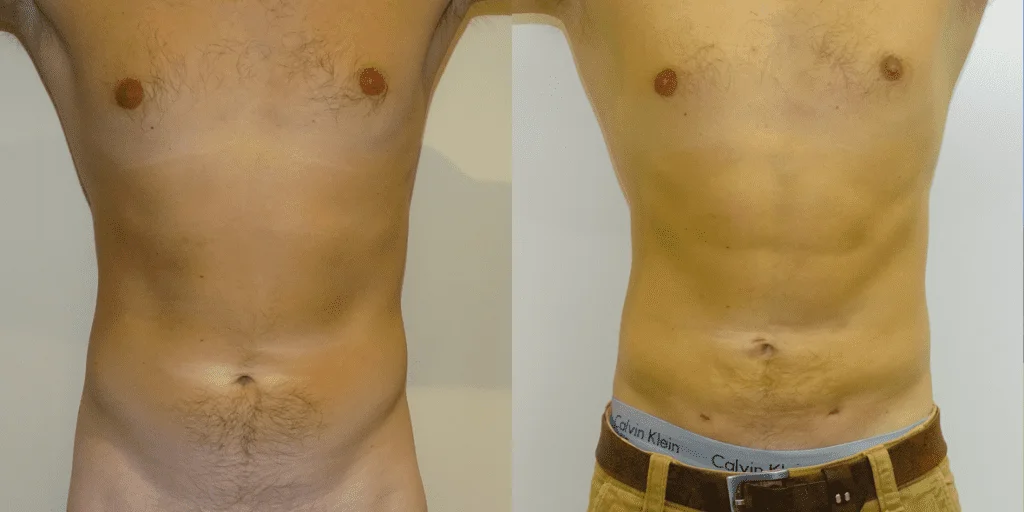
Before & After Results
Below, we have provided a gallery of male CREO Clinic patients who have undergone liposuction treatment. Results vary between patients according to the techniques used and volume of fat removed, as well as the individual rates of healing and time needed for swelling to settle.
Patient Feedback & Outcomes
The CREO APEX Recovery System
What to Expect: Before, During & After
Understanding the stages of the liposuction treatment pathway for men helps to give our patients realistic expectations and prepare for surgery and recovery. Below you can find the most important stages of the surgical journey from preparation up to the point where final results are visible.
Before Surgery
Stop using nicotine: You may be asked to abstain from cigarettes, vapes, patches, and all other nicotine-containing products for a specified period before and after surgery. The required period will be confirmed at pre-operative assessment. Nicotine reduces blood flow to healing tissue and significantly increases the risk of wound complications and infection at incision sites.
Review medications and supplements: Provide a full list of all prescribed medications, over-the-counter drugs, and supplements to the surgical team. Some may need to be temporarily adjusted or paused before surgery. Do not discontinue any prescribed medication without approval from the relevant clinician.
Reduce alcohol intake: You may be advised to reduce or avoid alcohol for a specified period before and after surgery. Guidance will be confirmed at pre-operative assessment.
Maintain a stable weight: Aim to maintain a stable weight in the weeks leading up to surgery. Significant changes to body composition can alter the surgical plan and affect outcomes.
Arrange transport home: You will not be able to drive on the day of surgery, regardless of the anaesthetic used. Arrange for a responsible adult to collect you from the facility and be available to support you for the first 24 hours after discharge.
Prepare your home for recovery: Set up a comfortable place to rest with essentials within easy reach. Arrange any support needed for work, childcare, or daily responsibilities during the initial recovery period.
Attend pre-operative appointments: Attend any assessments, blood tests, or other appointments requested by the surgical team before the procedure. These may include a full blood count, urea and electrolytes, and clotting profile.
Day of Surgery
Over the course of a 1- to 3-hour surgery, fat cells are extracted from the target areas. The small incisions created to allow the cannula entry will be closed with dissolvable sutures. A compression garment is fitted, and you will have a period of rest in a specially designed recovery room, where the clinical team will monitor you as the effects of your anaesthetic/sedative subside.
Liposuction is typically a day case, and the majority of patients are discharged within a few hours of the surgery. Overnight stays are available if deemed clinically necessary during the initial monitoring period.
Initial Recovery
Most patients with desk-based roles are able to return to work within around seven days. Strenuous exercise should be avoided for approximately two weeks, though light walking is encouraged earlier to support circulation. Follow-up appointments are included as standard and will be scheduled by the clinical team to monitor healing throughout recovery.
Final Results
For most patients, a significant reduction in swelling becomes apparent within six to twelve weeks of surgery. Final results, including the full contour improvement, are generally visible by twelve weeks, though some residual swelling may persist beyond this point in larger treatment areas.
Scars from liposuction incisions are small and are placed in discreet locations where they can be concealed by the natural contours of the body. Scars may continue to change in colour, texture and appearance for 12 to 18 months or longer, depending on individual healing. Laser scar management may be recommended, where appropriate, as part of CREO’s APEX aftercare.
Where some skin laxity becomes apparent following fat removal, this may improve as the skin contracts over the months following surgery. In some patients, particularly those with reduced skin elasticity or larger volumes of fat removed, a degree of laxity may remain. Where this is a significant concern, additional treatments such as BodyTite may be considered. These options will be discussed at consultation if relevant.
Maintaining a stable weight following liposuction supports long-term results. Fat cells are permanently removed from the treated areas, but the remaining fat cells in the body can expand if significant weight gain occurs. A stable lifestyle helps preserve the contour improvements achieved through surgery.
Risks, Limitations & Considerations
Liposuction is generally considered a well-established procedure with effective safety practices, but it carries recognised risks and limitations that should be considered carefully before proceeding. Outcomes vary between patients and depend on anatomy, technique, skin quality, and individual healing response.
Some potential risks and considerations include:
- Swelling and bruising: Swelling and bruising in the treated areas are expected following surgery and are a normal part of the healing process. These typically resolve over several weeks.
- Numbness and altered sensation: Temporary numbness or changes to sensation in the treated area are common following liposuction. These typically resolve as healing progresses, but in some cases changes to sensation may be prolonged or permanent.
- Contour irregularities: Uneven fat removal, asymmetry, or surface irregularities can occur following liposuction. These may be related to pre-existing differences in fat distribution, the healing process, or the degree of skin contraction following surgery.
- Skin laxity: Where skin elasticity is reduced, the removal of fat may result in loose or irregular skin in the treated area. In some patients this may improve over time; in others, additional skin-tightening treatment may be required.
- Infection: As with all surgical procedures, there is a risk of infection at the incision sites. Infection is uncommon but may require antibiotic treatment.
- Seroma: A collection of fluid may form in the treated area following surgery. This may resolve on its own or may require drainage.
- Wound healing complications: In some patients, wounds may heal more slowly or may partially break down, particularly in those who smoke or who have health conditions affecting circulation or immunity.
- Deep vein thrombosis and pulmonary embolism: As with all procedures performed under general anaesthetic or sedation, there is a risk of blood clot formation. Preventive measures including compression stockings and early mobilisation are used to reduce this risk.
- Adverse reaction to anaesthesia: Reactions to anaesthetic agents, while uncommon, may occur. The anaesthetic team will review your medical history and relevant risk factors before surgery.
- Revision surgery: In some cases, a second procedure may be required to address asymmetry, contour irregularities, or inadequate fat removal. Revision liposuction is more complex than primary surgery and is assessed on an individual basis.
The likelihood of specific risks varies according to individual patient factors, medical history, and the nature of the procedure.
Men’s Liposuction Costs & Financing Options
The cost of men’s liposuction at CREO Clinic depends on the number of areas treated, the technique used, the complexity of the surgical plan, and whether procedures are combined. Pricing at CREO is structured by the number of treatment areas.
At the CREO Clinic, liposuction starts from £5,900 for one area, £6,900 for two areas, £8,250 for three areas, £9,250 for four areas (360 liposuction), £9,900 for five areas, and £10,900 for six areas.
What Affects Men’s Liposuction Costs?
The cost of men’s liposuction at the CREO Clinic is influenced by the number of areas treated, the technique used, the complexity of the surgical plan and any anatomical considerations, the anaesthetic approach, and whether additional procedures are combined with liposuction; certain complementary treatments, such as BodyTite and Renuvion, can add extra cost to the treatment plan.
The price also covers important elements of the surgical process. All liposuction fees at CREO cover the following:
- Surgeon and anaesthetist fees: All clinical fees for the surgical team involved in your procedure.
- CQC-registered surgical facilities: All procedures are performed in regulated hospital environments.
- Pre-operative assessments and blood tests: Including full blood count, urea and electrolytes, and clotting profile.
- Compression garment: Fitted following surgery and worn for six weeks as part of the standard recovery protocol.
- Up to three follow-up appointments: Included as standard to monitor healing and assess treated areas during recovery.
- Laser scar management treatments: Laser scar treatments are provided where clinically appropriate as part of the APEX aftercare programme.
- Manual lymphatic drainage massage (MLD): MLD is also provided as part of the APEX aftercare programme, where clinically appropriate.
Financing Options
Where appropriate, financing options may be available to patients via CREO Clinic’s external finance partner, Chrysalis Finance, including interest-free loans over a 12-month period, with longer-term plans available at increased rates of interest.
Any financing arrangement is subject to status, an affordability assessment, lender approval, and all applicable terms and conditions. Current rates and terms will be confirmed before you apply. Financing should be considered only after the clinical suitability of the procedure has been established.
Why Choose CREO Clinic for Men’s Liposuction
Men choose to undergo men’s liposuction at the CREO Clinic due to our clinically led surgical approach, integrated APEX aftercare support, and emphasis on detailed treatment planning, with treatment provided by surgeons who focus on particular anatomical areas.
Specialist Surgeon-Led Planning
CREO Clinic surgeons focus on particular anatomical areas, allowing treatment planning to reflect the anatomy and clinical needs of each patient. Dr Omar Tillo has a clinical focus on surgical procedures from the neck down and has performed hundreds of liposuction surgeries on men with a variety of aesthetic and clinical needs.
Anatomical Understanding of Male Body Contouring
Male body contouring requires detailed assessment of anatomy, fat distribution, skin quality and the relationship between the areas being treated. CREO Clinic surgeons use these factors to plan adjustments to the male physique that aim to improve balance and proportion.
Consultation-Led Suitability Assessment
All surgeries recommended by the CREO Clinic are made following a one-to-one clinical consultation with a surgeon. Suitability is determined through thorough physical assessment and clinical conversations, which means we only recommend a procedure if it is clinically appropriate for the patient and consistent with their physical and aesthetic goals.
Integrated Aftercare
The principle of the CREO Clinic is the integration of aftercare and recovery support into all treatment plans. Throughout recovery, patients have access to direct clinical advice and support treatments such as lymphatic drainage massage and laser scar management where clinically appropriate. Follow-up appointments with clinicians allow for careful monitoring of healing progress and interventions where necessary.
FAQs: Men’s Liposuction
Is men’s liposuction the same as weight loss surgery?
Weight loss surgery focuses on interventions to reduce caloric intake, such as bariatric surgery, and achieve significant reductions in overall weight.